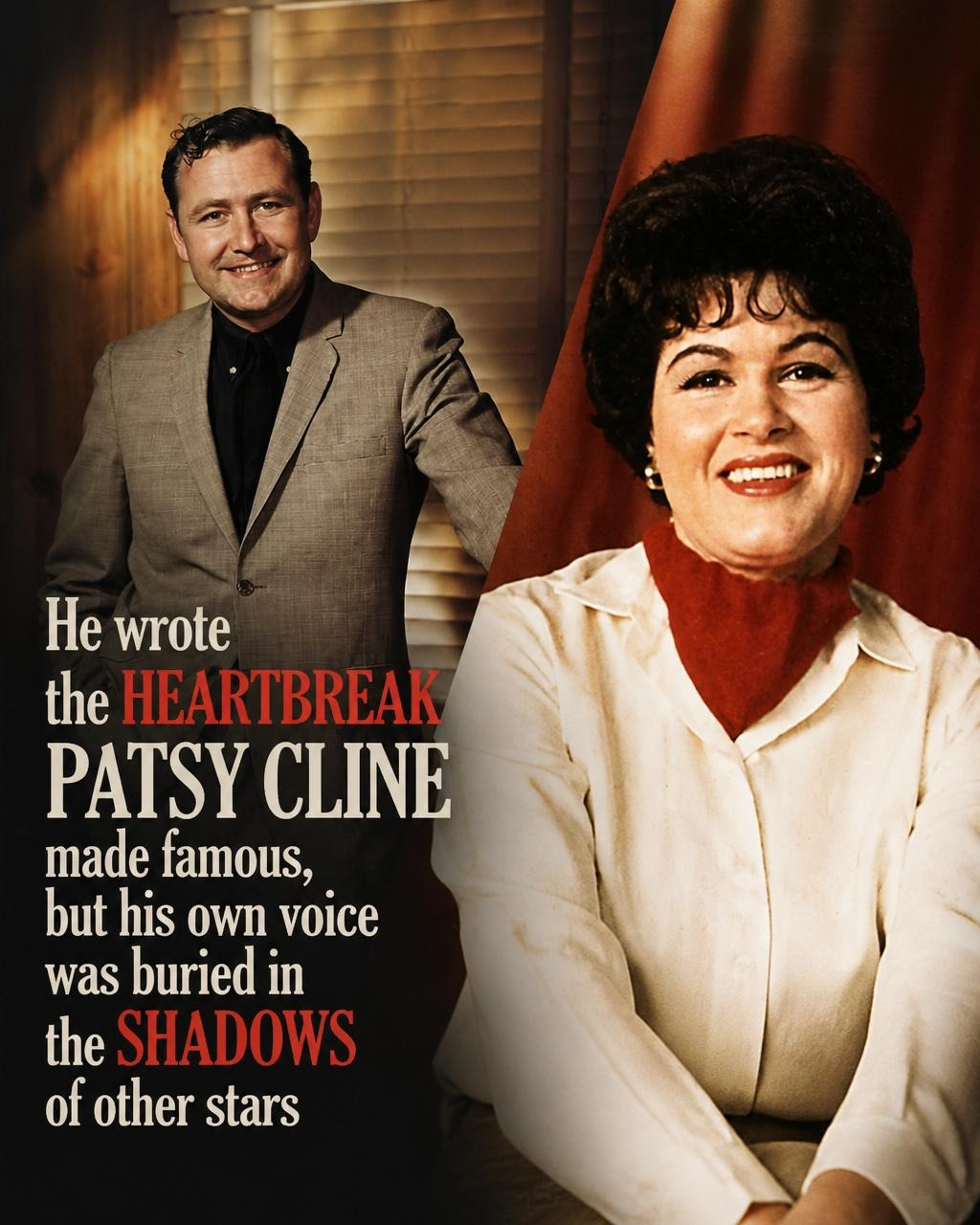
Hank Cochran: The Songwriter Behind Country Music’s Greatest Heartbreaks
Country music has always had room for heartbreak, but few writers understood it as deeply as Hank Cochran. He gave the genre some of its most unforgettable pain, writing songs that became part of the country music bloodstream: “I Fall to Pieces,” “She’s Got You,” and “Make the World Go Away.” These songs did not just become hits. They became emotional landmarks.
What makes Hank Cochran’s story so striking is that the voice behind those songs was often not the voice the public remembered. Patsy Cline made “I Fall to Pieces” feel eternal. Eddy Arnold gave “Make the World Go Away” a polished, aching grace. George Strait later brought Hank Cochran’s writing to new generations with an ease that made the songs sound as if they had always belonged to him.
And yet, Hank Cochran was not only a songwriter. He was also a singer with a real recording career of his own. He recorded for respected labels including RCA, Monument, Capitol, and Elektra. In another life, or perhaps in a different industry, those labels might have launched him into stardom. He had the kind of voice that could carry sorrow without sounding forced, a voice built for the kind of songs he wrote.
The man who wrote the ache
Hank Cochran had a rare gift: he knew how to write heartbreak in a way that sounded personal, but never artificial. His songs often felt simple on the surface and devastating underneath. That was part of the magic. He did not overload the listener with words. He found the exact line that landed like a truth you had been avoiding.
Some songwriters write to impress. Hank Cochran wrote to wound gently, and the result was unforgettable.
His work helped define the emotional core of country music during an era when the genre was reaching wider audiences and deeper artistic confidence. He wrote for voices that could lift his words beyond the page, but the emotional power started with him. His songs carried a sense of human loss that felt universal, whether they were sung in a honky-tonk, on the radio, or quietly at home.
Recognition came, but slowly
For all of his influence, Hank Cochran spent much of his career in the background. The spotlight often followed the singers who interpreted his work, while his own name lived in the credits and liner notes. In 1974, Nashville formally recognized him by placing him in the Songwriters Hall of Fame. Later, in 2014, four years after his death, the Country Music Hall of Fame honored him as well.
Those recognitions mattered, but they also raised a lingering question: how many listeners knew the man behind the songs was also a performer worth hearing?
What remains after the applause
Hank Cochran’s legacy is not just that he wrote hits. It is that he helped shape the emotional language of country music itself. His songs have stayed alive because they were built on honesty, and because the best singers in the genre knew exactly what to do with them.
Still, there is something moving about the idea that his own records are out there, waiting for new listeners. Waiting for someone to hear not only the songwriter, but the singer. Waiting for people to realize that the man who wrote the heartbreak also knew how to deliver it himself.
In country music, some names shine brightest on the label. Hank Cochran’s name may have lived there quietly, but the feelings he wrote were never quiet at all.