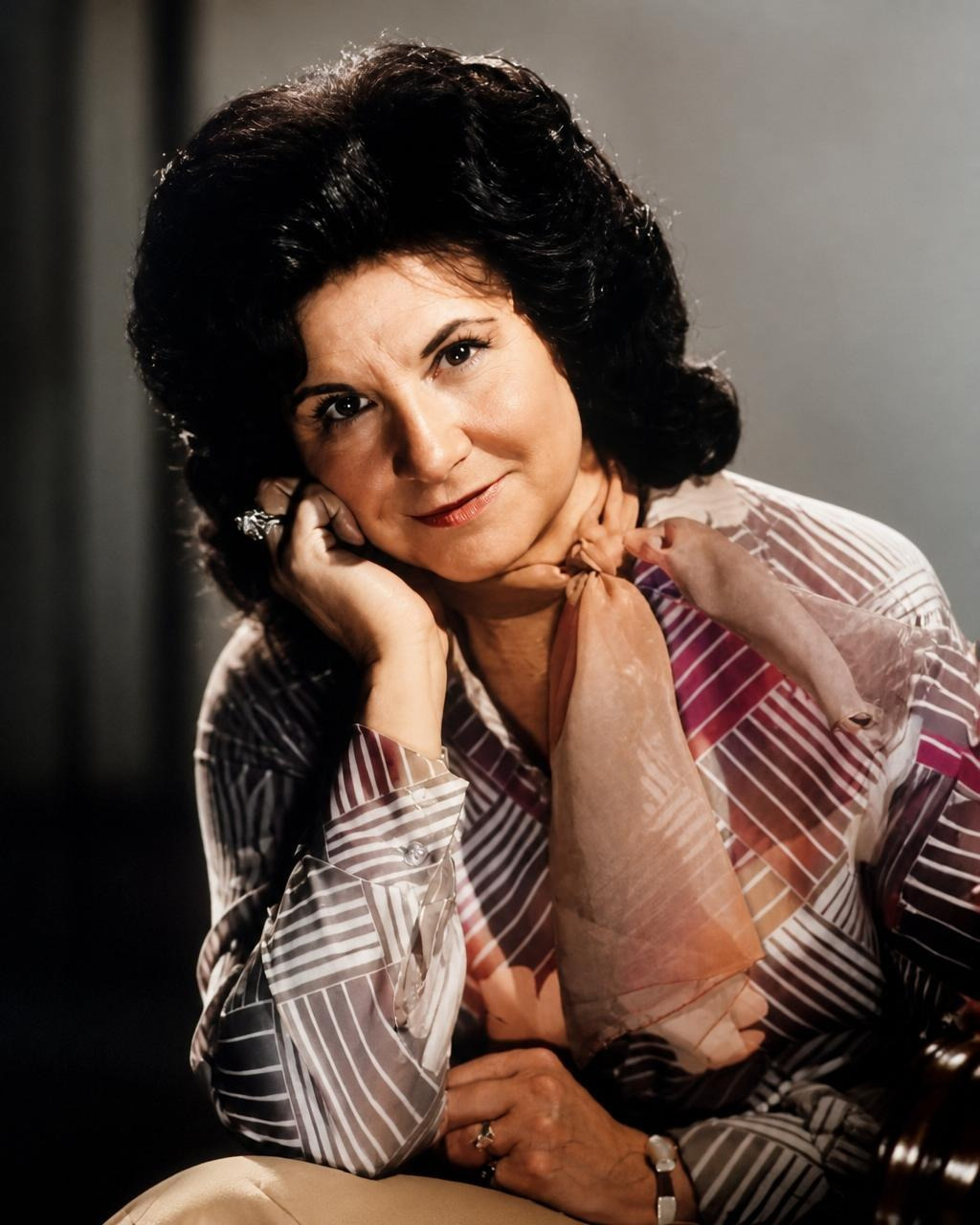
$125 Changed History: How Kitty Wells Opened the Door for Women in Country Music
In 1952, Kitty Wells was close to giving up on music. Her records on RCA had gone nowhere, and the dream that once felt full of promise was starting to feel tired. Like many performers who keep showing up even when the business does not show mercy, Kitty Wells had reached a point where walking away seemed easier than hoping.
Then Decca offered her a song. It was an answer record to Hank Thompson’s The Wild Side of Life, a hit that blamed women for heartbreak and made a whole type of female character sound like the reason every marriage failed. Kitty Wells did not rush into the session full of excitement. She did not arrive planning to make history. She came for one practical reason: the $125 union fee.
On May 3rd, 1952, Kitty Wells walked into Owen Bradley’s studio in Nashville and recorded “It Wasn’t God Who Made Honky Tonk Angels.” At the time, it was just another recording date to her. But the moment the song was released, everything began to shift.
A Voice That Sounded Like the Truth
The song pushed back against the idea that women were always to blame. It gave a voice to a side of the story that country music had barely allowed to speak. Kitty Wells sang it plainly, without showy drama, and that honesty is part of what made it so powerful. Listeners heard something familiar in it: frustration, dignity, and a refusal to accept being judged unfairly.
“It Wasn’t God Who Made Honky Tonk Angels” did not sound like a rebellion. That is what made it unforgettable.
The reaction was immediate and intense. The single sold 800,000 copies in its first year and held the No. 1 spot on the Billboard country chart for six weeks. Kitty Wells became the first solo woman to reach No. 1 on that chart, a milestone that had never been achieved before.
Blocked, Banned, and Still Heard
Not everyone welcomed the song. NBC banned it for being “too suggestive,” and the Grand Ole Opry refused to let Kitty Wells sing it on air. Those decisions were meant to limit the record, but they only made the story stronger. The public had already connected with the song, and no gatekeeper could fully stop that.
What happened next mattered even more than the chart success. Kitty Wells became proof that women could lead in country music, not just support it. She did not arrive as a polished symbol of a movement. She simply stood in front of a microphone and told the truth in a way people could not ignore.
The Doors That Opened After Kitty Wells
Later generations of artists understood exactly what Kitty Wells had done. Loretta Lynn said she tried to sing like Kitty Wells when she was starting out. Dolly Parton and Tammy Wynette also traced part of their path back to that moment in Nashville. The influence was not abstract. It was direct, personal, and lasting.
That $125 session changed more than Kitty Wells’ life. It changed the expectations of an entire genre. A woman who came to the studio ready to earn a fee ended up making space for countless others to be heard.
Kitty Wells did not set out to rewrite country music history. But on that afternoon in 1952, she did exactly that.