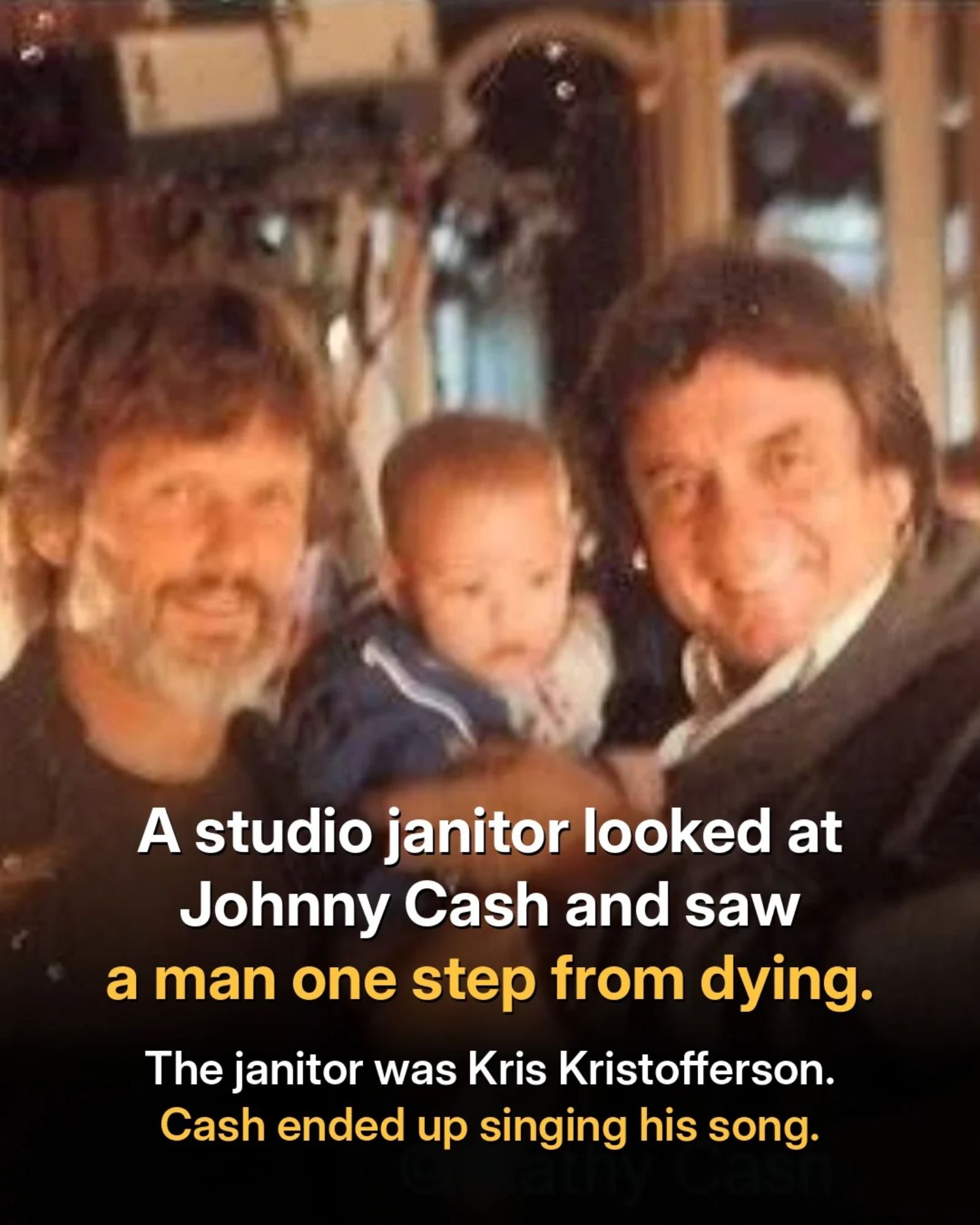
Scroll to the end of the article to hear the song.
The song is “To Beat the Devil,” and Kris Kristofferson wrote it about a single moment in the hallway of a Nashville recording studio, when a friend was reading him poetry and Kris Kristofferson realized he might be watching that friend slip away.
The Janitor Nobody Was Listening To
In the mid-1960s, Kris Kristofferson had a future most people would envy. He was an Army captain and a helicopter pilot, and he had been offered a job teaching literature at West Point. He turned it down. Around 1965, close to thirty, he moved to Nashville to write songs.
It went badly. He tended bar and worked as a janitor at Columbia’s recording studios. His wife left and took their children with her, and his family had all but stopped supporting him. He swept floors in the same rooms where his heroes made records and pitched his songs to anyone who would listen. For a long time, almost nobody did.
One of the artists who recorded in that building was Johnny Cash, a man Kris Kristofferson later called “my idol.” By the late 1960s, though, Johnny Cash was in rough shape.
The Moment in the Hallway
When Kris Kristofferson recorded the song, he opened it with a short spoken story. He described running into a great friend, someone he called “wasted,” in the hallway of a recording studio. The friend was reciting poetry he had written. As he listened, Kris Kristofferson realized the man was close to death, and he couldn’t stop asking why. That was when the lines of the song came to him.
“I saw that he was about a step away from dying.”
Kris Kristofferson never names the friend. He ends the introduction by saying he is glad the man is no longer wasted and has found a good woman, and he dedicates the song to “John and June.” Writers who have studied the song identify the friend as Johnny Cash, who rebuilt his life with the help of June Carter. The two married in 1968.
What the Song Actually Says
The song itself follows a broke, hungry songwriter walking down Music Row on a bitter winter day. He ducks into a dim bar, and a stranger at the counter buys him a drink, asks to hear him play, then sings him a song of his own. The message is grim: people won’t listen, singers have been silenced for telling the truth, and most would rather not hear it.
The songwriter recognizes that song from his own lonely nights. He doesn’t claim to have won anything. He simply takes the stranger’s song with him and keeps singing, even if he dies poor, because someone, someday, might care.
It is easy to hear Kris Kristofferson himself in that songwriter. The hallway gave him the spark, but the bar on Music Row was his own life.
The Song Comes Home
Then the story turned. Johnny Cash recorded “To Beat the Devil” in 1969 for his album Hello, I’m Johnny Cash, released in January 1970, months before Kris Kristofferson’s own debut album. The man who had stood a step from dying was now singing the song himself.
On that same album, Johnny Cash and June Carter Cash sang “If I Were a Carpenter” together, and the duet won them a Grammy. The song born from his lowest point sits on the same record as the woman who helped him climb out.
The song opened doors for its writer too. It was one of the songs Kris Kristofferson played for Fred Foster at Monument Records, who soon signed him as a recording artist.
Why It Still Matters
Decades later, Kris Kristofferson admitted his life had moved far from the place that produced songs like this one.
“I wasn’t living in that place anymore.”
Maybe that is why “To Beat the Devil” still lands so hard. It was written by a man with nothing, about a friend who was losing everything, and it became a thank-you to the two people who showed him another way.