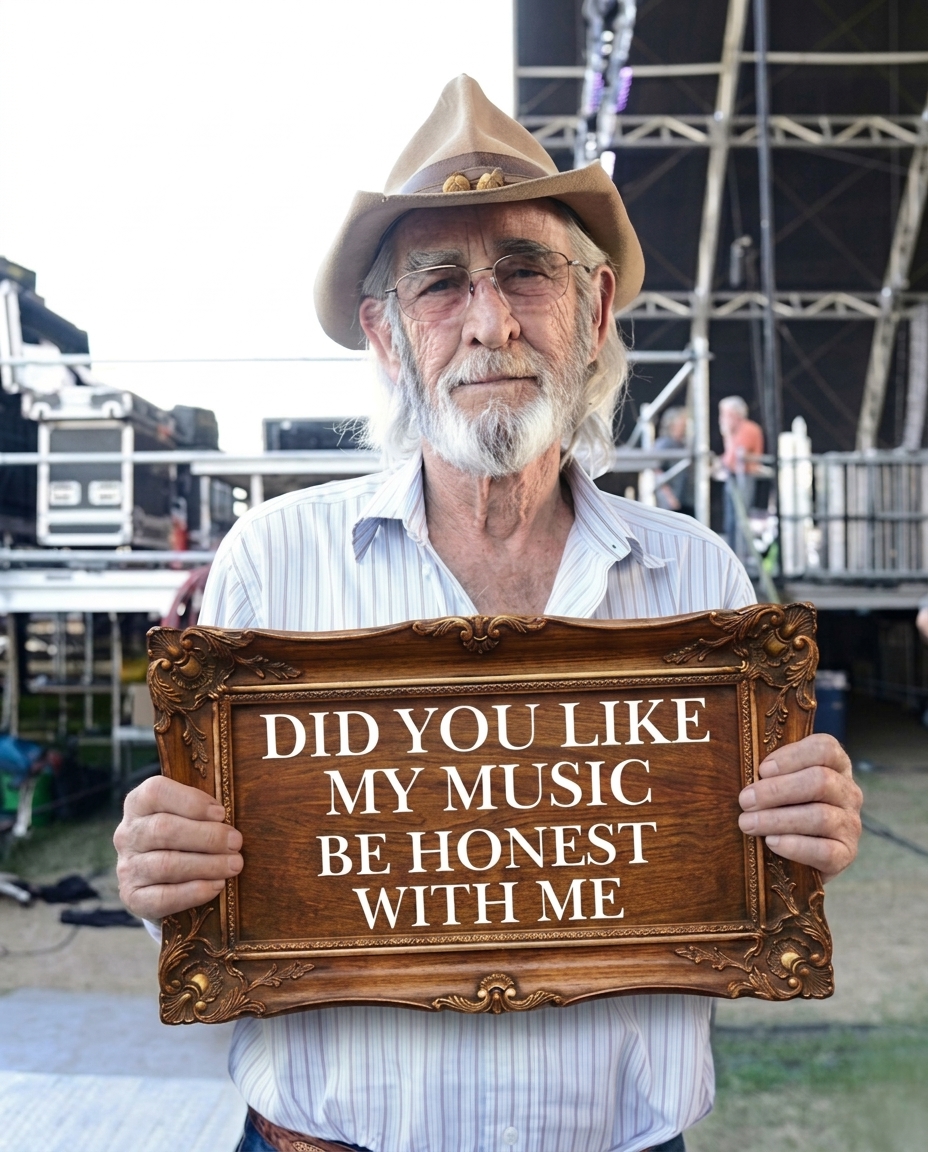
HE DIDN’T NEED TO SING LOUD — AND THAT’S EXACTLY WHY PEOPLE LISTENED
Between 1974 and 1979, Don Williams built something rare in country music. He did not chase the room. He did not try to overpower it. While other voices pushed harder and productions grew brighter, Don Williams stepped into the middle of that changing sound with almost startling calm. He sang the way some people speak when they are completely sure of themselves—softly, clearly, without wasting a word.
That was the difference. Don Williams never sounded like he was asking for attention. Don Williams sounded like someone who had already earned trust and knew he did not need to raise his voice to keep it. In a genre full of heartbreak, swagger, and spectacle, that kind of steadiness stood out. Not because it was flashy, but because it was real.
A Voice That Never Forced the Moment
When listeners first heard Don Williams in the mid-1970s, the impact was immediate, even if it did not arrive in a dramatic way. There was no need for vocal gymnastics. No need for strain. No sense that Don Williams was trying to convince anyone of anything. The strength was already there, tucked inside that warm baritone that moved at its own pace.
That voice did something many singers spend entire careers trying to do: it made people lean in. It invited rather than demanded. It settled into a song instead of climbing on top of it. And in doing that, Don Williams created intimacy on a huge scale. People felt like Don Williams was singing directly to them, alone, in whatever room they happened to be in.
“He didn’t sing at people. He spoke to them.”
That line explains almost everything. Don Williams did not attack a lyric. Don Williams delivered it with patience, as if the truth inside the song mattered more than the performance around it. The result was a style that felt effortless, though it clearly was not. It takes discipline to sound that unhurried. It takes confidence to leave space inside a song and trust that the listener will meet you there.
The Quiet Power of 1974
When I Wouldn’t Want to Live If You Didn’t Love Me reached No. 1 in 1974, it marked more than a chart success. It felt like confirmation that country audiences still had room in their hearts for gentleness. The song did not explode. It settled. It did not arrive like a celebration. It arrived like recognition. Listeners heard it and seemed to think: yes, that is exactly what love sounds like when it is spoken plainly.
That was one of Don Williams’s greatest gifts. Don Williams could take a feeling that might sound oversized in someone else’s voice and make it feel grounded, believable, almost private. Even the biggest emotions came through with restraint. The songs did not beg to be noticed. They stayed with people because they did not need to beg.
In a decade when country music was becoming more polished and commercially ambitious, Don Williams moved in the opposite direction without ever seeming resistant or old-fashioned. Don Williams was not rejecting the times. Don Williams was simply refusing to rush. And that refusal became its own kind of identity.
Why “Gentle Giant” Fit So Perfectly
The nickname “Gentle Giant” stayed with Don Williams for a reason. It was not only about physical presence. It was about emotional weight carried with grace. There was something large in the way Don Williams held a song—something steady, calm, and deeply reassuring. Don Williams did not dominate a performance. Don Williams anchored it.
That steadiness mattered. People do not always remember the loudest voice in the room. Often, they remember the voice that made them feel safe. Don Williams had that kind of voice. It felt like the end of a long day. It felt like honesty without performance. It felt like someone telling the truth and trusting that the truth, by itself, was enough.
And maybe that is why Don Williams still feels so distinctive. In a world that often rewards volume, Don Williams proved that quiet can travel farther than noise. Between 1974 and 1979, Don Williams did not just score hits. Don Williams offered a different way of being heard.
Not by singing louder. Not by reaching harder. But by standing still long enough for people to realize that calm, in the right hands, can be unforgettable.