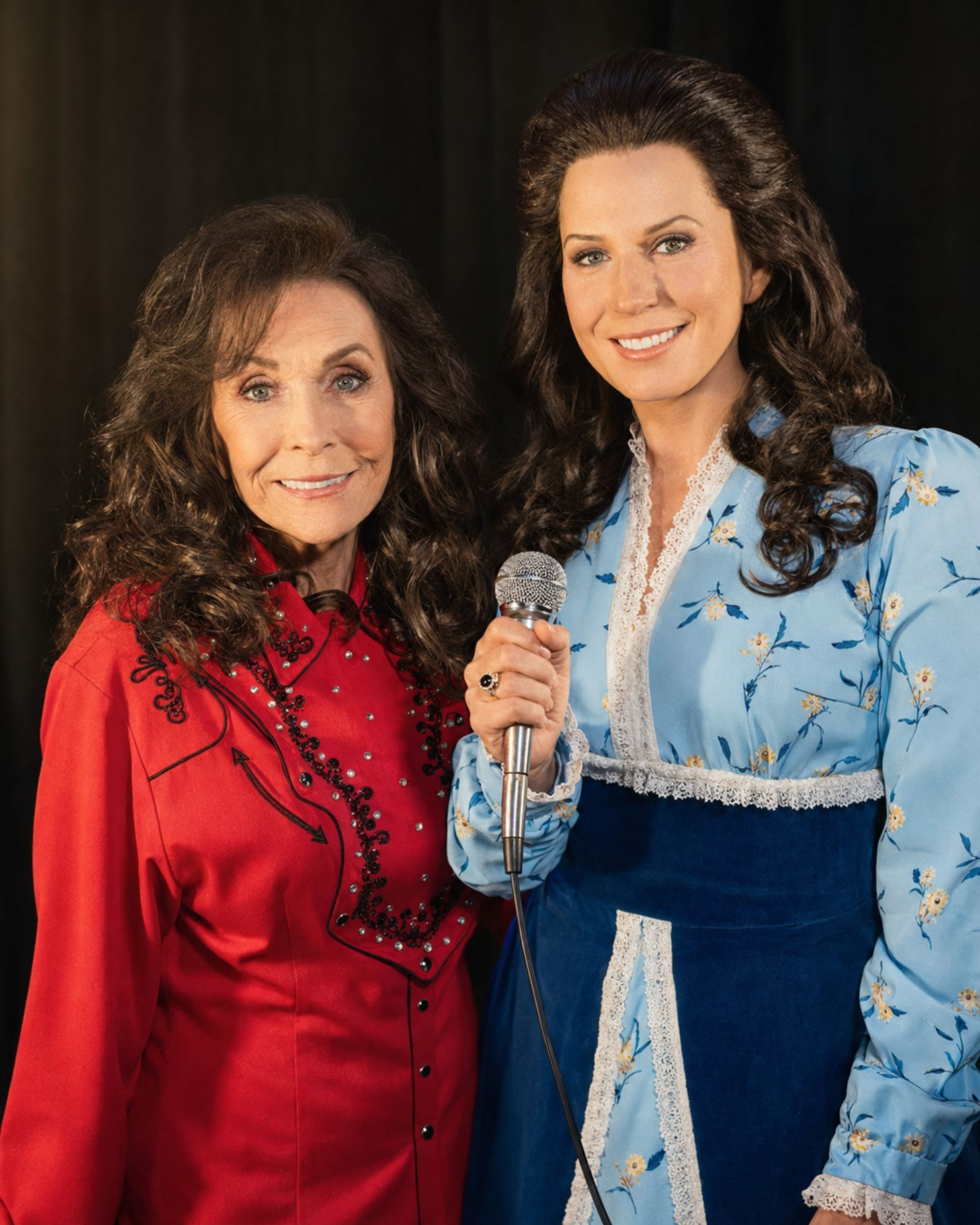
She Died on a Tuesday. By the End of the Week, America Was Playing Her Songs Like It Had Just Realized What It Lost.
Loretta Lynn did not come from comfort, polish, or privilege. She came from Butcher Hollow, Kentucky, where a coal mining cabin and a hard life shaped everything around her. She grew up barefoot, learned responsibility early, married young, became a mother young, and became a grandmother before many women her age had even settled into adulthood. Her life was never neat, and that was exactly why her voice mattered so much.
She sang about the things people were often told to keep private. She sang about poverty, marriage, motherhood, cheating men, birth control, and the complicated truth of being a woman in a world that expected silence. Loretta Lynn did not write songs to sound agreeable. She wrote them because they were real. That honesty made some country radio stations uncomfortable. It also made millions of listeners feel seen.
A Voice Built from Real Life
Loretta Lynn was not manufactured for fame. She lived the kind of life that country music often claims to celebrate, but she lived it for real. When she sang, listeners heard the ache, the anger, the humor, and the stubborn hope all at once. That is why her songs lasted. They were not trends. They were testimony.
Her music carried the weight of experience without ever losing its human warmth. She could be sharp, funny, defiant, and deeply tender in the same breath. That balance made Loretta Lynn unforgettable. She gave country music something it could not fake: the sound of a woman telling the truth.
“Coal Miner’s Daughter” was never just a hit song. It became a national memory, a story America kept returning to because it felt bigger than one woman’s life and yet completely hers.
The Tuesday Everything Changed
On October 4, 2022, Loretta Lynn died peacefully in her sleep at her ranch in Hurricane Mills, Tennessee. She was 90 years old. The news spread quickly, but what happened next was immediate in a way that felt almost emotional and collective. Her streams surged 1,841% that same day. By the end of the week, her catalog was up 615%, and “Coal Miner’s Daughter” had crossed 1.3 million streams.
That sudden surge was more than a data point. It was a public reaction that looked like regret, gratitude, and rediscovery all at once. People did not just remember Loretta Lynn. They rushed back to her, as if the full meaning of her work had finally arrived in the moment she was gone.
It happens often enough to be familiar: an artist leaves, and the world wakes up to the size of the loss. But with Loretta Lynn, the reaction felt especially sharp because her songs had spent decades quietly doing the work of honesty. They had been there all along, waiting.
Nashville Came Back to Her
The farewell did not end with the first wave of listening. Twenty-six days later, the Grand Ole Opry filled with voices in her honor. It was the kind of tribute that only comes when an artist has changed the room forever. Alan Jackson sat in the circle and sang a song he had written for his own mother. George Strait, Dolly Parton, Jack White, Taylor Swift, and many others joined in to honor the woman from Butcher Hollow who had spent a lifetime refusing to be quiet.
Those names mattered because they showed the reach of Loretta Lynn’s influence. She belonged to traditional country music, but she also crossed generations and styles. Artists who came after her understood that she had made room for them by being fearless first. She did not ask permission to speak plainly. She simply did it, and the music world adjusted around her.
Why Her Songs Still Hit Hard
Loretta Lynn’s songs still work because they are built on ordinary pain and ordinary courage. They are about the kind of life many people recognize but rarely hear described so openly. She gave language to feelings that could otherwise stay hidden: frustration, exhaustion, pride, loyalty, disappointment, and survival.
That is why her death mattered beyond nostalgia. It reminded America that some artists do not just entertain us. They keep a record of who we are, what we endured, and what we were afraid to say out loud. Loretta Lynn did that for generations.
She did not leave country music quietly. She left after changing it, challenging it, and expanding it. And when the songs started playing again after her death, they did not sound old. They sounded necessary.
Loretta Lynn did not just leave country music.
She left it finally saying thank you.