They Got Married on a Concert Stage: The Love Story and Tragedy of Hawkshaw Hawkins and Jean Shepard
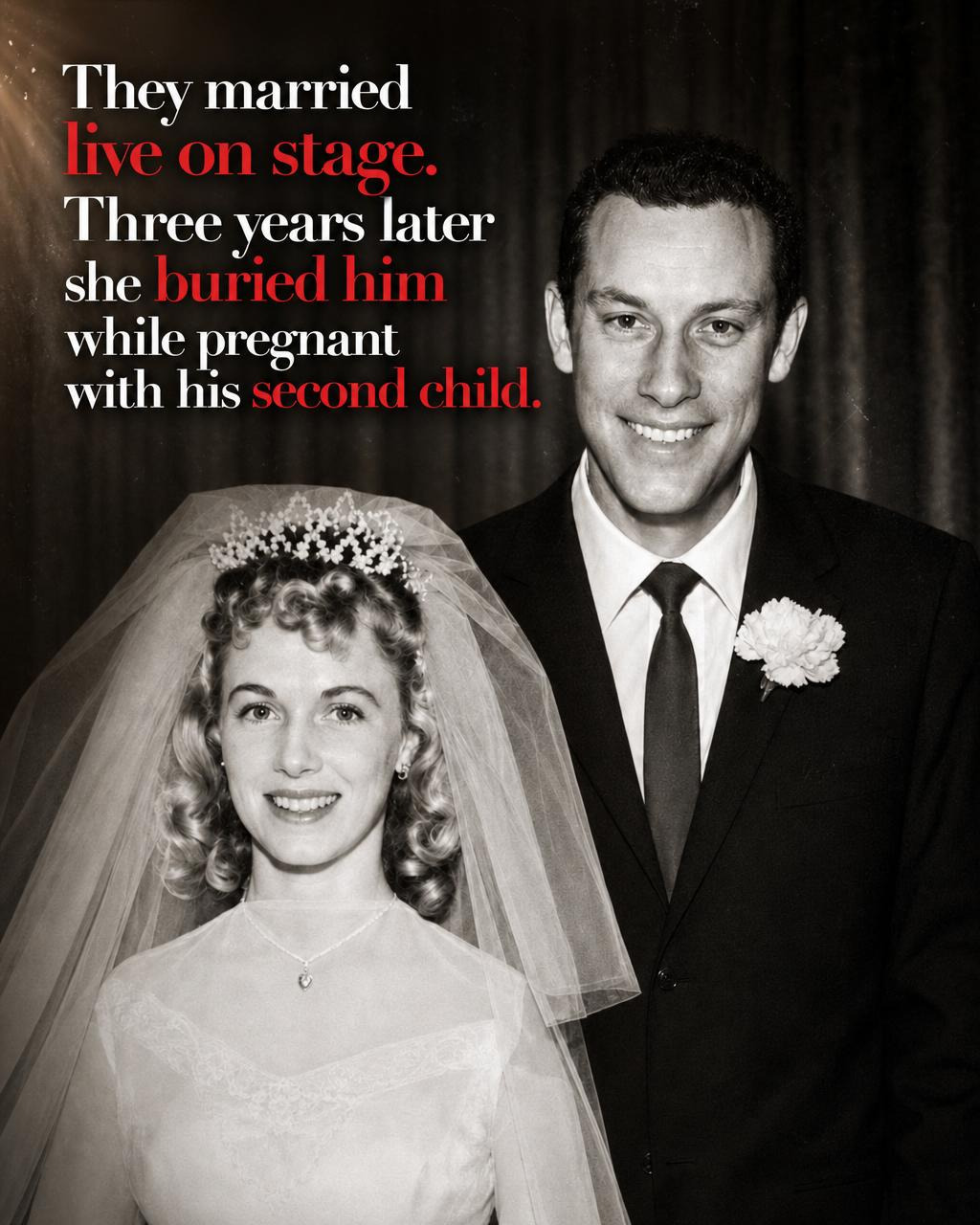
In November 1960, something happened on a concert stage in Wichita, Kansas that felt more like a scene from a movie than real life. In front of an audience, with a disc jockey broadcasting live on radio, Hawkshaw Hawkins and Jean Shepard got married right there in public. It was bold, surprising, and deeply fitting for two people who had already lived close to the spotlight for years.
Hawkshaw Hawkins was known for his towering presence and easy charm. At six-foot-five, he was the kind of man people noticed the moment he walked into a room. Fans called him “Eleven Yards of Personality,” and the name fit. He had warmth, humor, and the kind of voice that could fill a room without ever sounding forced.
Jean Shepard was just as unforgettable, but in a different way. She was not a fragile star waiting to be protected. Jean had fought her way into hard country at a time when women were not expected to sing that strong, sound that direct, or hold their own in a world ruled mostly by men. She was tough, honest, and full of grit. That made her one of the most respected voices in country music.
A Marriage in Front of the World
When Hawkshaw Hawkins and Jean Shepard married on that stage, it was not just a publicity moment. It was a celebration of two lives that had already been shaped by music, travel, hard work, and heartbreak. Their marriage felt open and fearless, like they were stepping into the future together without hiding from anyone.
They built a home. They made a family. Their son came first, and later Jean became pregnant again. Life was busy and hopeful. There were jobs to do, shows to sing, and a household to keep moving forward. For a brief time, it seemed like they had found a rhythm that worked.
They were not just a famous couple. They were a working family, trying to make a life out of music, love, and faith in tomorrow.
The Day Everything Changed
Then came March 5, 1963.
That day is remembered in country music history for the plane crash that also took Patsy Cline, but it took Hawkshaw Hawkins too. In a single moment, the future Jean Shepard had been building with him was shattered. Hawkshaw Hawkins was gone.
Jean was eight months pregnant. Their little boy was barely walking. The loss was not abstract or distant. It was immediate, personal, and overwhelming. One day she was a wife expecting a second child. The next, she was facing motherhood alone, carrying grief that had no easy shape and no quick answer.
What makes the story so haunting is not only the crash itself, but the silence that followed. Hawkshaw Hawkins never got to see what came next. He never held the child Jean was carrying. He never heard how the world would respond to one of his biggest songs after he was already gone.
The Song That Came After
Weeks after the crash, “Lonesome 7-7203” rose to No. 1 and stayed there for four weeks. It became the biggest hit of Hawkshaw Hawkins’s career. The irony is painful and unforgettable: the song found its biggest audience after he was no longer alive to witness it.
People heard his voice on the radio everywhere. They heard the song in cars, in diners, in homes, and on country stations across the country. For Jean Shepard, that meant living with his presence in one of the hardest ways possible. His voice kept returning, even after he was gone.
That is part of why the story still touches people. Fame can make a life look bright and complete from a distance, but real life is often more fragile than that. Jean Shepard did not get the ending anyone would have wanted. She got grief, responsibility, and the difficult job of carrying on.
Jean Shepard’s Strength
Jean Shepard’s strength was never just about performing. It was about survival. She raised two boys while carrying the memory of Hawkshaw Hawkins and continuing her own life and career. She had already proven she could stand tall in a tough industry, and now she had to prove she could stand tall in sorrow too.
That is what makes her story so moving. She did not disappear. She did not break. She endured.
Hawkshaw Hawkins and Jean Shepard’s marriage began in one of the most public ways imaginable, but their story became something much deeper than spectacle. It became a story about love, loss, and the strange way music can preserve a person long after life is gone.
Even now, the image remains powerful: a couple married on a concert stage, a radio audience listening in, a family beginning in front of the world. And then, less than three years later, a widow with a toddler, another child on the way, and a voice on the radio that would never stop reminding her what had been taken.
It is a country music story, but it is also a human story. One about joy, tragedy, and the resilience it takes to keep going when life changes forever.