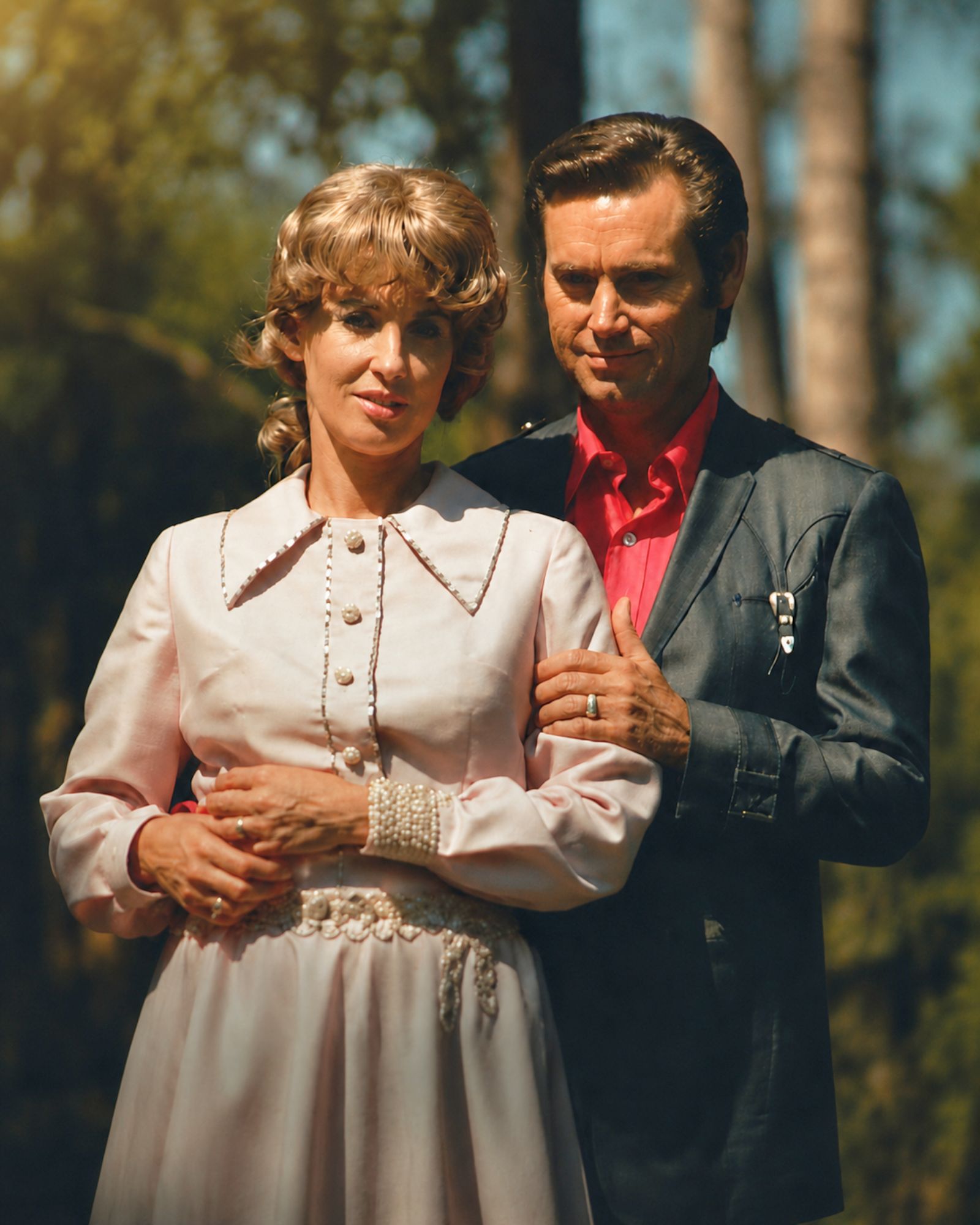
How “Golden Ring” Turned a Broken Marriage Into Country Music History
“Golden Ring” is one of those songs that feels personal even when you know it was built from imagination. Bobby Braddock did not write it as a diary entry about George Jones and Tammy Wynette. He came up with the story after watching a television drama about a handgun, and the idea of an object passing through different lives sparked something bigger: a wedding ring, a relationship, a beginning, and an ending.
When George Jones and Tammy Wynette recorded the song in 1976, the timing gave it an extra sting. Their divorce had already happened about 14 months earlier, and the duet reached No. 1 on the Billboard country chart that August. The song was not written about their marriage, but it sounded as if it had been.
A Story That Felt Too Real
The lyrics trace a cheap ring from a pawn shop to a wedding chapel, then through a fight, a separation, and finally back to the same place where it began. That simple cycle gave the song its power. It sounded like a complete relationship in a few verses, and George Jones and Tammy Wynette made every line feel lived-in.
That emotional weight was part of why the record connected so strongly with listeners. The duet became more than a hit single; it became a mirror. Fans heard the harmony, heard the hurt, and heard the history between George Jones and Tammy Wynette without needing any explanation.
Working Together After the Split
The real-life relationship between George Jones and Tammy Wynette was already strained by the time “Golden Ring” arrived. Even so, the music business kept pulling them back together. George Jones later said he hated working with Tammy Wynette after the split because it brought back too many memories, and because fans kept hoping for a romantic reunion that was never going to happen.
That tension is part of what makes the song unforgettable. It is not just a duet about heartbreak. It is a duet sung by two artists who knew exactly how heartbreak sounded from the inside. The performance carries that burden without ever sounding forced.
Why It Still Resonates
“Golden Ring” endures because it gives grief a shape. It shows how love can start with hope, bend under pressure, and return to silence. The song’s power comes from the contrast between its fictional origin and its very real emotional aftermath. Bobby Braddock imagined the story. George Jones and Tammy Wynette made people believe it.
And maybe that is why the song still lands so hard today. Knowing the background does not weaken it. It sharpens it. “Golden Ring” was never written about George Jones and Tammy Wynette, but once they sang it, it became impossible to hear it as just a story. It became a memory dressed as a song.