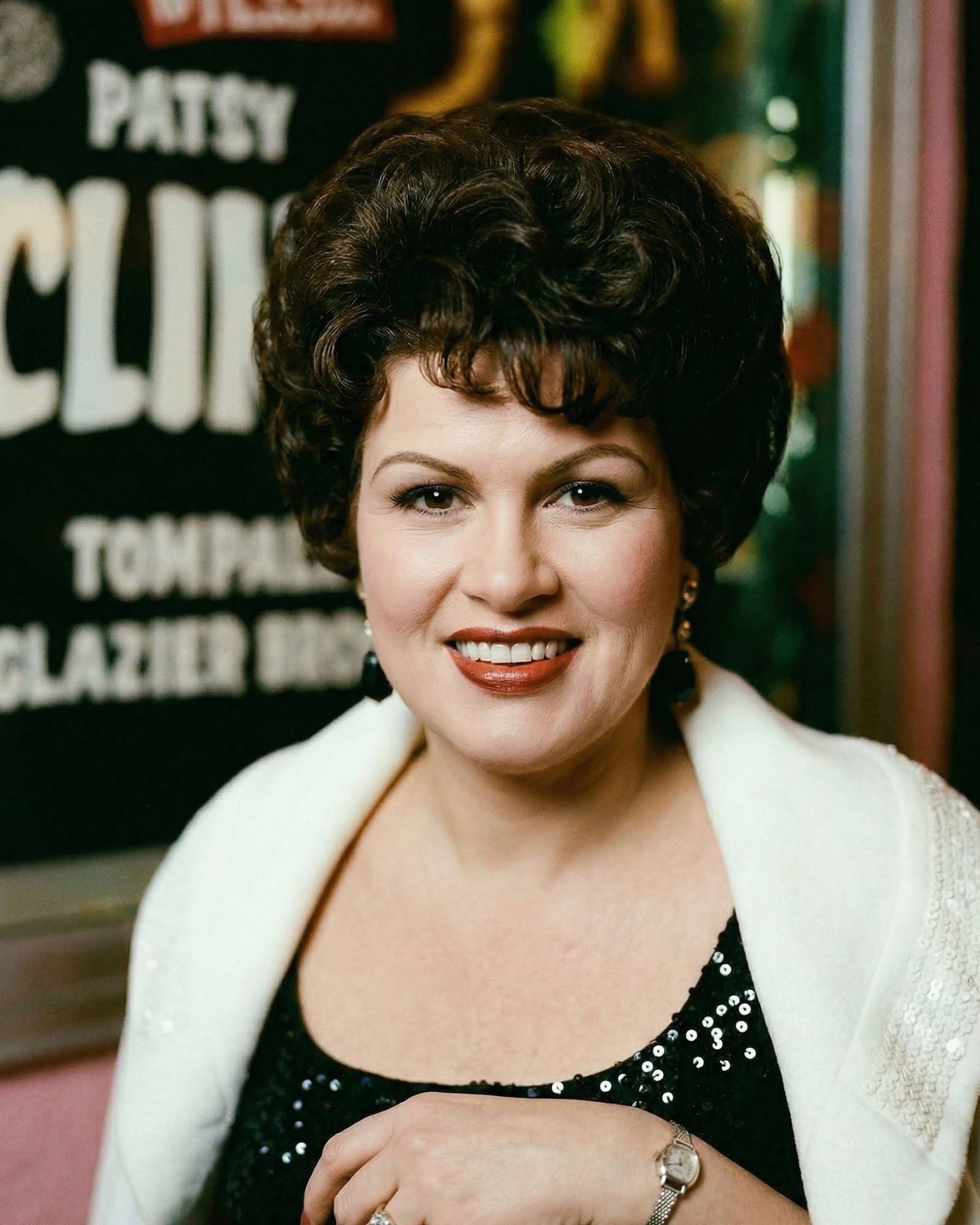
When Patsy Cline Came Home One Last Time
Winchester, Virginia, had known her long before the records, the radio play, and the songs that made her famous. Before she became Patsy Cline, she was Virginia Patterson Hensley, a girl from South Kent Street who grew up in a working-class home and learned early that life could be hard, restless, and unfair. After her father left the family, she quit school as a teenager and went to work to help her mother keep things together. By night, she sang wherever she could find a chance.
That small-town beginning mattered, because it explained why Winchester never quite stopped claiming her. Patsy Cline was born there in 1932 and raised in and around the town that shaped her early life. She was not handed an easy road. She built her way forward with a voice that could sound strong and fragile at the same time, and with a determination that kept pushing her beyond the limits other people expected.
A voice that reached far beyond Winchester
By the early 1960s, Patsy Cline had become one of the most important voices in country music. Songs like “Walkin’ After Midnight,” “I Fall to Pieces,” and “Crazy” turned her into a star, even though her run at the top lasted only a few short years. Her success was fast, bright, and deeply human. She sang with feeling that made the lyrics seem lived-in, as if every line had passed through real heartbreak and real hope.
But fame did not erase where she came from. Winchester still remembered the girl from South Kent Street, the one who worked for a living and sang at night. That memory would matter in the saddest moment the town had ever known.
The return home
Patsy Cline died on March 5, 1963, in a plane crash in Tennessee, at only 30 years old. Her burial took place on March 10, 1963, in Winchester. On that day, nearly 5,000 people came to mourn her. The funeral home was so crowded that its doors had to be closed, leaving many people outside. Along the route to Shenandoah Memorial Park, mourners stood quietly by the road, and many men removed their hats as the hearse passed.
Winchester had once known her as Virginia. On the day of her burial, it seemed the whole town came to remember that girl again.
There was sorrow in that farewell, but also something else: recognition. People were not only grieving a famous singer. They were honoring someone who had once belonged to their streets, their neighborhoods, and their memory of what it meant to struggle and rise at the same time.
What the town carried forward
Patsy Cline was buried that day, but Winchester did not bury the story. The thousands who lined the road were saying goodbye to a legend, yes, but also to a local daughter whose life had never stopped echoing back to the town that first knew her. Her music remained, but so did the image of Virginia Patterson Hensley: the girl from South Kent Street who worked, sang, and kept going.
In the end, that may be why her funeral felt so large and so quiet at once. People came not just for the star, but for the memory of the young woman Winchester had watched grow up. And when they stood there with bowed heads, they were mourning both Patsy Cline and the girl she had once been.