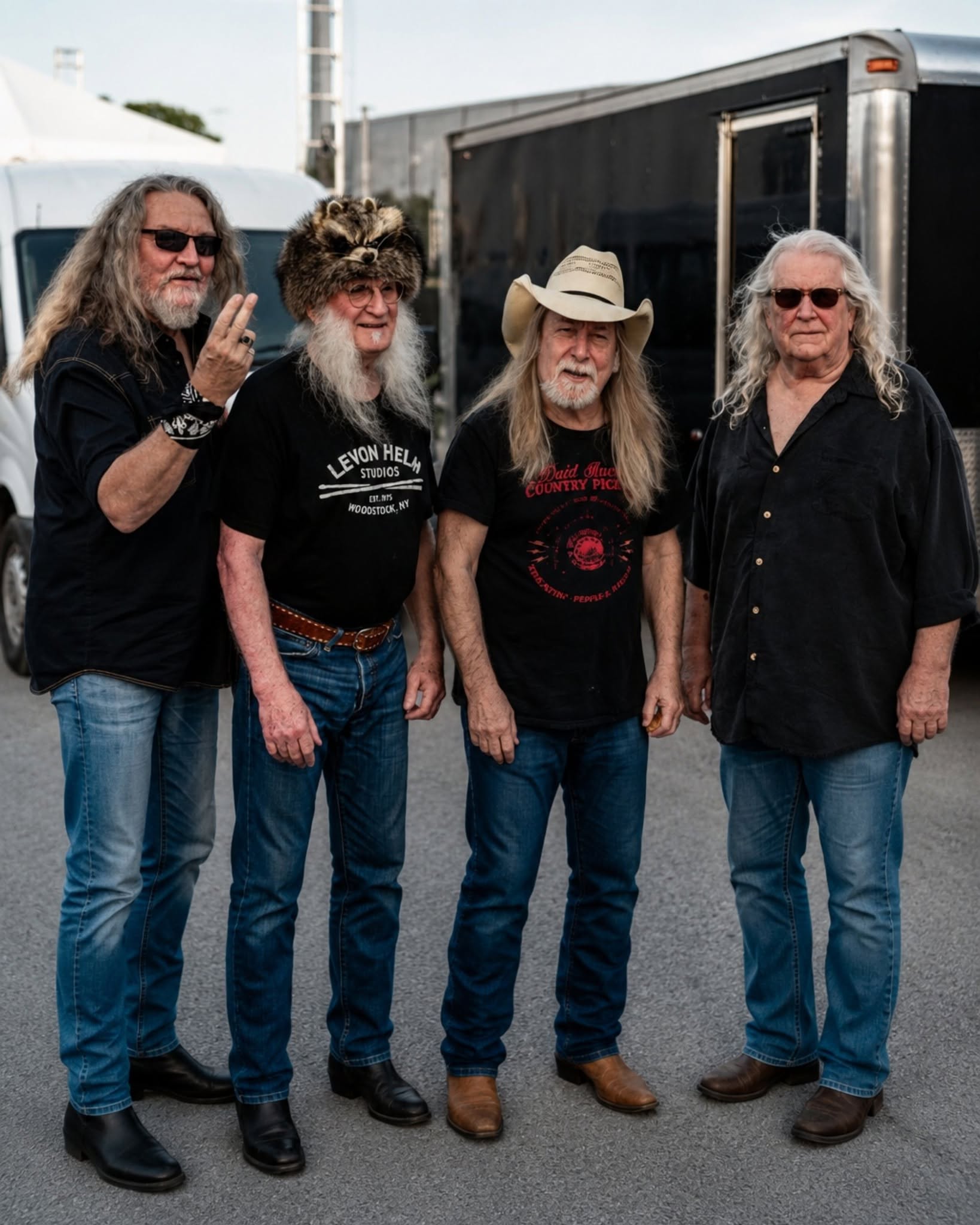
The Kentucky Headhunters and the Farmhouse Sound Nashville Couldn’t Wash Away
Nashville has always loved a good story, especially the kind that can be polished, packaged, and placed neatly under bright lights. But every once in a while, a band comes along that refuses to be dressed up for the room. The Kentucky Headhunters were that kind of band. They did not arrive looking like they had been assembled for radio. They sounded like they had been surviving together for years, because they had.
The story begins in 1968, long before anyone was talking about platinum records or award shows. In small-town Kentucky, Richard Young, Fred Young, Greg Martin, and Anthony Kenney were playing together as Itchy Brother. They were young, loud, and stubborn in the best way. Their music carried a mix of country, Southern rock, and raw front-porch energy that did not seem interested in fitting a neat category. It sounded lived-in, like a truck with a dent in the door and a radio that still worked perfectly.
What made their story different was the time. This was not a band that caught fire overnight. There was no instant breakthrough, no magical weekend in Nashville, no executive suddenly announcing that the future had arrived. Instead, there were years of rehearsals, local gigs, lineup changes, arguments, and the kind of persistence that only comes from people who truly believe in what they are making. They kept going while country music became smoother, shinier, and easier to sell.
By 1986, the band had evolved into The Kentucky Headhunters. The lineup now included Richard Young, Fred Young, Greg Martin, Ricky Lee Phelps, and Doug Phelps. Together, they stepped into the studio with a sound that felt almost rebellious simply because it was honest. Their album, Pickin’ on Nashville, did not sound like it had been designed in a meeting. It sounded like a group of long-haired Kentucky boys walking straight into the room and refusing to apologize for who they were.
Their music did not clean itself up for Nashville. Nashville had to deal with the mess.
That attitude became their strength. When “Walk Softly on This Heart of Mine” started getting attention, people listened. When “Dumas Walker” and “Oh Lonesome Me” followed, the response grew even louder. Suddenly, this farmhouse band from Kentucky was impossible to ignore. The album went double platinum. A Grammy followed. CMA and ACM honors came next. The irony was impossible to miss: the industry that often prefers control was celebrating a band whose power came from not being controlled at all.
What The Kentucky Headhunters proved was simple but important. They did not win because they became cleaner. They won because they stayed themselves long enough for the world to catch up. Their rough edges were not a problem to fix; they were the reason people believed them. The guitars had bite. The harmonies felt real. The whole thing had the feeling of a band that had earned every note through years of playing together as a family, as friends, and as brothers in noise.
That is why their story still matters. It is not just a tale of success. It is a reminder that sometimes the thing the industry overlooks is the very thing audiences are starving for. The Kentucky Headhunters did not come from a label office. They came from Kentucky roads, long practice sessions, and a sound that refused to be scrubbed clean. And when Pickin’ on Nashville finally hit, it was not a quiet correction. It was a statement.
The farmhouse got louder than the office, and Nashville had no choice but to listen.