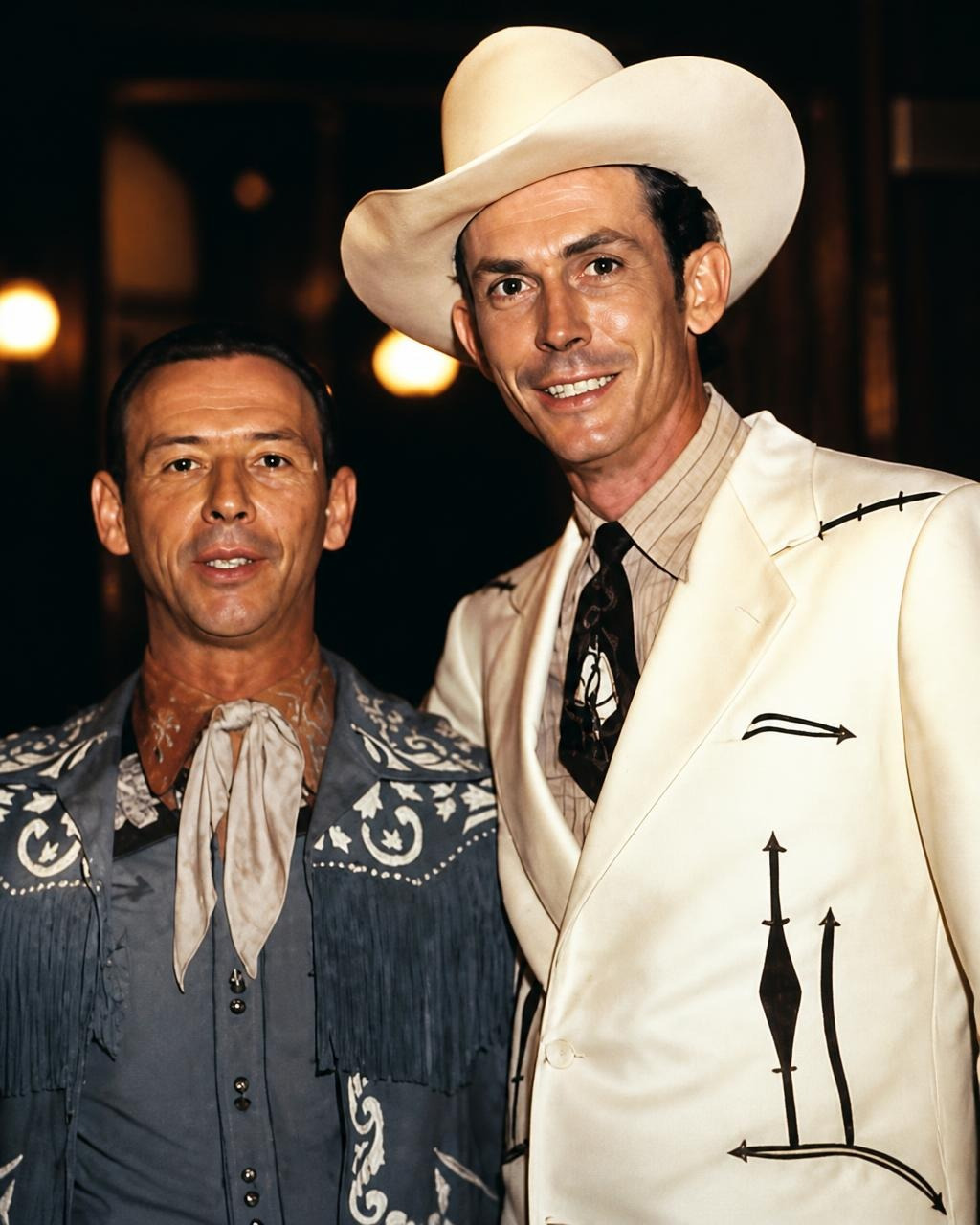
Hank Snow and the Night the Opry Finally Opened Its Door
On January 7, 1950, Hank Snow stepped into the Grand Ole Opry with something more stubborn than confidence: patience. For years, he had chased the right break in America, trying different places and different stages, but the big one had never quite locked into place. That night, at last, the door opened. Ernest Tubb had helped keep Hank Snow’s name in front of Opry management, and the invitation finally came through. Hank Snow was ready, even if the room still had to learn who he was.
The introduction carried extra weight because the man who announced Hank Snow was Hank Williams, a singer who was already becoming one of the most powerful voices in country music. Williams had joined the Opry in June 1949, only months earlier, after the success of “Lovesick Blues” made it impossible to ignore him. By early 1950, he was young, famous, and fully at home on that stage.
Hank Snow performed “Brand On My Heart,” and the reaction was not the roar of a sensation. It was more measured than that, more cautious. The applause came back politely, the kind of welcome that says a crowd is listening but has not yet decided how much it cares. That was part of the truth of the Opry: even legends sometimes arrive quietly.
What followed, though, changed everything. Snow did not walk away from that stage after one polite night. He kept returning, and the songs kept building his reputation. His early American success eventually came with “I’m Moving On,” which became a major hit in 1950 and 1951, helping turn him from a hopeful newcomer into a lasting Opry presence.
There is a sharper edge to this story, too. Three years after introducing Hank Snow, Hank Williams was dead. He died on January 1, 1953, at the age of 29. The loss gave the earlier moment a haunting shape in hindsight: the rising star who welcomed another singer would not live long enough to see the full arc of his own legend.
Hank Snow, meanwhile, kept going. He kept showing up, kept singing, and kept proving that persistence can matter as much as applause. Over time, the room that once greeted him politely learned to hear the strength in his voice. The man who once waited years for the Opry became one of its enduring names, still tied forever to that January night when the right people finally said yes.