Merle Haggard: The Self-Taught Country Giant Who Built a Legend By Ear
He wrote 38 number-one hits, sold millions of records, won the respect of Nashville, and never learned to read sheet music. Merle Haggard did not follow the usual path to greatness. He followed instinct, memory, hard living, and a kind of musical honesty that cannot be taught in a classroom.
For many fans, Merle Haggard will always represent something rare: a man who turned raw experience into timeless songs. He was not polished in the early days, and he was never interested in pretending to be someone else. He simply listened, learned, and played until the sound in his head matched the sound coming from his hands.
A Boy in a Boxcar With a Guitar
Merle Haggard was twelve when his older brother Lowell handed him a used guitar. That gift changed everything. There were no lessons, no printed music, and no formal training. Just a boy living in a converted railroad boxcar, surrounded by hardship, trying to make sense of the world through strings and rhythm.
Merle Haggard did not begin as a prodigy with a plan. He began as a curious kid with a secondhand instrument and a deep need to make sound. He listened closely, tried things, made mistakes, and kept going. Every note came from trial and error. Every chord was discovered, not assigned.
Learning From Records, Not Teachers
While many musicians in Nashville studied theory and memorized notation, Merle Haggard learned from Jimmie Rodgers records and the rhythm of freight-train whistles. He listened until he understood the feel of a song. He could not always name the chords he was playing, but he knew when they were right.
Merle Haggard heard music first and understood it later. That may be one reason his songs felt so direct, so natural, and so deeply human.
There is something powerful about that kind of learning. It is not neat or academic, but it can be deeply personal. Merle Haggard developed a style rooted in instinct. He did not chase perfection. He chased truth. That approach gave his music a plainspoken strength that listeners trusted right away.
Why His Songs Connected So Strongly
Merle Haggard’s music worked because it sounded lived in. The heartbreak, the pride, the regret, and the resilience in his songs did not feel manufactured. They felt earned. Fans heard a voice that understood struggle without dressing it up.
His self-taught approach also helped him sound different from everyone else. When a musician learns by ear, there is often a looseness and a freedom in the playing. Merle Haggard brought that freedom into country music and made it part of his signature sound. He did not need to impress people with technical jargon. The songs did the work for him.
The Telecaster Behind Glass
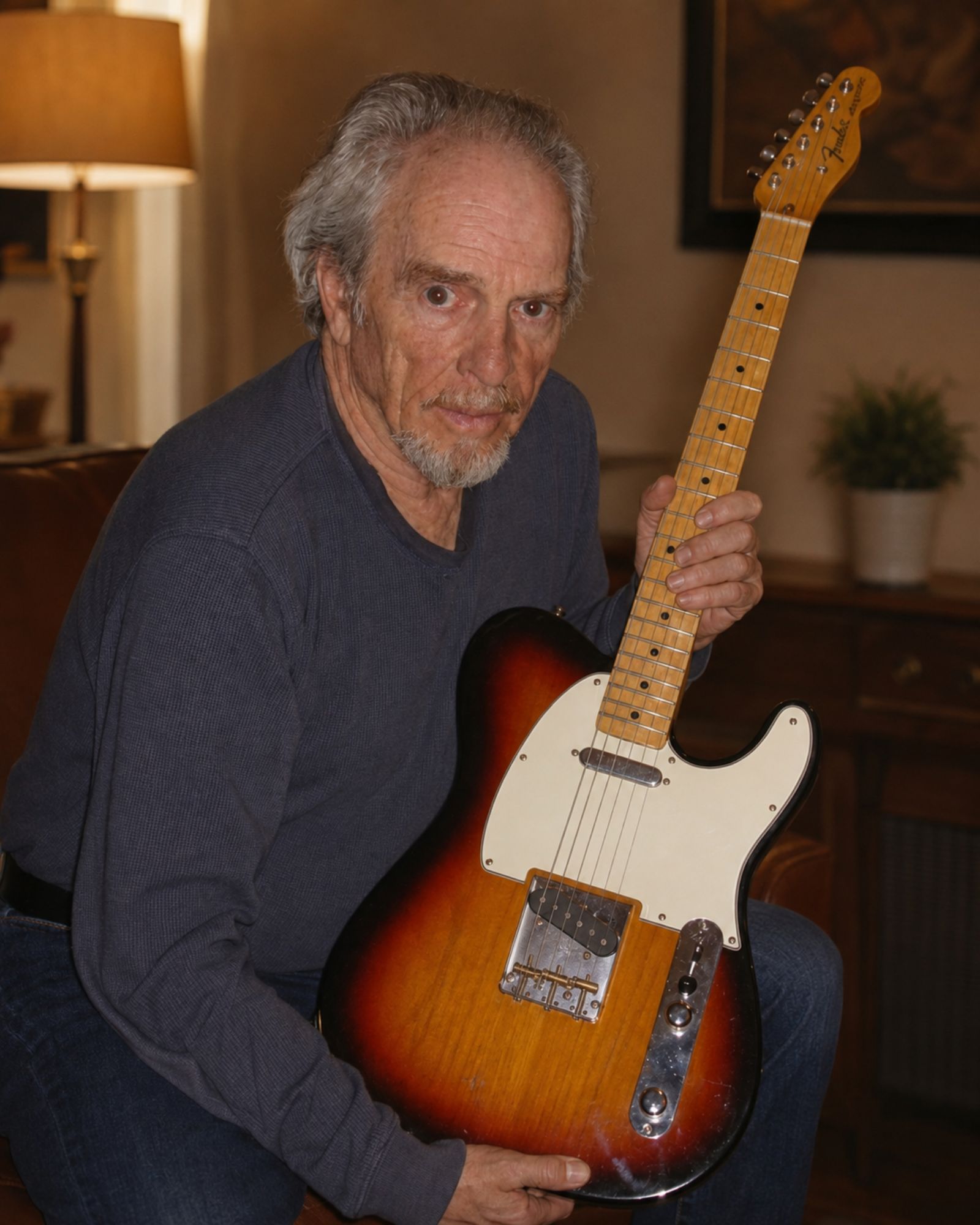
Today, Merle Haggard’s Fender Telecaster sits under glass in Nashville, preserved as a piece of country music history. It is the kind of artifact fans stare at quietly, knowing that it once helped shape some of the most important recordings in American music.
But the story of that guitar is more than a museum display. It carries the marks of a working musician’s life. Before Merle Haggard handed it over, he treated it like what it truly was: an instrument that had traveled with him through stages, sessions, and long nights of making music the only way he knew how.
What did Merle Haggard do the night before giving it up? He reportedly played it one more time, not for an audience, but for himself. That detail matters. It says everything about the bond between a musician and the tool that helped shape his voice. For Merle Haggard, a guitar was never just an object. It was a partner.
A Legacy Built on Instinct
Merle Haggard eventually became one of the most decorated artists in country music, earning a place in the Country Music Hall of Fame and receiving a Grammy Lifetime Achievement Award. Those honors reflect more than commercial success. They recognize an artist who changed the emotional language of country music.
He proved that formal training is not the only path to mastery. Some musicians study charts. Others study life. Merle Haggard studied life, then turned it into songs that millions could understand. That may be the real reason he lasted so long: he never sounded fake.
Did Merle Haggard Hear Something Others Missed?
The question still lingers. Do self-taught musicians hear something trained ones never will? Maybe the answer is not that one method is better than another. Maybe it is that a self-taught player listens for feeling first, and feeling is often what people remember.
Merle Haggard’s story reminds us that music is not only about rules. It is about instinct, persistence, and the courage to keep playing before you fully understand what you are doing. He did not need to read sheet music to become a giant. He simply needed a guitar, a sharp ear, and a life full of songs waiting to be told.