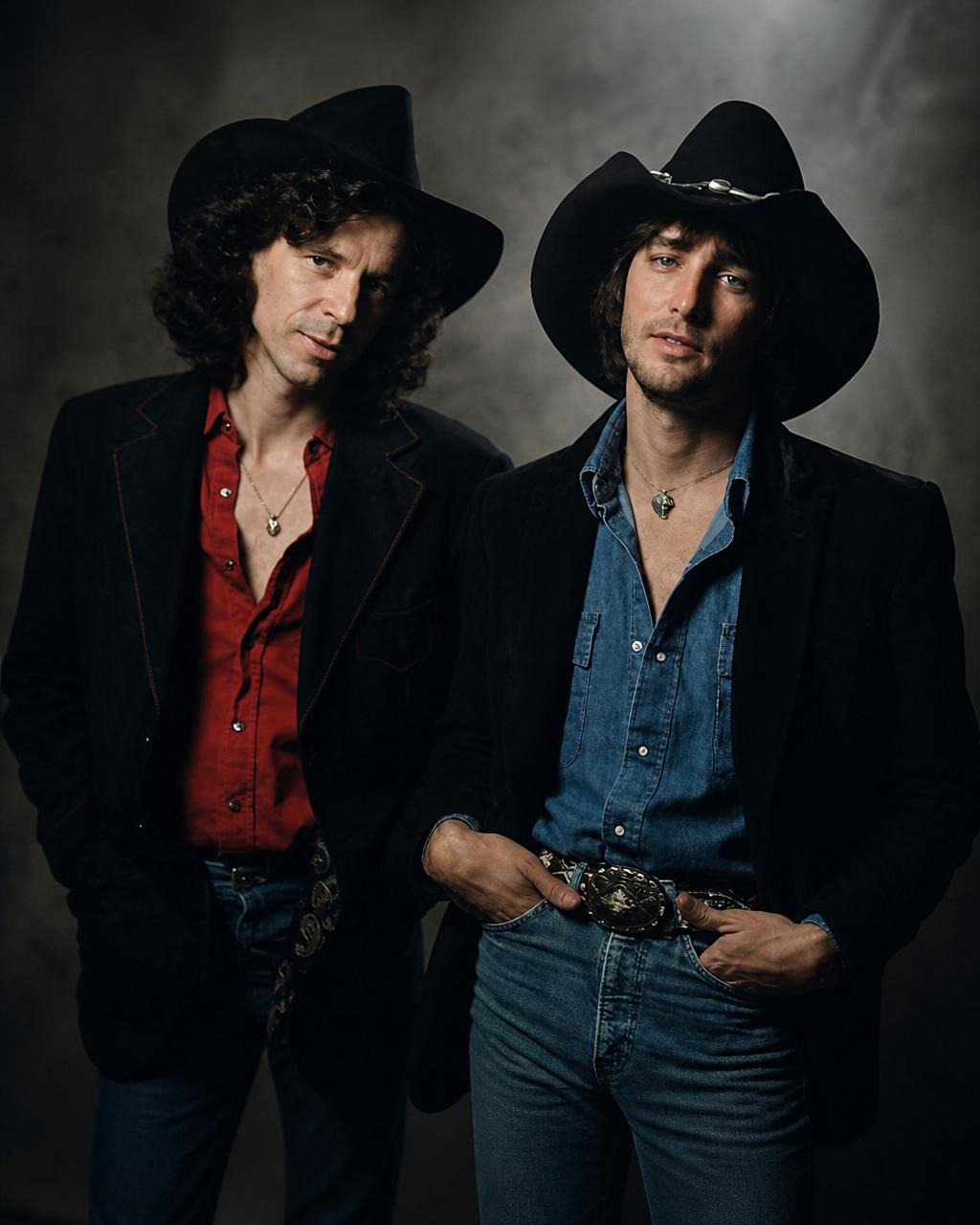
Before He Wrote 76 Songs for George Strait, Dean Dillon Stood Beside Another Broken Country Singer
In 1982, Dean Dillon was not yet the name country fans would one day connect to some of the most important songs in modern country music. He was still a young writer trying to find his footing, still learning how to turn raw feeling into something a radio could carry. He had talent, but talent alone does not guarantee a place in Nashville. Sometimes it only gets you in the room.
Gary Stewart was in a different kind of fight. He was already known for that aching, unmistakable voice, the kind that sounded as if it had lived through every hard lesson before the rest of the world had even woken up. But by the early 1980s, Stewart was trying to hold on to relevance in a town that often moves on before the story is finished. He was one of country music’s great wounded singers, and wounds do not always help a career.
RCA saw something in the pairing and brought Dean Dillon and Gary Stewart together. The result was Brotherly Love, a duet that never tried to sound polished or overproduced. It was not a flashy comeback. It was not designed like a headline. It felt more like a late-night conversation between two men who understood disappointment, regret, and the strange comfort of singing through it.
A Song That Felt Lived-In
Brotherly Love had the smoky atmosphere of a honky-tonk after midnight. The kind of song where the air feels heavy and the jukebox seems to know too much. It carried the sound of brothers heading toward trouble, not because they wanted it, but because trouble had become part of the landscape. There was dust in it, grit in it, and a kind of quiet honesty that made it stand out.
Dean Dillon and Gary Stewart did not sound like men pretending to be tough. They sounded like men who had already learned what toughness cost. That is part of why the record still lingers in the memory of country fans who have found it. It never begged for attention. It simply existed with an unshakable truth.
Country music often remembers the hit, but sometimes the most human song is the one that barely leaves a trace.
Dean Dillon Before the Legacy
Today, Dean Dillon is widely known as one of George Strait’s secret weapons, a songwriter whose pen helped shape the sound of traditional country for decades. He wrote 76 songs for George Strait and helped create 11 number-one hits. Later, he would also co-write Tennessee Whiskey, a song that Chris Stapleton would turn into a modern anthem.
But none of that greatness arrived fully formed. Before the awards, before the catalog, before the songs that every country fan knows, Dean Dillon was still proving himself. Brotherly Love showed another side of that journey. It was not the start of his legend, but it was part of the road that led there.
For many songwriters, the early years are full of near-misses and quiet breakthroughs. A song may not become a classic right away. It may not even become a memory for the general public. Yet it can still teach the writer how to listen better, how to cut deeper, and how to make an honest line land with force. Dean Dillon learned those lessons in a time when Nashville was not handing out second chances freely.
Gary Stewart’s Place in Country Music
Gary Stewart never became the biggest star in the room, but he became something just as important: unforgettable. His voice carried sorrow without sounding weak. It carried heartbreak without turning sentimental. That was his gift. Even when the industry looked elsewhere, Gary Stewart remained a singer who sounded real.
Brotherly Love fit him because it did not ask him to be smooth. It asked him to be true. And truth was always Gary Stewart’s strongest currency. When he sang, the cracks in the voice were not flaws. They were part of the message.
The Song Nashville Never Knew How to Save
Nashville has always been good at building stars, but it has also been good at passing by artists who do not fit the moment. Some songs are too rough for the machine. Some voices are too bruised. Some collaborations arrive with all the right emotion and none of the commercial packaging. Brotherly Love belonged to that category.
It was a forgotten duet, but forgotten does not mean empty. It means overlooked. It means a song can still hold power even if it never gets the kind of attention that makes a career explode. That is what makes the story of Dean Dillon and Gary Stewart feel so moving. It reminds us that before an artist becomes a legend, there are often quiet chapters no one celebrates at the time.
Then time moved on, as it always does. Dean Dillon became the writer behind some of George Strait’s most beloved songs. Gary Stewart remained one of country’s most soulful, broken, and beautiful voices. And Brotherly Love stayed behind, like a small candle burning in a dark room, waiting for anyone who cared enough to look back.
That is the real story. Not just the future hits, not just the famous names, but the moment when two men stood together, one microphone between them, and made something honest enough to last.