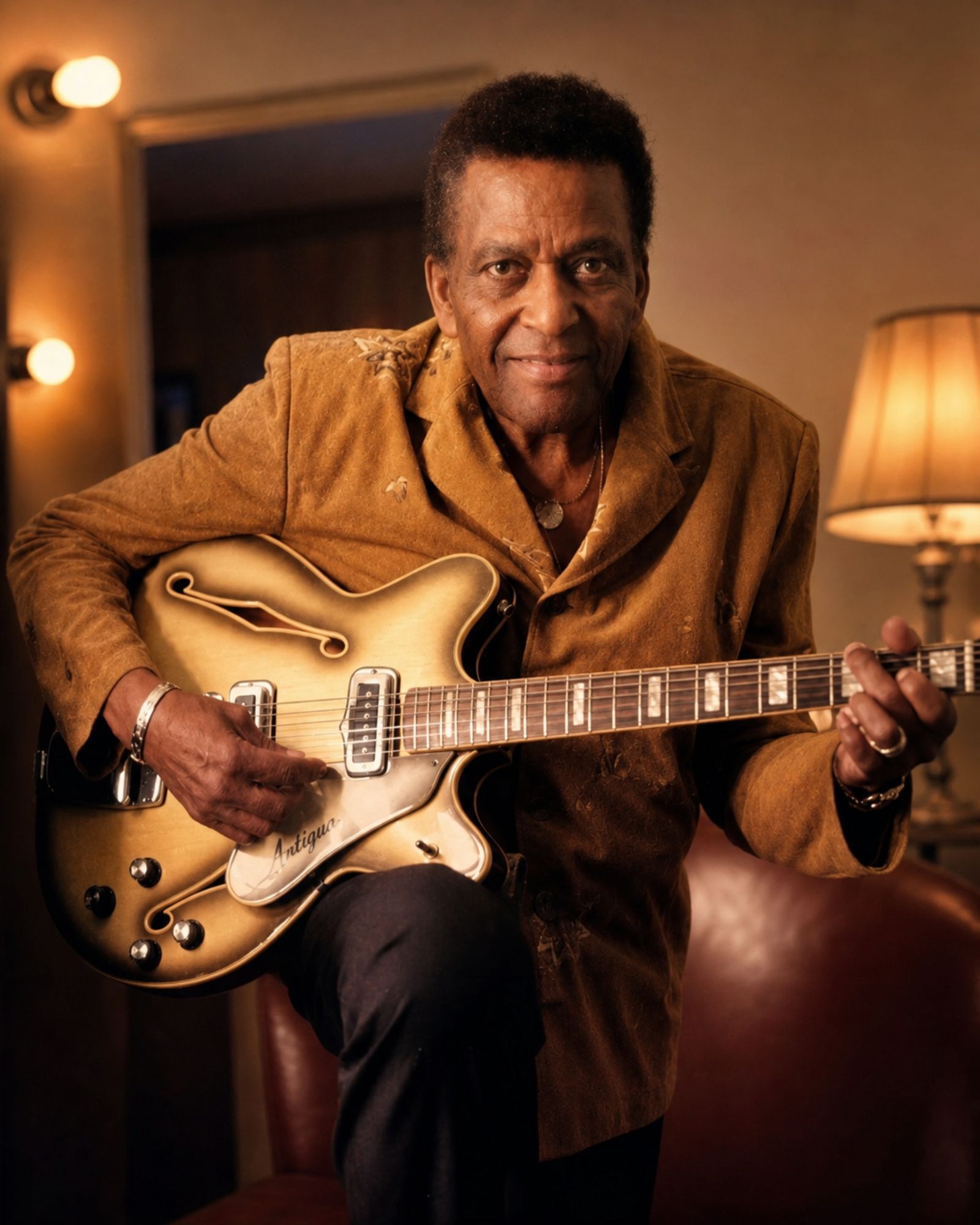
Charley Pride and the Last Song That Said Everything
When Charley Pride first stepped into country music, the industry did not know what to do with him. He had the voice, the timing, the charm, and the kind of natural ease that makes an audience lean in. But he also had something many executives saw as a problem instead of a gift: Charley Pride was Black.
In the 1960s, that fact made record labels nervous. They were so worried that listeners would reject a Black country singer that they released some of Charley Pride’s early records without putting his face on the cover. In a business built on image as much as sound, that decision said everything. The label was willing to sell the music, but not the man behind it.
Charley Pride did not respond with a speech. He responded with a song.
That was the quiet power of Charley Pride. He did not try to shout down the room. He walked into it, stood still, and let the music do the work. And when he sang, people listened. One performance after another, he proved that talent could break through prejudice, even when prejudice arrived first.
The boy from Mississippi
Charley Pride was born in Sledge, Mississippi, in 1934, the son of sharecroppers. He grew up with hard work, modest means, and a deep familiarity with the realities of rural life. Long before the awards and the applause, he was just a boy trying to find his place in a world that did not offer many easy paths.
Baseball came first for a while. Music came along too, as it often does in homes where radios carry both comfort and escape. Charley Pride had a natural ear and a warm, steady voice. He also had a strong sense of humor, something he would later use to disarm tension and make people feel at ease.
He eventually made his way toward music professionally, and country music was the style that fit him best. It matched the stories he knew. It matched the rhythm of ordinary lives. It matched his voice in a way that felt inevitable, even if the industry was not ready to admit it.
A career built one song at a time
Once Charley Pride began recording and performing, the results were impossible to ignore. He became one of country music’s biggest stars, with 30 number-one hits and more records sold at RCA than anyone except Elvis Presley. That is a stunning achievement in any era, but it feels even more remarkable when you remember how much resistance he faced before his audience ever saw his face.
Some people came to Charley Pride’s music because they were curious. Many came back because they were moved. His songs were direct, emotional, and honest without feeling forced. He sang about love, loss, hope, and home in a way that felt familiar to millions of listeners.
“I just want to sing good songs and make people feel something.”
That simple goal became a major career. Over time, Charley Pride earned three Grammy Awards and a place in the Country Music Hall of Fame. More importantly, he earned trust. He crossed barriers by being undeniably good at what he did, night after night, record after record.
The moment that changed everything
One of the most famous moments in Charley Pride’s career came with “Kiss an Angel Good Mornin’,” a song that became a defining hit in 1971. It was cheerful, catchy, and full of the easy confidence that Charley Pride could deliver so naturally. The song helped cement his place as a star, and for many fans, it became inseparable from his voice.
Decades later, that same song returned at a very different moment.
On November 11, 2020, Charley Pride appeared on the CMA stage at age 86 to accept a Lifetime Achievement Award. He told the audience he was nervous. That honesty made the moment feel even more human. Then he sang “Kiss an Angel Good Mornin’.”
His voice was not the same as it had been in his prime. Time had changed it, as time changes every voice. But what remained was unmistakable: the warmth, the ease, the kindness that always seemed to live inside the music. The room understood what it was hearing. This was not just a performance. It was a lifetime compressed into a few minutes.
Why that final performance mattered
Charley Pride passed away 31 days later, on December 12, 2020, at age 86. When people look back on that final CMA appearance, it does not feel like a farewell with a dramatic ending. It feels like a final reminder.
Charley Pride had spent his whole life answering doubt with excellence. He did it without bitterness on display. He did it without needing permission to belong. He did it by making country music sound like home to people who never expected him to be there.
That is why the last song hit so hard. It reminded everyone that Charley Pride had not simply broken a barrier. He had lived beyond it. He had become part of the music itself.
The lasting legacy of Charley Pride
Charley Pride’s story matters because it is about more than one man’s success. It is about who gets seen, who gets heard, and who gets underestimated. It is about an artist who was told, in one way or another, to stay behind the curtain, and who instead built a career strong enough to pull the curtain down.
He was a sharecropper’s son from Mississippi. He was a country star. He was a trailblazer who did not always announce himself as one. And on that last stage, singing the song that helped define his career, Charley Pride reminded the world of something simple and powerful: great music does not ask for permission to move people.
It just does.