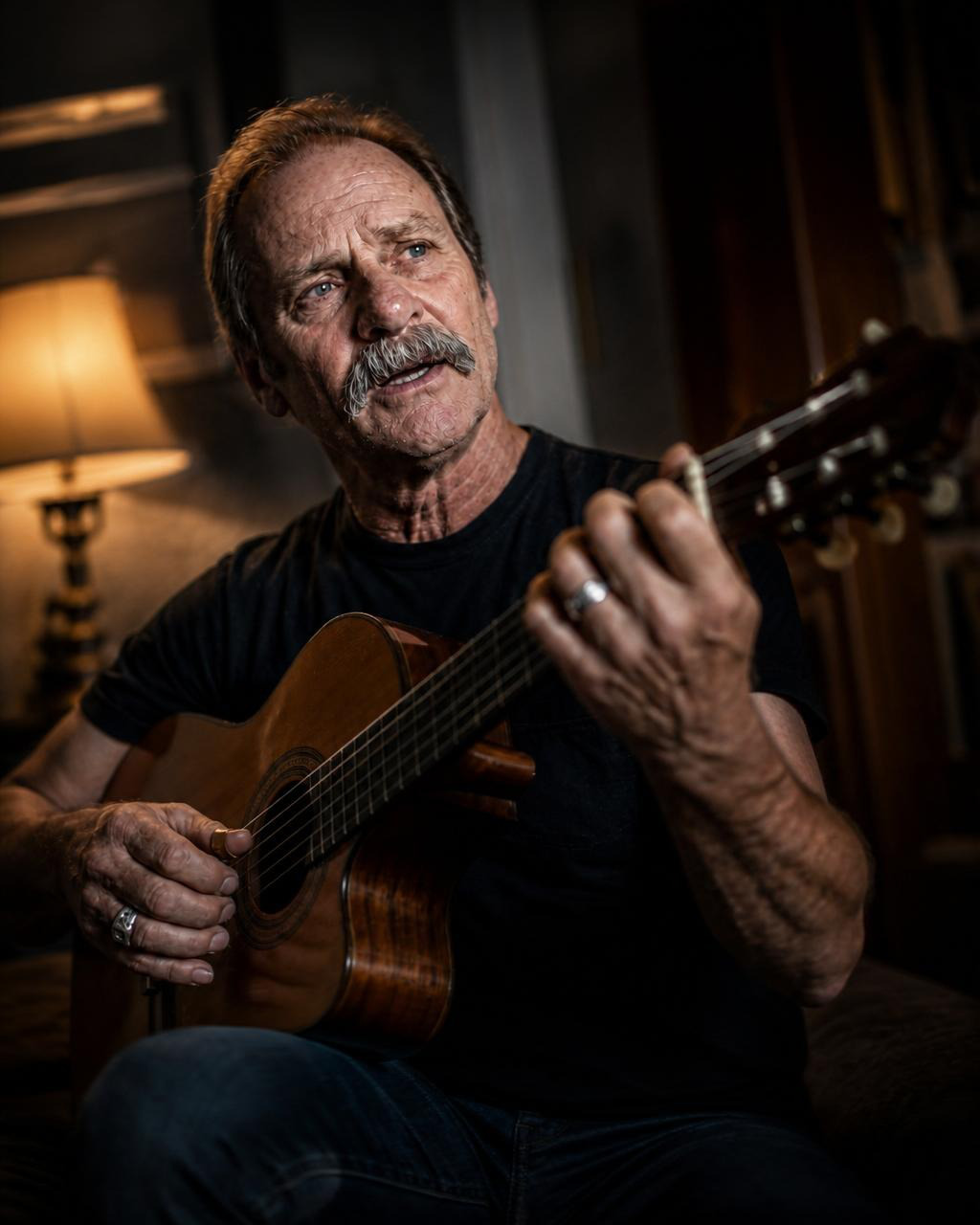
The Voice Nashville Nearly Forgot: The Life and Quiet Goodbye of Vern Gosdin
They held a public visitation for him at Mount Olivet Funeral Home in Nashville, but the funeral itself was private. That detail says a lot about the way Vern Gosdin left this world: surrounded by respect, mourned by those who truly understood him, and still somehow overlooked by the wider country music audience that should have known his name by heart.
Country music lost one of its greatest voices when Vern Gosdin died on April 28, 2009, at the age of 74. He had suffered a series of strokes, yet even in those final weeks he was still planning ahead, still working, still trying to prepare his tour bus for a CMA Festival appearance in June that would never happen. According to his administrative assistant, Dawn Hall, he had been independent until the end of that month, still giving instructions, still acting like the man in charge. That was Vern Gosdin all over. He did not stop being Vern Gosdin just because the world was ready to move on without him.
The singers who knew exactly what he meant
There are artists who become legends because the industry says so, and then there are artists whose greatness passes from one singer to another like a secret handshake. Vern Gosdin belonged to the second group. Tammy Wynette once said he was “the only other singer who can hold a candle to George Jones.” Josh Turner called him one of his unofficial vocal coaches. Jack Ingram said Chiseled in Stone was “as sad a country song as He Stopped Loving Her Today.”
Those were not casual compliments. They were statements of recognition from people who understood what it takes to carry a song with honesty. Vern Gosdin did not just sing notes; he made every line sound lived-in. His voice could sound broken, steady, lonely, and brave all at once. That kind of delivery does not come from technique alone. It comes from knowing pain, disappointment, love, and regret well enough to sing them without flinching.
“We will all miss Vern.” — George Strait
Five words. Simple, direct, and completely right. For a man who spent thirty years finding the exact right words for heartbreak, longing, and hard-earned truth, that short farewell fit him perfectly.
A career built on feeling, not flash
Vern Gosdin was never the loudest personality in the room, and he was never built for easy headlines. He did not depend on spectacle. He depended on songs that meant something. In a genre that often celebrates bigger names and brighter lights, he kept building a reputation the old-fashioned way: by singing so well that other singers stopped and listened.
Fans who loved Vern Gosdin did not love him by accident. They loved him because his music felt personal. He could sing about heartbreak without sounding theatrical. He could sing about regret without sounding preachy. He had the rare gift of making sorrow sound clean, almost plainspoken, as if he were telling you the truth late at night when nothing else mattered.
That is why so many people outside the hardcore faithful barely noticed when he died. He was not always the face on the magazine cover. He was not always the biggest commercial story. But to the people who knew, he was essential. He was the kind of singer other singers used as a benchmark.
The loss Nashville should have seen coming
After Vern Gosdin passed away, fans circulated a petition calling for Nashville to place his name in the Country Music Hall of Fame. It never happened. For many supporters, that omission felt painful, even baffling. How does a voice that influenced so many remain on the outside of the institution that exists to honor country music’s greatest contributors?
Maybe that question will always hang in the air. Some artists are celebrated immediately. Others are understood only after they are gone. Vern Gosdin belonged to the second category, even though he had already earned the respect of the first. He got the admiration of peers, the devotion of fans, and the nickname that said everything: The Voice.
That nickname mattered because it was both praise and understatement. It did not try to explain his style or package his legacy neatly. It simply acknowledged what people felt when they heard him sing. Vern Gosdin did not need a lot of introduction. He needed one note, one line, one heartbreakingly honest verse. Then the room understood.
What remains after the applause fades
In the end, Vern Gosdin did not receive the grand farewell show some believed he deserved. He did not get the Hall of Fame tribute that fans fought for. What he got was something quieter, and maybe more meaningful in its own way: the devotion of musicians, the gratitude of listeners, and the memory of a voice that could still stop people in their tracks.
There are artists who are remembered for controversy, and artists who are remembered for sales. Vern Gosdin is remembered for something harder to fake and easier to feel. He is remembered for truth. That is why the singers knew. That is why the fans kept asking for more. That is why George Strait could say so much in so few words.
Country music did not just lose Vern Gosdin in 2009. It lost one of the purest voices it ever had. And for those who really listened, that loss still echoes.