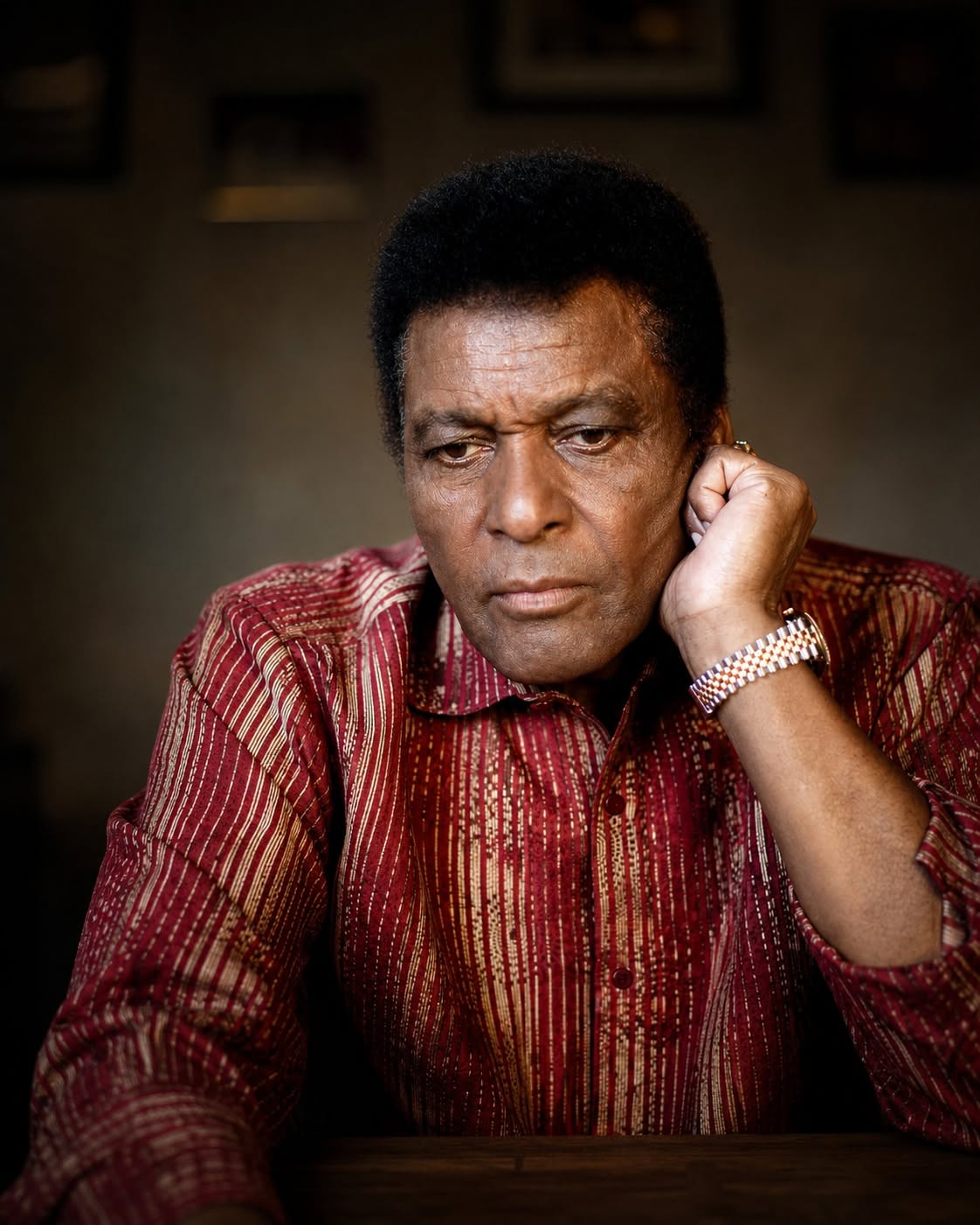
Charley Pride: The Lone Trailblazer Country Music Never Truly Followed
They called him the Jackie Robinson of country music, but Jackie Robinson had teammates. Charley Pride walked alone for fifty years.
That is the part of the story that still lingers. Not just that Charley Pride became a star, but that he did it in an industry that often seemed unsure how to make room for him. His voice was warm, smooth, and steady enough to cut through skepticism. His presence was calm, even when the room around him was not.
Charley Pride was born in Mississippi, the son of a sharecropper, and grew up picking cotton before music ever became a career path. He did not arrive in Nashville with privilege or protection. He arrived with talent, discipline, and a voice that could hold a crowd still. His first singles were sent to radio without a photo, a quiet decision that let listeners hear the music first and confront their assumptions later. For a while, it worked beautifully.
Then people saw the face behind the voice.
Charley Pride was a Black man making country music at a time when that alone was enough to make some radio stations hesitate. A few stopped playing his records after they realized who he was. But the music was already doing the hard work. The voice was too good to ignore, too honest to dismiss. Once listeners got past their own prejudice, many stayed for the song.
A Career Built on Talent and Endurance
Charley Pride did more than survive. He dominated. Over the course of his career, he earned twenty-nine number one hits and fifty-two Top 10 singles. He became one of RCA’s biggest country stars, second only to Elvis Presley in record sales for the label. He was named CMA Entertainer of the Year and later entered the Country Music Hall of Fame. Those are not small achievements. They are the kind of accomplishments that define an era.
And yet his success carried a strange burden. Nashville often pointed to Charley Pride as proof that country music had opened its doors. But one man is not an open door. One man is an alibi.
That was the quiet truth behind his fame. While Charley Pride stood at the center of celebration, the larger industry remained slow to change. His success was real, but it was also lonely. For more than fifty years, he remained essentially the only Black artist with a major-label country career. He was admired, respected, and often praised, but rarely joined by a wave of others who should have followed.
Charley Pride was not just a superstar. He was a test the industry passed in public and failed in practice.
The Voice That Made Prejudice Sound Foolish
There was something almost disarming about Charley Pride’s singing. His baritone was rich but unforced, confident but never showy. It carried both strength and kindness, which made it difficult to argue with. Even people who had not expected to love country music found themselves repeating his songs, humming along, and forgetting whatever assumptions they had brought into the room.
That may be why his music lasted. It was not built to challenge people with anger. It challenged them by being better than the boundaries around it. Charley Pride did not need to lecture the audience. He simply sang, and the song did the rest.
Still, the loneliness remained. He was celebrated as a breakthrough, yet his breakthrough did not automatically become a bridge for everyone else. That contradiction followed him for decades.
The Final Bow
On November 11, 2020, Charley Pride took the stage at the CMA Awards to accept a lifetime achievement award. He sang “Kiss an Angel Good Mornin’” one last time. For many viewers, it was a moment of joy and gratitude, a chance to see a legend honored while he could still receive it. For others, it carried a sharper edge. It was impossible not to think about the long road behind that song, and the long silence around everything it represented.
One month later, Charley Pride died from COVID-19 at the age of eighty-six. Nashville mourned loudly. Tributes came quickly, and rightly so. But then came the quieter part, the part where people had to sit with what his life had been trying to say all along.
Charley Pride was proof of excellence. He was also proof of how much excellence can be asked to carry when an industry is unwilling to change fast enough. He opened doors with his music, but he had to walk through them alone.
Why Charley Pride Still Matters
Charley Pride’s story is not only about country music. It is about who gets welcomed, who gets watched, and who is expected to prove something that others are allowed to inherit. It is about the difference between applause and inclusion.
His legacy remains powerful because it is complicated. He was a giant, but he was not a full answer. He was beloved, but not surrounded. He was honored, but not fully followed.
That is why Charley Pride still matters. Not because he was the first to face hardship, and not only because he succeeded despite it. He matters because his life revealed the gap between recognition and real change. And because, even now, his voice still makes the truth sound unmistakable.