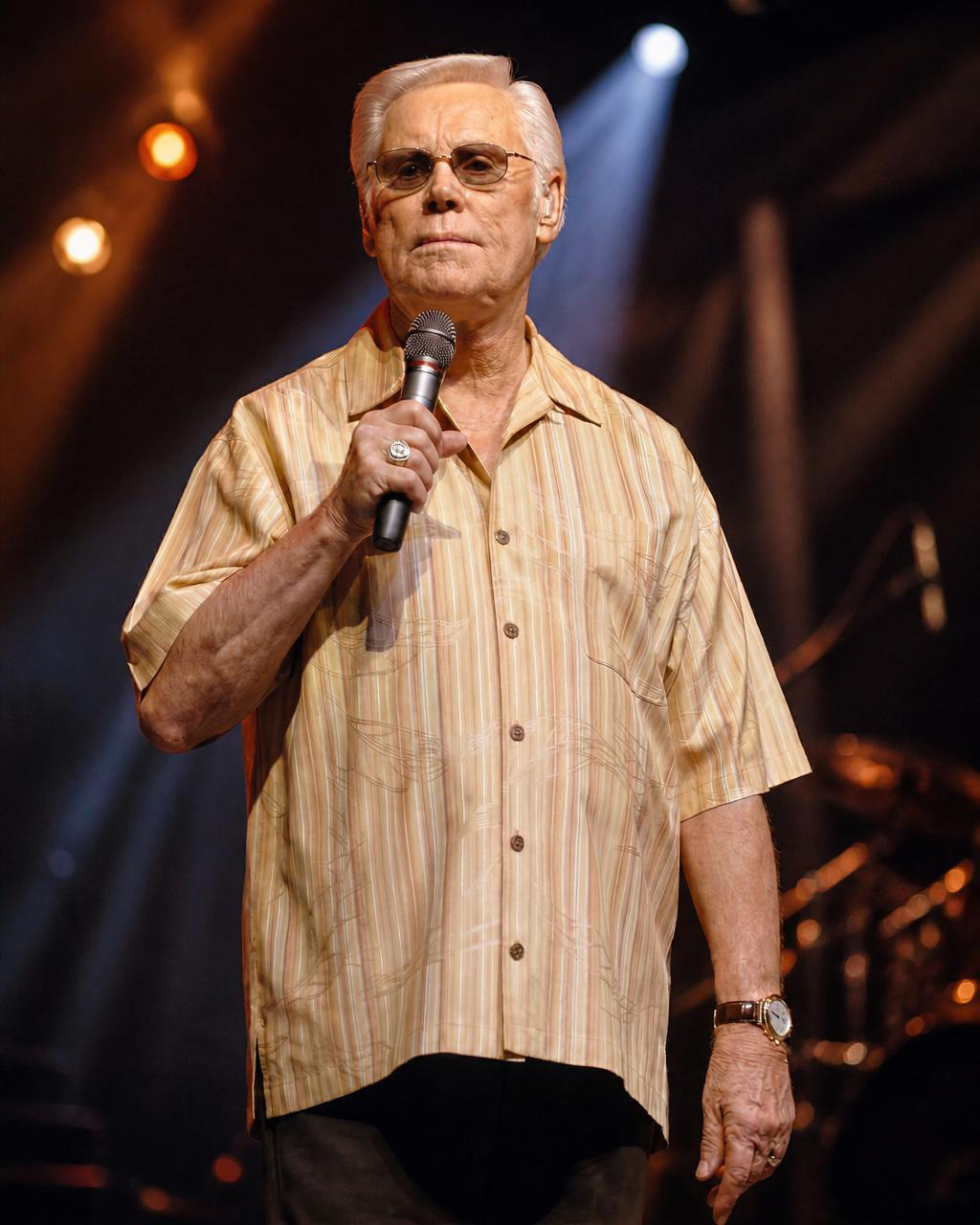
George Jones and the Night Nashville Turned “No Show” into a Farewell
George Jones carried a nickname that was never meant as a compliment. “No Show Jones” followed him for years, born from the hard reality that he often missed concerts because of drinking and chaos. Fans paid for tickets, promoters filled rooms, and sometimes the stage stayed empty. It was a painful part of his story, and nobody close to the legend could pretend otherwise.
But George Jones was never just the worst night of his life repeated over and over. He was also one of country music’s most influential voices, a singer whose phrasing could make a simple line feel like a confession. By the time the 1990s rolled around, newer stars and slicker sounds had changed the radio landscape, and George Jones was no longer the center of every conversation. Still, he kept working, kept touring, and kept carrying the weight of a career that had already become part triumph, part warning.
A farewell planned on his own terms
Before he died, George Jones had planned a final concert for November 22, 2013, at Nashville’s Bridgestone Arena. It was supposed to be his goodbye show, the last chance for fans to see him take the stage one more time. Instead, George Jones died on April 26, 2013, seven months before that date arrived.
Nashville did not cancel the moment. It reimagined it.
On November 22, 2013, the city gathered for Playin’ Possum: The Final No Show, a tribute built around the irony that had shadowed George Jones for decades. More than 100 artists appeared, and reports described a nearly four-hour celebration that stretched through dozens of songs. The lineup brought together country veterans, newer stars, and even a few unexpected names, all paying tribute to a man whose voice had crossed boundaries for generations.
An empty chair, a crowded stage
The most haunting image from the night was not a flashy duet or a surprise guest. It was the empty rocking chair placed onstage, a quiet reminder that George Jones was gone but still present in every note. That detail gave the tribute a strange emotional power. The insult that once followed him became the title of his farewell. The joke, after a lifetime of missed appearances, became a final act of respect.
Maybe that is what made the night feel honest. Nashville did not erase George Jones’ failures. It stood beside them and said that greatness and regret can live in the same name.
For longtime fans, the evening was not about pretending George Jones had been perfect. It was about acknowledging the full arc: the missed shows, the recovery, the stubborn return, the songs that lasted longer than the scandal. In the end, the city gave George Jones something he had spent years chasing in his own way — a room full of people who showed up for him, even after he was gone.
That is why the question still lingers. Was Nashville honoring George Jones too late, or exactly on time? Maybe both. Maybe the only honest answer is that the farewell made sense because it told the truth, and George Jones’ life had never belonged to anything less.