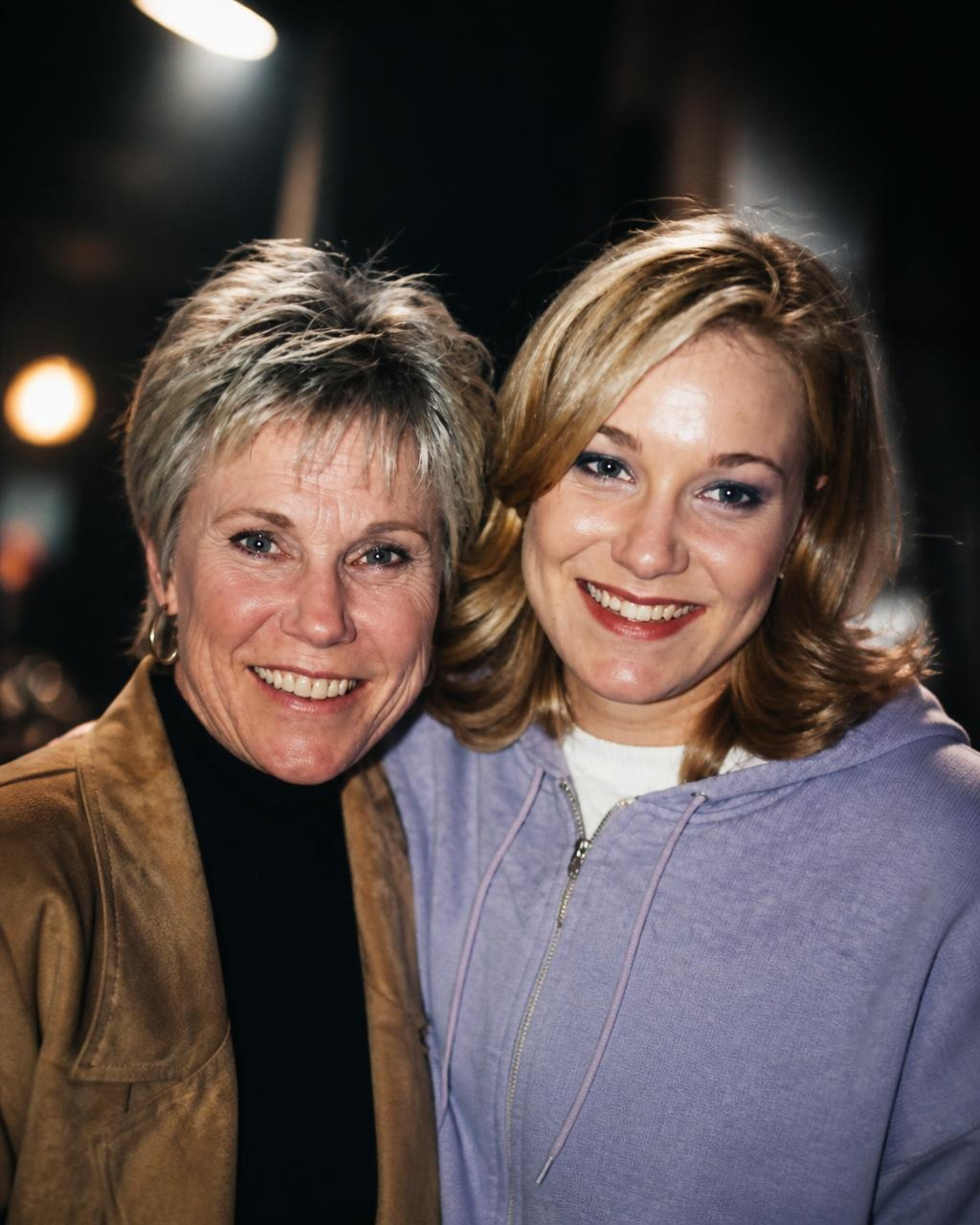
When Anne Murray Sang “Nobody Loves Me Like You Do” Again
In December 1984, “Nobody Loves Me Like You Do” became Anne Murray’s ninth number one country hit in America. At the time, it was just a polished duet with Dave Loggins, a tender love song that fit neatly into the radio world it was made for. For years, that was all most listeners knew it to be: warm, direct, and complete in itself.
But family life has a way of changing the meaning of a song without changing a single word. Anne Murray’s daughter, Dawn Langstroth, was only five years old when the record reached the top. Decades later, the same song would return with a different kind of weight, carrying memory, fear, relief, and survival in the same melody.
A Family Story That Could No Longer Stay Hidden
Long before the reunion recording, Dawn Langstroth had been fighting anorexia nervosa, and the struggle was heavy on everyone around her. In January 1999, the family stopped keeping it private. Anne Murray and Dawn Langstroth spoke publicly, side by side, in a moment that made clear this was not a story about celebrity polish. It was a family trying to face something painful without pretending it was simple.
That same month, Anne Murray performed a benefit for Sheena’s Place, the Toronto center that had supported them. The performance mattered not because it solved everything, but because it showed what care can look like when a family is willing to ask for help and accept it.
Some songs begin as performances and end up becoming testimony.
For Dawn Langstroth, recovery also meant finding a voice of her own. Over time, Dawn Langstroth began writing and recording under her own name, building a path that was separate from her mother’s fame but never separate from the life they shared.
The Song Returns as a Duet
In 2007, Anne Murray recorded “Nobody Loves Me Like You Do” again, this time with Dawn Langstroth, for Duets: Friends & Legends, the last album of new material Anne Murray ever released. Nothing in the lyric changed. The words stayed exactly the same, but the meaning did not.
What had once sounded like a straightforward love song now sounded like something deeper: a mother and daughter meeting each other across years of fear and endurance. The voice answering line for line was no longer just a duet partner beside Anne Murray. It was the daughter Anne Murray had once been afraid of losing, standing there in the song with her own voice intact.
Why the moment still resonates
Part of the power of this story is its honesty. It does not pretend music fixed everything. It does not turn struggle into a neat ending. Instead, it shows how a song can hold two lives at once: the original recording and the later return, the public hit and the private history, the memory of fragility and the fact of survival.
By the time Anne Murray and Dawn Langstroth sang together in 2007, “Nobody Loves Me Like You Do” had become more than a hit from 1984. It had become a family document, quietly reshaped by time. And for anyone who knows what it means to hold on to someone through illness, fear, and change, that final duet lands not as nostalgia, but as something much harder earned: grace.