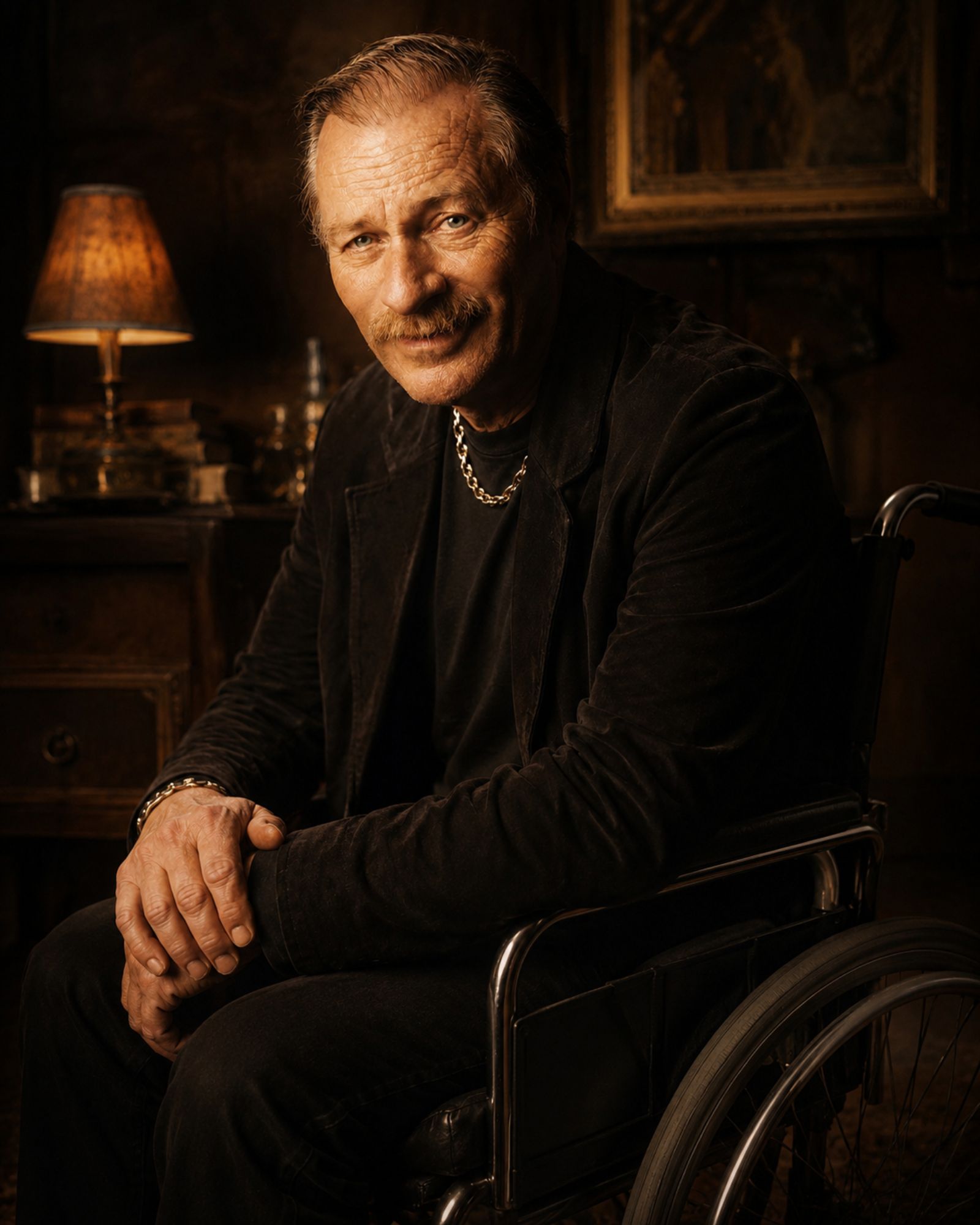
The Stroke Took His Strength. Nashville Made Him Wait. But Vern Gosdin Still Had the One Thing Country Music Couldn’t Fake.
Vern Gosdin did not arrive in country music like a star. He arrived like a man who had lived too much, loved too hard, and learned early that life rarely hands out comfort for free. Born in Woodland, Alabama, one of nine children, he grew up in poverty with gospel music echoing through a small church where his mother played piano. Long before Nashville began calling him The Voice, Vern Gosdin had already learned the most important lesson of his career: real music does not need to shout. It only needs to be honest.
That honesty came from somewhere deep. In a home where every day asked for resilience, Vern Gosdin understood struggle before he ever stepped onto a stage. He did not sing like someone trying to impress a crowd. He sang like someone trying to tell the truth about what it felt like to lose, to hope, to keep going anyway. That gift would follow him through every part of his life, even when the road got lonely.
A Quiet Detour from the Dream
Like many artists, Vern Gosdin spent years trying to make Nashville open its doors. But the journey was not smooth, and success did not come quickly. In the 1970s, after years of chasing the music business, he stepped away and started a glass business in Georgia. It was a normal life, a quieter one, and maybe for a while it seemed safer than the constant waiting and disappointment that can wear down even the strongest person.
Still, music never really left him. Heartbreak has a way of staying close to the voice of someone who knows how to feel deeply. Vern Gosdin may have traded the spotlight for an ordinary workday, but the songs were still there, waiting in the background, ready to return when life gave him enough pain and wisdom to sing them properly.
Some voices are built from training. Vern Gosdin’s voice was built from survival.
The Return That Sounded Like a Confession
By the late 1980s, Vern Gosdin returned with songs that did not sound written in a hurry. They sounded lived in. They sounded like memories that had been sitting around too long and finally demanded to be heard. “Do You Believe Me Now” carried regret with heartbreaking calm. “Set ’Em Up Joe” found pain hiding behind a barroom toast. And then came “Chiseled in Stone,” the song that changed everything.
Released in 1988, “Chiseled in Stone” did not try to win people with force. It won them with recognition. The lyrics felt like the kind of truth a person only understands after life has already delivered its lesson. In 1989, the song won CMA Song of the Year, and it made perfect sense. The award was not just for the writing. It was for the honesty, the stillness, and the ache that made every line land like a confession.
That was Vern Gosdin’s power. He did not perform feelings. He revealed them.
When Life Kept Testing Him
In 1998, a stroke struck Vern Gosdin and took away some of his strength. For a man whose entire identity had been built around carrying emotion through a song, it was a cruel blow. Many people would have faded from view, and many would have stopped. But Vern Gosdin was not built for easy endings.
Even after the stroke, he kept writing and singing. That choice mattered. It showed that his gift was never just talent; it was determination. He understood that music was not only about what the body could do, but about what the spirit refused to surrender. Nashville may have made him wait. Life may have slowed him down. But the truth in his voice remained untouched.
The One Thing Country Music Couldn’t Fake
Country music has always rewarded honesty, but Vern Gosdin carried a version of it that could not be manufactured. It was in the cracks of his voice, in the way he let a line sit just long enough to hurt, in the way he sounded like a man who had actually been there. That cannot be faked. The audience knows it. The heart knows it even faster.
On April 28, 2009, Vern Gosdin died in Nashville at the age of 74. The loss felt larger than a career ending. It felt like the closing of a chapter in country music that belonged to plainspoken truth, quiet heartbreak, and songs that did not need polish to be powerful.
They called him The Voice, and that name fit. But it was never only about vocal control or style. Vern Gosdin was called The Voice because when he sang, heartbreak stopped pretending it was fine. He gave pain a melody, gave loneliness a name, and gave country music something it will always need: the sound of a man telling the truth.