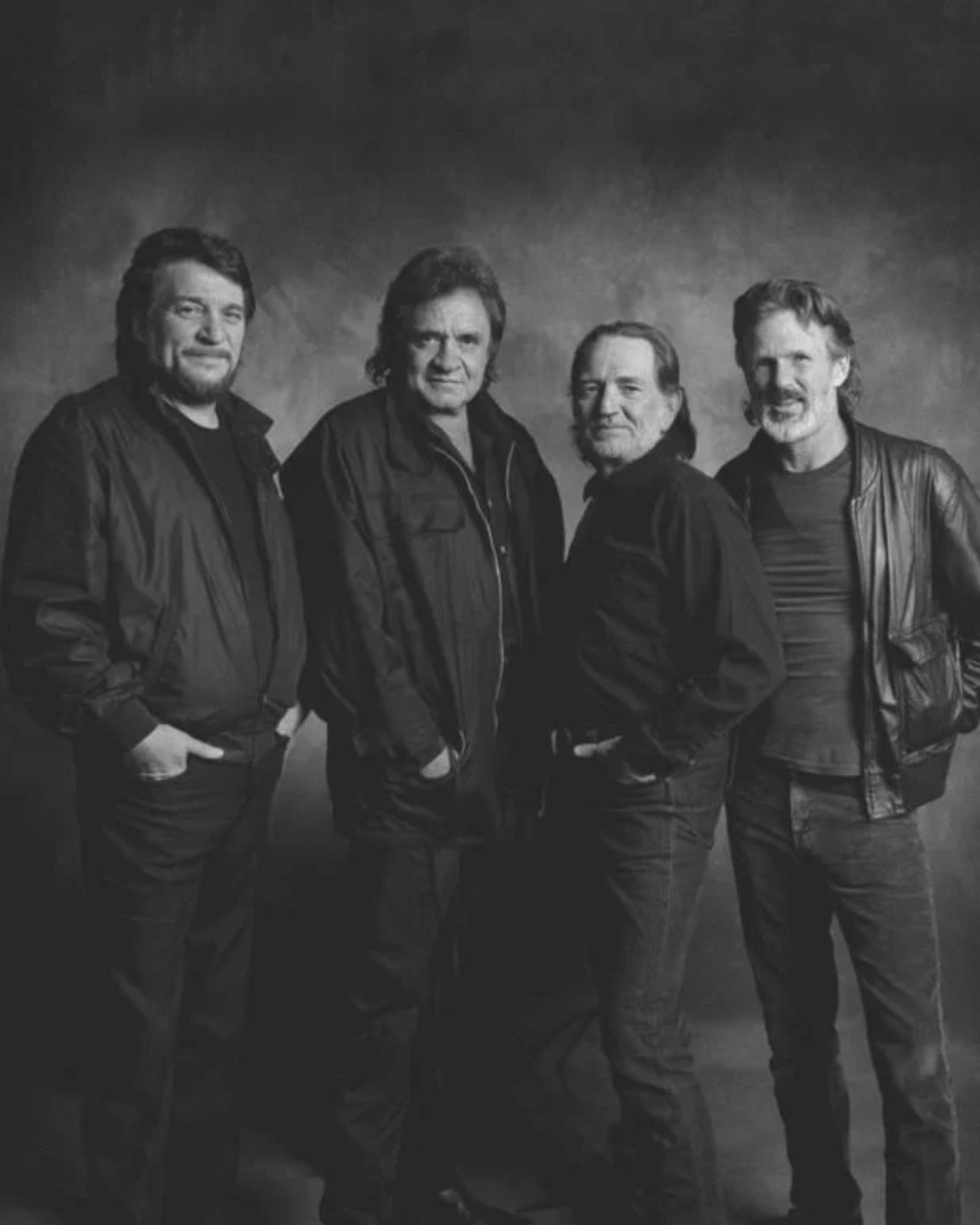
Five years before Johnny Cash, Waylon Jennings, Willie Nelson, and Kris Kristofferson recorded “The Last Cowboy Song,” Willie Nelson had already sung it alongside another country legend. But when The Highwaymen brought the song back in 1985, something changed in the lyrics.
It was only one line. Yet that small change connected four remarkable careers to a song about the disappearance of the American cowboy.
And behind it was a songwriter whose influence on outlaw country went much deeper than many listeners realize.
The Song Began With Ed Bruce
In 1980, Ed Bruce released “The Last Cowboy Song,” written with Ron Peterson. Willie Nelson joined Ed Bruce on the recording, which reached No. 12 on Billboard’s country chart.
Ed Bruce was already familiar with the cowboy’s place in American music. The singer and songwriter had built a career around stories of independence, wandering, and the complicated lives of people who preferred open spaces to ordinary routines.
But “The Last Cowboy Song” was different from a simple celebration of the Old West.
The lyrics pictured a cowboy living in a changing country. Open land had become fenced property. Familiar cattle trails had given way to highways and commercial transportation. The legendary figure celebrated in Western paintings and novels was becoming harder to find in everyday life.
Rather than describing one man’s death, the song mourned the gradual disappearance of an entire way of living.
Before The Highwaymen, There Was Another Recording
Willie Nelson’s involvement in 1980 was not the song’s only connection to the future supergroup.
In 1982, Waylon Jennings recorded “The Last Cowboy Song” for WWII, the album released under the names of Waylon Jennings and Willie Nelson. The recording placed the song in the outlaw country circle several years before The Highwaymen’s debut.
By 1985, Johnny Cash, Waylon Jennings, Willie Nelson, and Kris Kristofferson had joined forces as The Highwaymen. Their first album, Highwayman, featured “The Last Cowboy Song” as its second track.
With four recognizable voices sharing the performance, the song gained another dimension.
Waylon Jennings brought a weathered, commanding delivery. Kris Kristofferson contributed a songwriter’s understated approach. Willie Nelson supplied a familiar, unmistakable vocal style. Johnny Cash added spoken narration that gave the recording another layer of gravity.
For listeners who had followed these artists through the 1960s and 1970s, the combination was especially meaningful.
The One Line That Changed
The most interesting difference appears in a verse that acknowledges the people singing about the cowboy.
In Ed Bruce’s 1980 recording, the line refers to Willie Nelson, Waylon Jennings, and the narrator, Ed Bruce, as performers who sing about the old cowboy.
The Highwaymen’s 1985 version changes the names.
Willie Nelson’s verse now identifies Johnny Cash, Waylon Jennings, and Kris Kristofferson alongside Willie Nelson as the performers remembering the cowboy.
It is a small adjustment, but the effect is striking.
The original song had connected Ed Bruce and two country stars to the disappearing cowboy tradition. The later recording placed all four Highwaymen directly inside that same story.
The lyrics did not claim that the singers were actual frontier cowboys. Instead, the names connected a modern country group to an older American legend.
And for listeners who associated Johnny Cash, Waylon Jennings, Willie Nelson, and Kris Kristofferson with independence and artistic freedom, that connection carried considerable weight.
The Other Cowboy Anthem Ed Bruce Helped Create
There is another connection that makes the history of “The Last Cowboy Song” especially interesting.
Years earlier, Ed Bruce and Patsy Bruce had written “Mammas Don’t Let Your Babies Grow Up to Be Cowboys.” Ed Bruce recorded the song first in 1975.
In 1978, Waylon Jennings and Willie Nelson turned it into a No. 1 country hit. The performance later earned the pair a Grammy Award for Best Country Vocal Performance by a Duo or Group.
Both songs explored the cowboy’s restless identity, but from different directions.
“Mammas Don’t Let Your Babies Grow Up to Be Cowboys” examined the difficulties of loving and understanding independent men.
“The Last Cowboy Song” looked beyond the individual to the changing world around the cowboy.
Two different songs. Two different perspectives. And Ed Bruce helped create both.
Why The Highwaymen’s Version Still Matters
When The Highwaymen recorded “The Last Cowboy Song,” the group was not simply reviving an old country number. Johnny Cash, Waylon Jennings, Willie Nelson, and Kris Kristofferson brought decades of musical history into the performance.
Each artist had followed a distinctive path. Together, the four voices gave the song an added sense of experience and reflection.
That is why the 1985 recording can feel so personal. It is a song about watching the world change, performed by musicians who had already witnessed country music change dramatically.
Ed Bruce and Ron Peterson wrote the story. Willie Nelson helped introduce it in 1980. Waylon Jennings carried it into another recording in 1982. And in 1985, The Highwaymen gave it a lasting place in the group’s shared legacy.
The cowboy in the song may have belonged to a fading American past. But the music ensured that the story would continue to be heard.