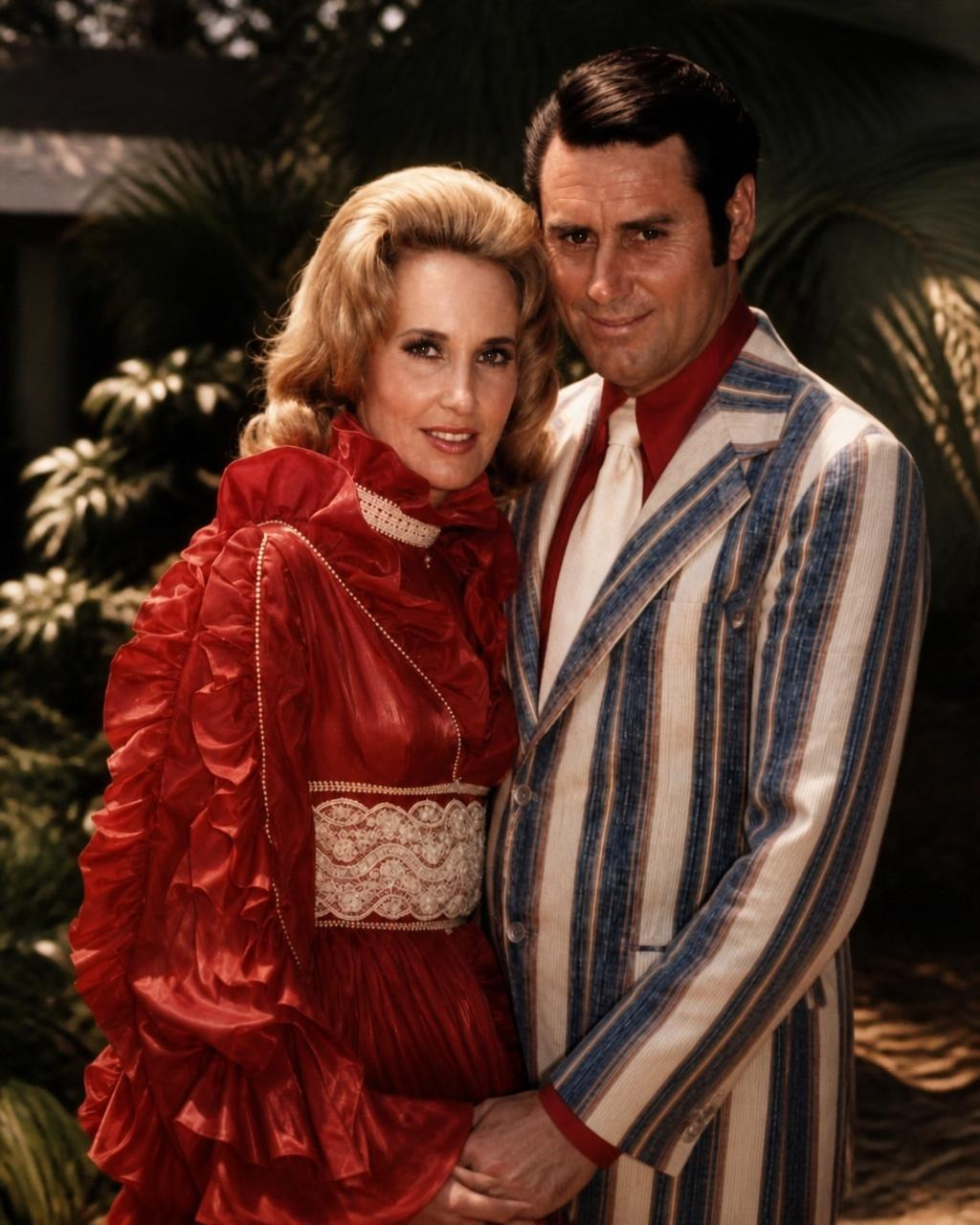
Tammy Wynette Thought She Had Written a Pretty Love Song. Millions Decided She Had Written a Surrender.
When “Stand By Your Man” reached No. 1 in 1968, it entered a country in the middle of a cultural argument. The women’s liberation movement was rising, and Tammy Wynette suddenly found herself cast as something she had never intended to be: the voice of quiet submission.
That reaction followed her for years, but the song itself began in a much smaller place. Tammy Wynette and producer Billy Sherrill wrote it quickly during a Nashville session, in roughly 15 minutes. What came out was not meant as a political statement. To Tammy Wynette, it was a straightforward love song about standing by the person you love, even while knowing no one is perfect.
That distinction mattered to Tammy Wynette, because the public meaning of the song soon drifted far beyond her original intent. Many listeners heard an instruction to stay silent, forgive everything, and endure anything. The title became shorthand for a traditional idea of womanhood, and Tammy Wynette was often treated as if she had personally authored that entire worldview.
In reality, the story became bigger than the recording itself. Epic Records helped shape that larger argument when it used a Billboard advertisement describing the single as Tammy Wynette’s “answer to women’s lib.” That marketing line turned a personal song into a national flashpoint. What had been framed as a love song was suddenly being used as a cultural emblem.
To Tammy Wynette, the song was never a command to be a doormat. It was about loyalty, not surrender.
That misunderstanding stuck because the song was strong enough to survive it. “Stand By Your Man” made Tammy Wynette a legend, but it also pinned a lasting label on her public image. For the rest of her life, she defended the song against readings she said were never hers in the first place.
Looking back, the tension around the record feels almost inevitable. A woman wrote about love in a country music session, a label gave it a political frame, and an era hungry for symbols turned it into a debate. Tammy Wynette did not write a manifesto. She wrote a song about devotion. But once the world heard it, the world heard much more.
That is why “Stand By Your Man” remains unforgettable. It is not only a famous hit from 1968. It is also a reminder of how quickly a simple idea can be rewritten by the culture around it, and how an artist can spend a lifetime explaining a song that everyone else decided to interpret for her.