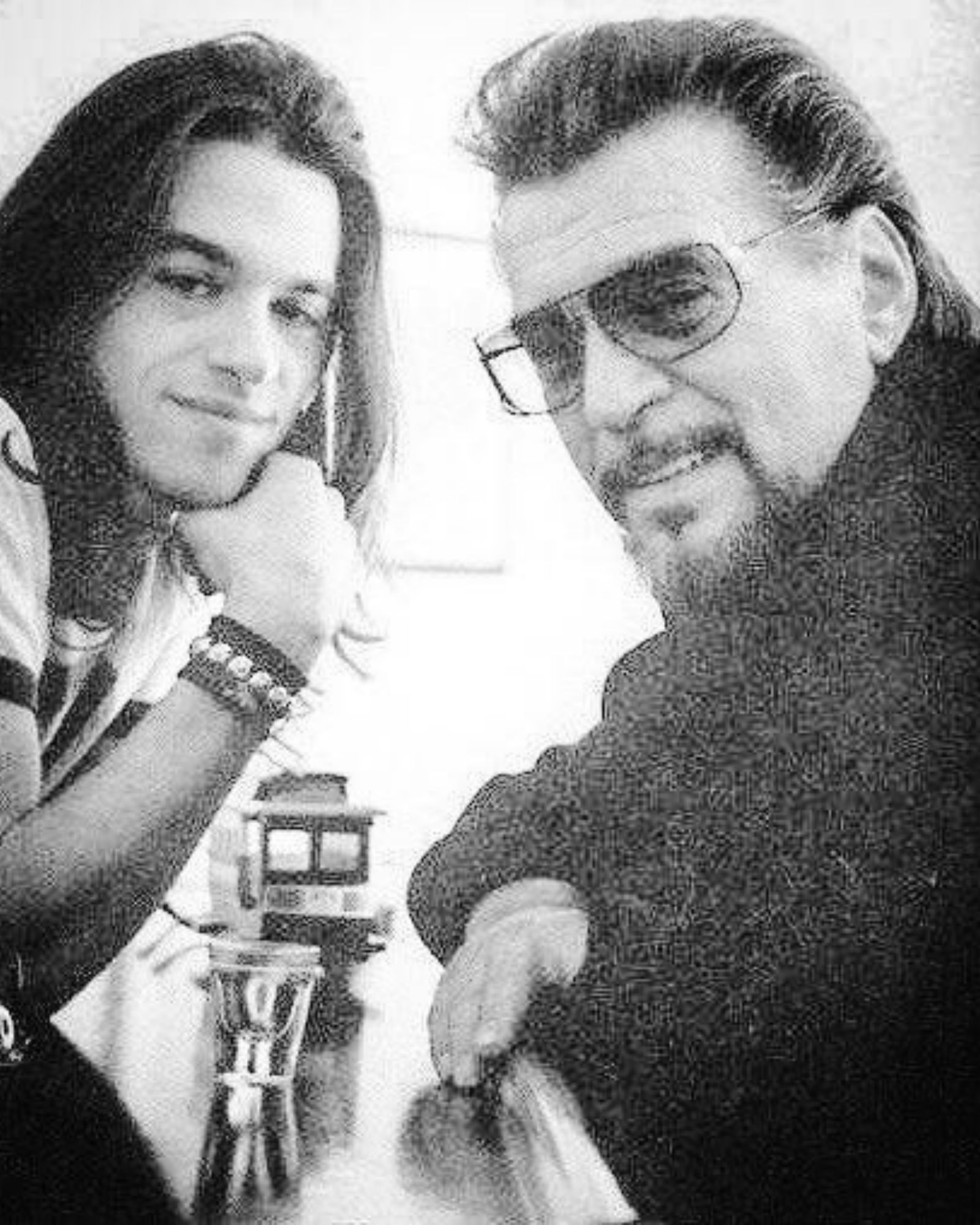
When Waylon Jennings passed away on February 13, 2002, at the age of 64, country music lost one of its most unmistakable voices. But for Shooter Jennings, the loss was far more personal. The man who helped change Nashville’s rules was also a father whose lessons would continue shaping a son’s life long after the music stopped.
Waylon Jennings left behind legendary recordings, Grammy Awards, and a place in the Country Music Hall of Fame. Yet one of the most meaningful things Waylon Jennings passed down was something no award could measure: the courage to be an individual.
Years later, Shooter Jennings would prove just how powerful that lesson had been.
The Advice Waylon Jennings Gave a Young Shooter Jennings
Growing up as the son of Waylon Jennings and Jessi Colter meant that Shooter Jennings was surrounded by music from childhood. Recording studios, touring musicians, rehearsals, and late-night performances were familiar parts of family life.
But having a famous father also brought expectations. Many people assumed Shooter Jennings would eventually sound like Waylon Jennings, sing the same kind of songs, and follow the same musical road.
Waylon Jennings offered a different kind of guidance.
“Don’t ever try to be like anyone else, because you’re never gonna be.”
Shooter Jennings recalled that advice in a 2020 interview with the Recording Academy, explaining that its meaning took years to fully understand.
Those words captured something essential about Waylon Jennings. The outlaw country pioneer had spent years fighting for artistic freedom, determined to make records without surrendering creative control.
For Shooter Jennings, honoring that legacy meant finding an independent voice rather than becoming an imitation.
The Grammy Night That Brought Two Fathers Back Into the Conversation
Shooter Jennings eventually developed a successful career as both a recording artist and producer, working with musicians including Brandi Carlile, Tanya Tucker, and Charley Crockett.
One particularly emotional moment came at the Grammy Awards on January 26, 2020.
Tanya Tucker had just won Best Country Album for While I’m Livin’, a project produced by Shooter Jennings and Brandi Carlile.
After decades in country music, Tanya Tucker was celebrating a long-awaited Grammy victory. But instead of treating the occasion as a personal triumph alone, Tanya Tucker called Shooter Jennings onto the stage.
“Your daddy’s up there with mine right now. He’s really proud of us right now.”
The words connected two generations of country music in a single moment.
Waylon Jennings was no longer there to witness the award. But the musical independence Waylon Jennings had encouraged was helping Shooter Jennings build an extraordinary career.
In 2024, Shooter Jennings Discovered Another Side of Waylon Jennings
The most remarkable chapter was still ahead.
During the summer of 2024, Shooter Jennings began examining hundreds of old recordings from Waylon Jennings’s personal archives at Sunset Sound Studio 3 in Hollywood.
The recordings dated largely from the 1970s and early 1980s, when Waylon Jennings and the Waylors were making music between tours.
These were not merely rough ideas or unfinished demos. Many were complete studio performances that had never appeared on a commercial album.
Among the recordings was something unexpected: Waylon Jennings singing Songbird, the gentle Christine McVie composition made famous by Fleetwood Mac.
For listeners accustomed to Waylon Jennings’s commanding outlaw image, the performance revealed a softer, more vulnerable side of the country legend.
Shooter Jennings was deeply moved by the discovery. Rather than completely remake the recordings, Shooter Jennings wanted to preserve the original sound and atmosphere.
Surviving Waylors members Gordon Payne, Jerry Bridges, Barny Robertson, and Carter Robertson returned to contribute carefully selected parts. Elizabeth Cook and Ashley Monroe added vocals to the title track.
The result was Songbird, released October 3, 2025, as the first of three planned albums drawn from the archives.
A Father’s Legacy, Heard Through a Son’s Work
There is something especially meaningful about the way Shooter Jennings approached those recordings.
Instead of using modern production to reshape Waylon Jennings into a contemporary country artist, Shooter Jennings allowed the original performances to speak for themselves.
The goal was not to manufacture another version of Waylon Jennings. It was to let listeners discover more of the artist who had always been there.
That approach reflects the advice Waylon Jennings offered decades earlier: originality matters more than imitation.
Twenty-four years after Waylon Jennings’s death, Shooter Jennings has helped introduce another chapter of the music to longtime fans and younger listeners alike.
The greatest inheritance was not simply a famous surname or a collection of recordings. It was an understanding that good music deserves honesty, freedom, and respect.
Waylon Jennings spent a lifetime protecting the right to make music on personal terms. Shooter Jennings has found a way to protect that same spirit for another generation.
And perhaps that is one of the most beautiful things a father can leave behind: not instructions for becoming the same person, but the confidence to become someone entirely your own.