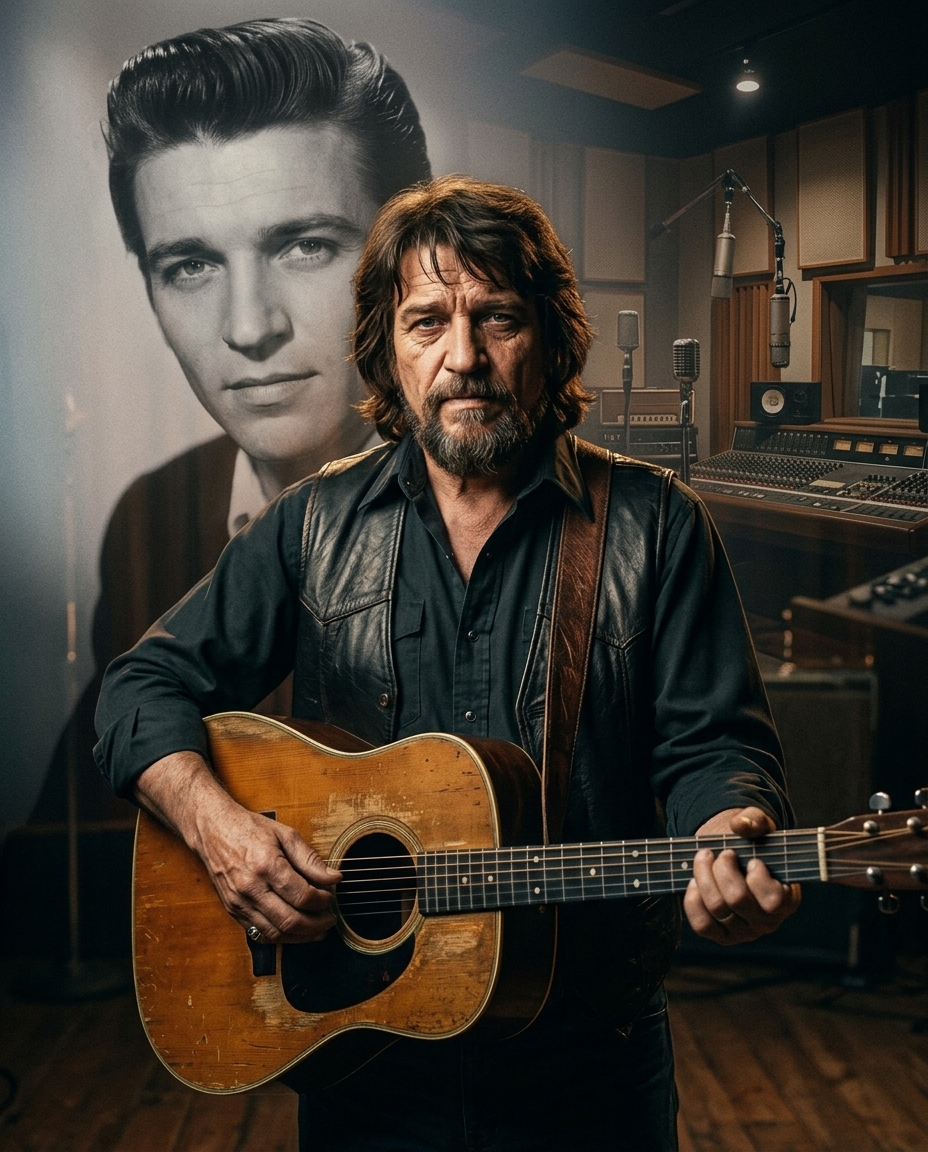
How Waylon Jennings Fought Nashville for Seven Years — and Changed Country Music Forever
For years, RCA Records told Waylon Jennings what to sing, how to sound, and who should play behind him.
They chose the songs. They hired the musicians. They layered his records with polished strings and smooth background choruses that sounded nothing like the man standing on stage every night.
The label wanted Waylon Jennings to fit Nashville.
Waylon Jennings wanted to sound like Waylon Jennings.
The Survivor Who Refused to Stay Quiet
Long before the fight with RCA began, Waylon Jennings had already survived something most people never could.
In 1959, Waylon Jennings was a young bass player in Buddy Holly’s band. On the night of February 3, Buddy Holly offered Waylon Jennings his seat on the small plane leaving Iowa after a freezing winter concert.
Waylon Jennings gave the seat away to J.P. Richardson, better known as The Big Bopper, who was sick and exhausted.
Hours later, the plane crashed. Buddy Holly, Ritchie Valens, and The Big Bopper were all killed.
Waylon Jennings carried the weight of that night for the rest of his life.
By the time Waylon Jennings arrived in Nashville years later, he was no longer interested in pleasing anyone. He had already seen how quickly life could change. He wanted to make music that sounded real.
RCA Wanted Another Nashville Star
When Waylon Jennings signed with RCA in the mid-1960s, the label believed they could turn him into another polished country singer.
Instead of using the musicians Waylon Jennings trusted from the road, RCA brought in session players. Instead of the rough edge and driving rhythm that audiences loved in concert, producers added orchestras, backup singers, and arrangements designed to sound safe.
Every new recording felt like a compromise.
Waylon Jennings later said that he would listen to some of those records and barely recognize himself.
He was supposed to smile, sing the songs he was handed, and be grateful for the opportunity. That was how Nashville worked at the time. Record labels controlled everything, and artists rarely challenged them.
But Waylon Jennings did.
The Seven-Year Fight
For nearly seven years, Waylon Jennings argued with RCA.
He wanted to choose his own songs. He wanted to bring in his own band. He wanted to strip away the extra production and make records that sounded the way he heard them in his head.
Again and again, the answer was no.
Executives told Waylon Jennings that country audiences would never accept a rougher, freer sound. They warned him that he was risking his career.
Waylon Jennings refused to back down.
By the early 1970s, the pressure inside Nashville was beginning to change. Younger artists were tired of the same rules. Willie Nelson had left Nashville for Texas. Kris Kristofferson and Tompall Glaser were pushing against the old system too.
Waylon Jennings saw his chance.
After years of fighting, RCA finally gave Waylon Jennings something no major country artist had ever received before: complete creative control.
Waylon Jennings could choose the songs, the musicians, the producer, and the sound.
It was a moment that changed not only his career, but country music itself.
The Birth of Outlaw Country
Once Waylon Jennings finally had control, the music changed immediately.
The records sounded leaner, louder, and more honest. The songs came from the road, from heartbreak, from anger, from freedom.
Waylon Jennings stopped sounding like every other singer in Nashville.
He started sounding like himself.
Then came the album that changed everything: Wanted! The Outlaws.
Released in 1976, the album featured Waylon Jennings, Willie Nelson, Jessi Colter, and Tompall Glaser. RCA originally saw it as a simple collection of songs. Instead, it became a cultural explosion.
Wanted! The Outlaws became the first country album in history to sell one million copies and earn platinum status.
The success shocked Nashville.
The same executives who once told Waylon Jennings that audiences would never accept his sound suddenly wanted more of it.
He Called It Music
The press gave the movement a name: Outlaw Country.
To reporters, Waylon Jennings and Willie Nelson looked like rebels. They wore leather, grew their hair long, and ignored the old rules.
But Waylon Jennings never seemed very interested in the label.
As far as Waylon Jennings was concerned, he was not trying to start a movement. He was simply trying to make the kind of music he believed in.
That fight led to sixteen number-one hits. It opened the door for future artists to demand more freedom. And it proved that country music did not have to sound the way Nashville said it should.
For seven years, RCA tried to tell Waylon Jennings who he was.
In the end, Waylon Jennings told them instead.