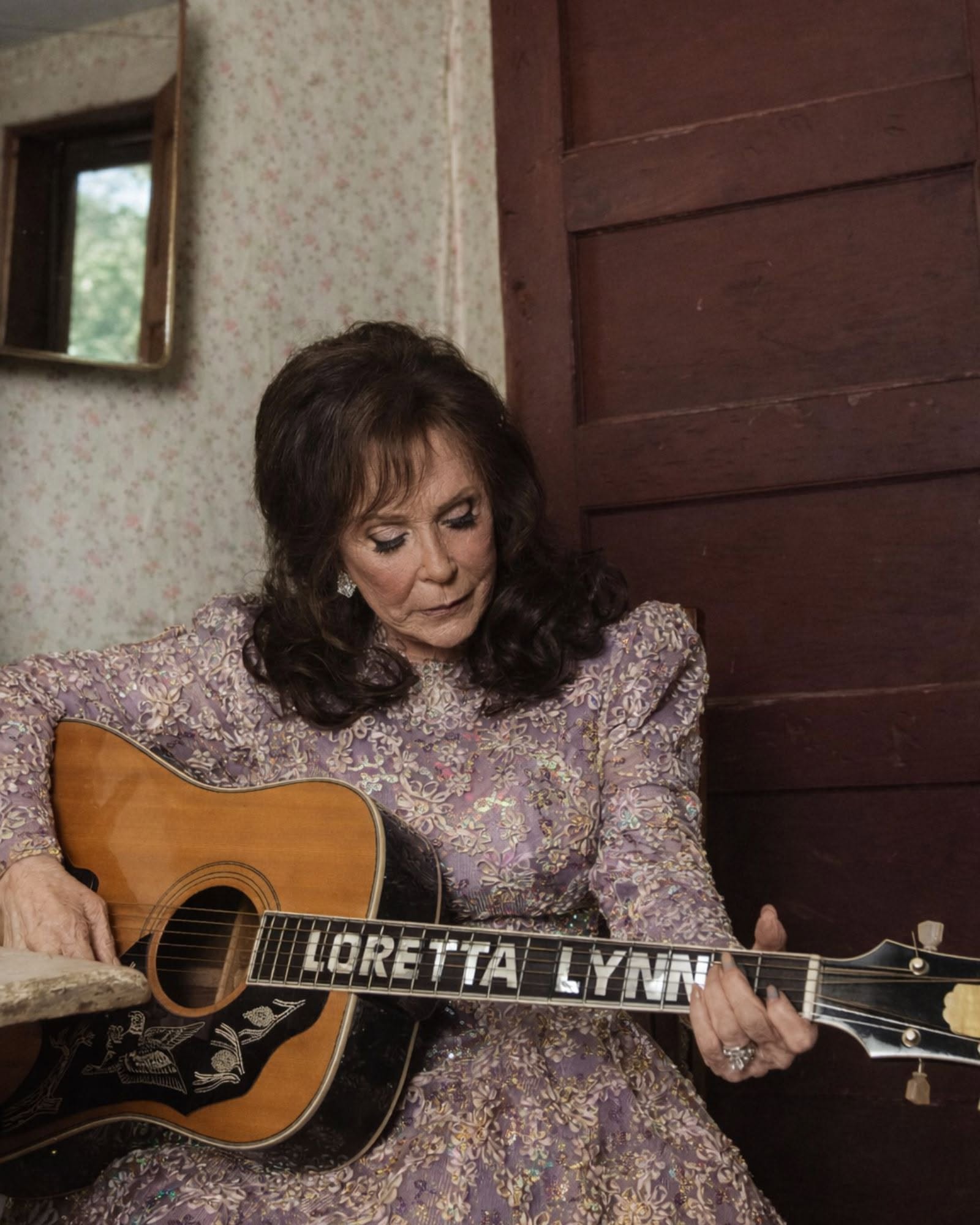
From Poverty to Power: The Unforgettable Rise of Loretta Lynn
Before the fame, before the awards, before the sold-out crowds and the bright lights of Nashville, Loretta Lynn belonged to a world where hard days came early and stayed late. She was born into poverty in Butcher Hollow, Kentucky, where every small comfort had to be earned and every dream had to fight for space. Childhood was not gentle. It was shaped by hunger, by work, and by the kind of responsibility most children never have to imagine.
Marriage came even earlier. At fifteen, Loretta Lynn became a wife. By eighteen, she was already a mother of four. Life did not pause to give her time to grow into any of it. She had babies to feed, a home to hold together, and not even a pair of shoes that fit properly. There was no easy path, no safety net, and no promise that things would ever get better.
A Guitar, a Catalog, and a Beginning
What changed Loretta Lynn’s life was not luck. It was a $17 guitar bought by her husband, Doolittle Lynn, from a Sears catalog. She had never played one before. She did not come from a music family with polished lessons and gentle encouragement. She taught herself, learning between feedings, between laundry, between the endless routines of survival. In a hollow so deep the sun only reached it for a few hours each day, she found a voice that would one day travel far beyond Kentucky.
Her songs came from real life. She wrote about cheating husbands, about the burden women carried quietly, and about the birth control pill at a time when many people did not want women speaking openly at all. She did not write to sound respectable. She wrote to sound true.
She wrote what she knew, and what she knew was the lives of women who were expected to endure everything without complaining.
Nashville Tried to Silence Her
Loretta Lynn’s honesty did not always make her popular. Some of her songs were banned from radio stations in Nashville. Not once. Not twice. Multiple records were pulled because a coal miner’s daughter had the courage to say what many people were already thinking. In a music world that often preferred polished silence over uncomfortable truth, Loretta Lynn became impossible to ignore.
She could have softened her lyrics to make people comfortable. She could have apologized and tried to fit into a safer mold. She never did. Instead, she wrote harder. Her music became a mirror for women who were tired of being quiet, tired of being dismissed, tired of pretending that pain did not exist.
A Life of Loss, and Still She Sang
Success did not protect Loretta Lynn from heartbreak. A stroke struck when she was 85, and she came back. Her son drowned, and she kept singing. Her husband died, and she kept singing. The losses were heavy, but they did not end her story. They became part of the story she carried with her every time she stepped onto a stage.
That is what made Loretta Lynn so remarkable. She was not made of myth. She was made of grit, memory, and an unshakable refusal to disappear. She carried the weight of her life openly, and somehow that made her stronger, not weaker. She did not pretend to be untouched by hardship. She sang through it.
Why Loretta Lynn Still Matters
When people remember Loretta Lynn, they remember the voice, the songs, and the fearless honesty. But they also remember the woman behind all of it: a barefoot girl from Butcher Hollow who never once asked permission to become who she was. She was too poor to quit, and too stubborn to stop. That simple truth became part of her legend because it was never just a line. It was a life.
For seven decades, Loretta Lynn performed with the kind of conviction that cannot be faked. She gave the world songs that were personal, blunt, and deeply human. She proved that where you start does not have to decide where you finish. Her journey from poverty to power remains one of the most enduring stories in American music.
Loretta Lynn did not wait for the world to make room for her. She walked in, guitar in hand, and made the space herself.