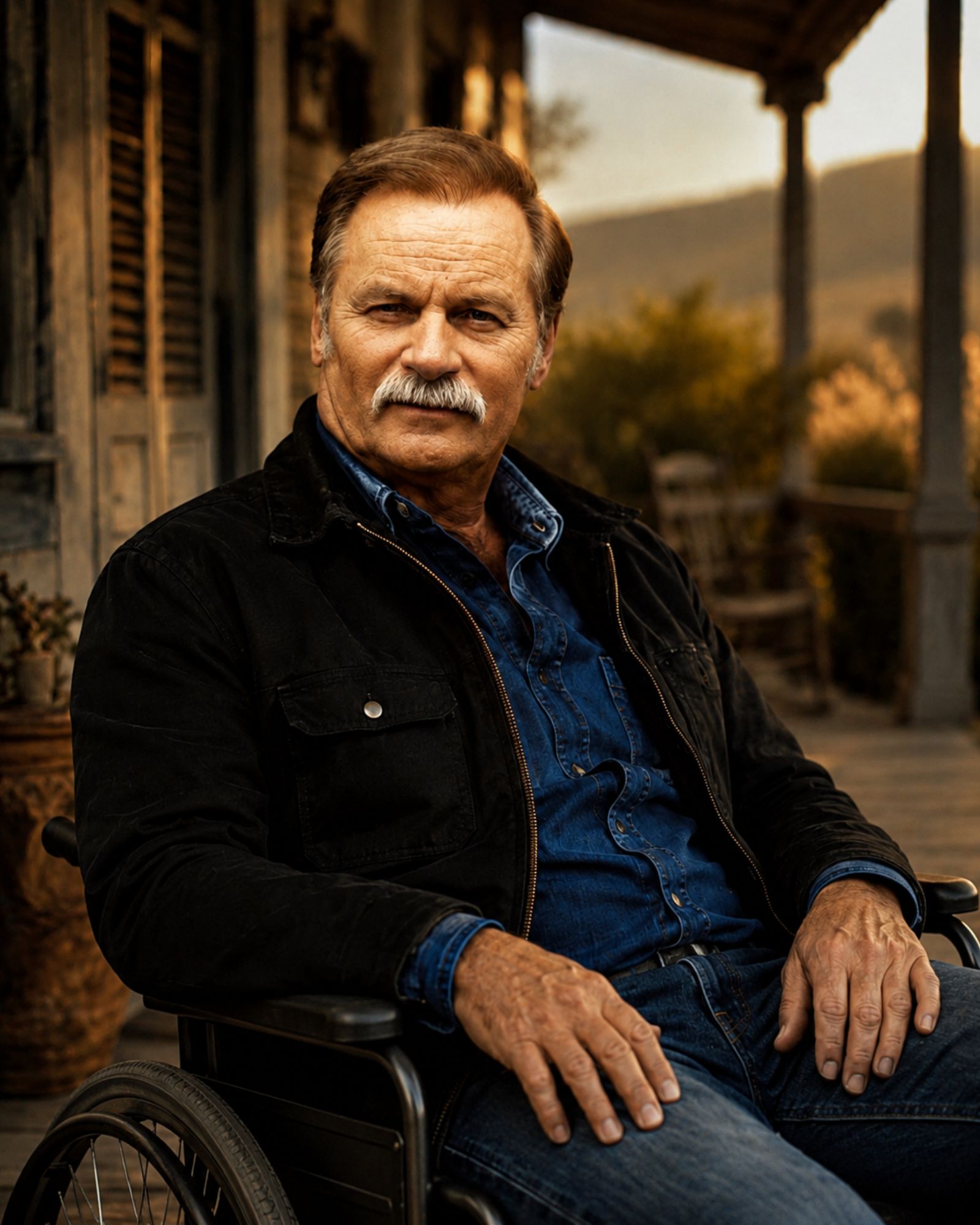
He Died at Midnight on a Tuesday in Nashville
He died at midnight on a Tuesday in Nashville from a stroke, and the city that had carried his songs for decades seemed to pause for a moment before moving on. For the fans who loved him, it felt impossible that a man known simply as The Voice could be gone so suddenly. Not a voice. The Voice. In Nashville, that was not a nickname. It was a statement.
For four hours, from noon to four, the doors at Mount Olivet were opened wide. Fans came through slowly, quietly, some with flowers, some with tears, some just standing there as if they needed to see the truth with their own eyes. They filed past in a steady stream, paying respect to a singer who had spent a lifetime turning heartbreak into songs people could live inside. Then the doors closed, and his family remained alone with him, saying goodbye in private, away from the crowd, away from the applause, away from the burden of being beloved by so many.
The Boy From Woodland, Alabama
He started far from the bright lights of Nashville. He was the boy from Woodland, Alabama, raised on hard work, chopped cotton, and gospel music in a clapboard church where his mama played piano. Long before the crowds knew his name, he knew the sound of honest labor and the feeling of singing because it was the only way to say what the heart was holding.
Like many Southern boys with big voices and bigger feelings, he left home chasing a future that was not yet guaranteed. He moved to California, where he found his way into music and wrote a song that ended up in Easy Rider. That kind of break can change a life, but it did not turn him into a different man. He still sounded like the South. He still sounded like hurt. He still sounded like someone who had lived enough to mean every word.
A Career Built on Heartbreak
He came back south and made a career out of singing the kinds of songs that make people stare into a drink and remember everything they tried to forget. He did not just record heartbreak; he understood it. He knew how to sing a line so it felt like a secret being told at the worst possible moment.
"Out of everything bad, something good will come," he once said. "I got ten hits out of my last divorce."
That quote sounded funny on the surface, but it carried the truth of his whole career. He took pain and made it useful. He took disappointment and turned it into melody. He gave the country music world songs like "Chiseled in Stone," "Set ‘Em Up Joe," and "Is It Raining at Your House", songs that still sound like whiskey tastes at two in the morning when the room is quiet and the person you hoped would stay has already walked away.
He was married three times and divorced three times, and he never tried to hide the fact that real life had helped shape the music. He mined every chapter of it. That honesty is part of why people trusted him. He sang as if he had nothing left to prove, only stories left to tell.
The Recognition That Came Slowly
His career earned respect in the places that mattered most to country music. He had nineteen top ten songs and won CMA Song of the Year. Yet for all that success, he still remained outside the Country Music Hall of Fame. That fact puzzled fans who believed the voice, the songs, and the legacy should have been enough long ago.
Maybe that is part of what makes his story linger. He was deeply famous and still somehow under-celebrated by the official machinery of the business. But the people who mattered most already knew. The fans knew. The singers who admired him knew. And Nashville knew that some artists do not need a plaque to be remembered.
Still Working, Still Planning
At the time of his death, he was fixing up his tour bus. He still had plans. He still had songs. He was still living in the forward motion that defines so many working musicians, always preparing for the next mile, the next stage, the next crowd waiting to hear that unmistakable voice.
That is what made the loss hit so hard. He was not a man drifting toward an ending he had long since accepted. He was still building, still moving, still expecting more music from tomorrow. Then, in a moment, it was over.
What Stayed Behind
After the doors at Mount Olivet closed and the family had their private goodbye, what remained was the music and the memory of a man who turned pain into something lasting. The Voice went quiet, but the songs did not. They kept moving through jukeboxes, through old radios, through late-night playlists, through the lives of people who have lived through divorce, loss, regret, and the long road back.
Nashville barely noticed at first, as big cities often do when a giant leaves the room. But the fans noticed. The fans always notice. And for them, the story was never only about how he died. It was about how he lived, how he sang, and how he made broken hearts feel less alone.
That is the kind of legacy that does not fade quickly. It stays. It waits. And every time one of those songs comes on, The Voice speaks again.