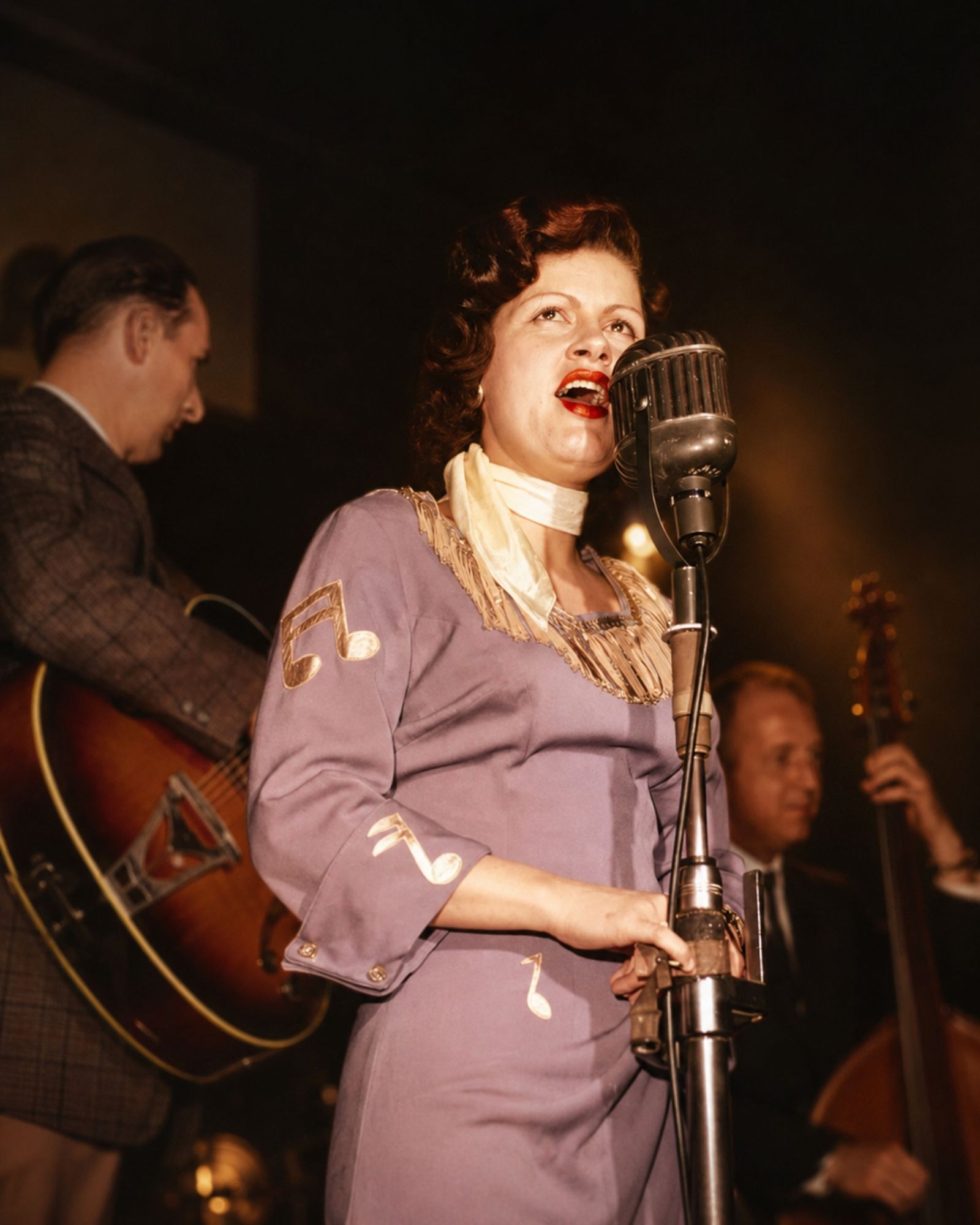
Patsy Cline Died in 1963 — But “Crazy” Still Comes On and Suddenly Nobody in the Room Is Pretending to Be Fine
Patsy Cline died in 1963, but that fact has never felt like the end of the story. The moment “Crazy” starts playing, time does something strange. A room can be full of conversation, clinking glasses, and half-finished plans, and then that voice arrives — calm, steady, aching — and everyone seems to pause a little longer than they meant to. Nobody announces what they are feeling. Nobody has to. Patsy Cline already said it better.
She did not just sing about heartbreak. She sang from inside it, with the lights on and the door open, as if hiding the pain would only make it louder. There was nothing guarded in the way she delivered a line. Every note sounded like it had been lived before it was recorded. That is why her music still lands so hard. It does not ask to be admired from a safe distance. It asks to be felt.
A Voice That Sounded Like Truth
Patsy Cline had a way of making vulnerability sound fearless. In “Crazy,” written by Willie Nelson, she did not perform sadness as a dramatic display. She made it sound private, almost tender, like someone speaking the truth in a quiet kitchen after a long day of holding it together. The song has been covered many times, but Patsy Cline made it feel permanent, as if the melody had finally found the exact voice it was waiting for.
Then there was “I Fall to Pieces,” where she turned emotional collapse into something graceful and painfully familiar. She did not sing like a person trying to look strong. She sang like someone who knew strength could also mean admitting when the heart is shaking. That honesty made listeners trust her immediately. Even now, decades later, her recordings can still catch people off guard because they do not sound polished in the cold way some classics do. They sound alive.
The Short Life Behind the Long Shadow
Patsy Cline died at just 30 years old, which is one of the hardest facts to sit with. Thirty is barely enough time to build a career, let alone become a legend. Yet she managed to leave behind a voice that still feels larger than the years she had. Some artists spend a lifetime trying to become unforgettable. Patsy Cline did it in a few blazing years, and the impact has never faded.
Her career helped change country music, but the real reason she still matters is simpler than history. She made people feel understood. Whether someone was heartbroken, lonely, defensive, or just trying not to cry in public, Patsy Cline had a way of naming the feeling without making it smaller. She gave listeners permission to be human.
Why “Crazy” Still Stops the Room
There are songs that entertain, and then there are songs that expose something people have spent all day trying not to admit. “Crazy” is one of those songs. It does not arrive with drama. It slips in quietly, and that quiet is what makes it powerful. By the time the chorus settles in, the room feels different. More honest. More exposed. Less interested in pretending everything is fine.
Some voices entertain you. Some voices stay with you. Patsy Cline’s voice does both, but it also does something rarer: it tells the truth in a way that feels safe enough to hear.
That may be why people still react so strongly when the song comes on unexpectedly. It is not just nostalgia. It is recognition. Patsy Cline sings in a way that reaches straight past the performance and into the part of the listener that remembers every quiet heartbreak they never fully explained. Her music does not demand tears, but it often earns them.
More Than a Memory
There is a reason Patsy Cline remains one of the most beloved voices in American music. She was never pretending. That is the thing people remember, even if they cannot always explain it. In an age of polished images and carefully managed emotions, her recordings still sound startlingly direct. She gave heartbreak a face, a pulse, and a melody that refuses to disappear.
Maybe that is why nobody wants “Crazy” to fade into the background. Some songs are meant to be heard. Patsy Cline’s songs are meant to be felt in the chest. She died in 1963, but the song keeps coming back, and every time it does, the room changes. The conversation softens. The smile becomes more careful. Somebody looks down for a second longer than usual.
And suddenly, nobody is pretending to be fine.