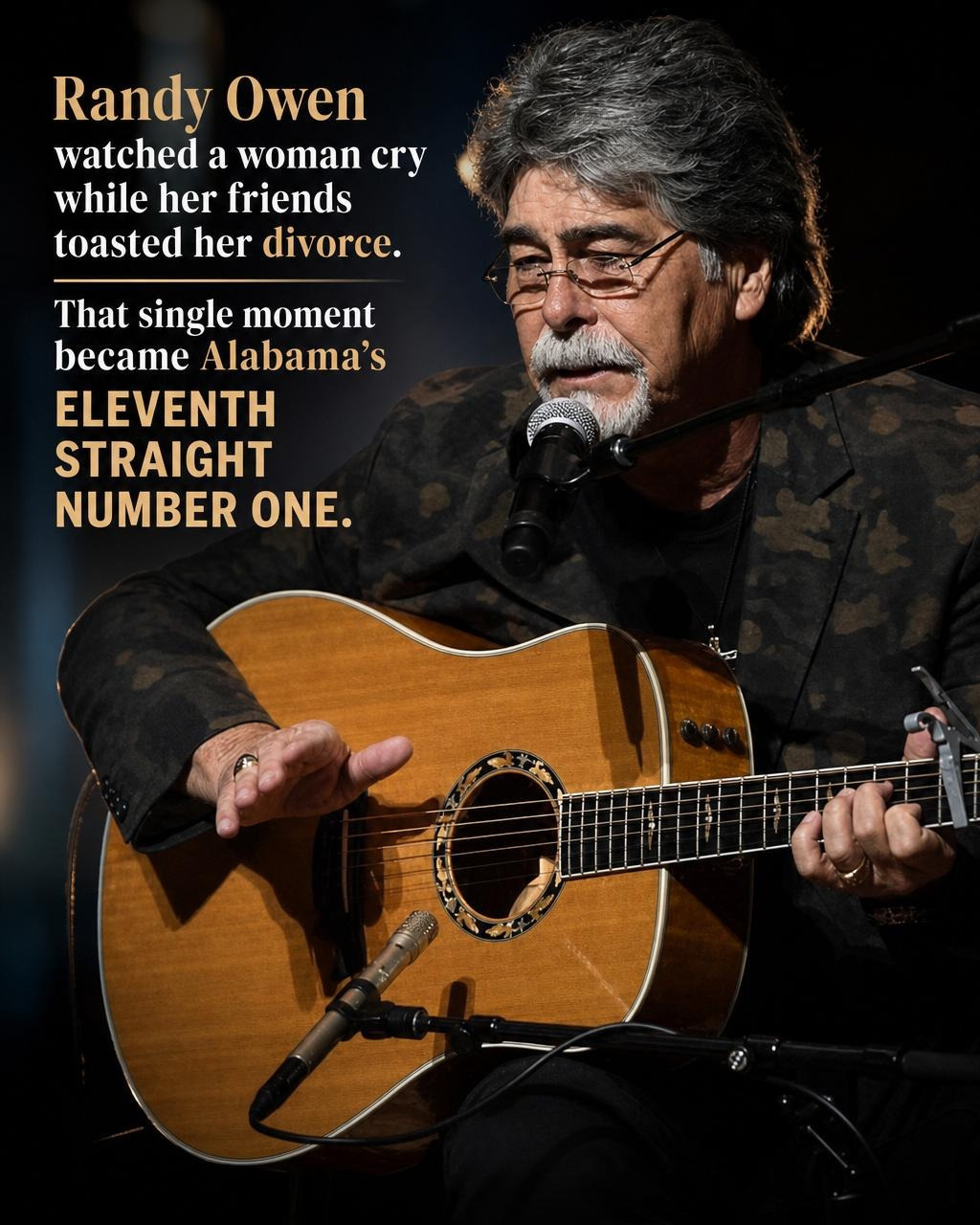
How Randy Owen Turned a Quiet Moment in Bowling Green Into Alabama’s “Lady Down on Love”
One night in Bowling Green, Kentucky, Randy Owen was doing what he did best: playing music and watching real life unfold around him. He was performing at a hotel nightclub when he noticed a group of women nearby celebrating with drinks, laughter, and plenty of noise. At first, it looked like a typical night out. Then Randy Owen realized the celebration had a painful reason behind it.
The women were toasting a friend’s divorce.
But the woman at the center of the gathering was not laughing. She was crying.
A Moment Randy Owen Never Forgot
What Randy Owen heard next stayed with him for years. The woman told her friends she did not want this kind of celebration. She said she would rather be home with her husband. She said she still loved him.
That simple, honest statement carried a weight that no loud room could hide. In that moment, Randy Owen saw something deeper than the joke or the party atmosphere. He saw the heartbreak of a marriage ending, but he also saw the complicated truth inside it. People do not always stop loving each other just because a relationship falls apart.
Some songs begin with an idea. Others begin with a human moment that feels too real to ignore.
Randy Owen took that night in Bowling Green and turned it into “Lady Down on Love,” a song that looked at both sides of a broken marriage. It gave voice to the loneliness of the woman left behind, and it also acknowledged the regret of the man who had fallen for someone else. That balance helped the song feel honest, not judgmental.
Why the Song Connected So Strongly
“Lady Down on Love” stood out because it did not treat heartbreak like a simple story with a clear winner and loser. Instead, Randy Owen wrote about emotional pain in a way many listeners recognized immediately. The song understood that endings are messy. It understood that people can smile in public while struggling in private.
That honesty helped Alabama’s audience connect with the song in a powerful way. In 1983, “Lady Down on Love” became Alabama’s 11th consecutive number-one hit, helping extend the band’s remarkable streak of 21 straight chart-toppers. That kind of success does not happen by accident. It happens when a song reaches people where they live, remember, and hurt.
Thirty Years Later, the Song Still Mattered
Decades later, Kenny Chesney covered “Lady Down on Love,” bringing the song to a new generation of country fans. Randy Owen’s response was simple and memorable. He said, “He sang the hell out of it.”
That reaction says a lot about Randy Owen himself. He understood that a great song can live many lives after it is written. More importantly, he knew the heart of the song was never about fame or chart numbers alone. It was about one woman’s honest sadness, one unforgettable night, and the way a true storyteller can turn a passing moment into something lasting.
In the end, “Lady Down on Love” remains a reminder that behind every celebration, there can be a story no one else sees. Randy Owen heard it, remembered it, and gave it a voice.