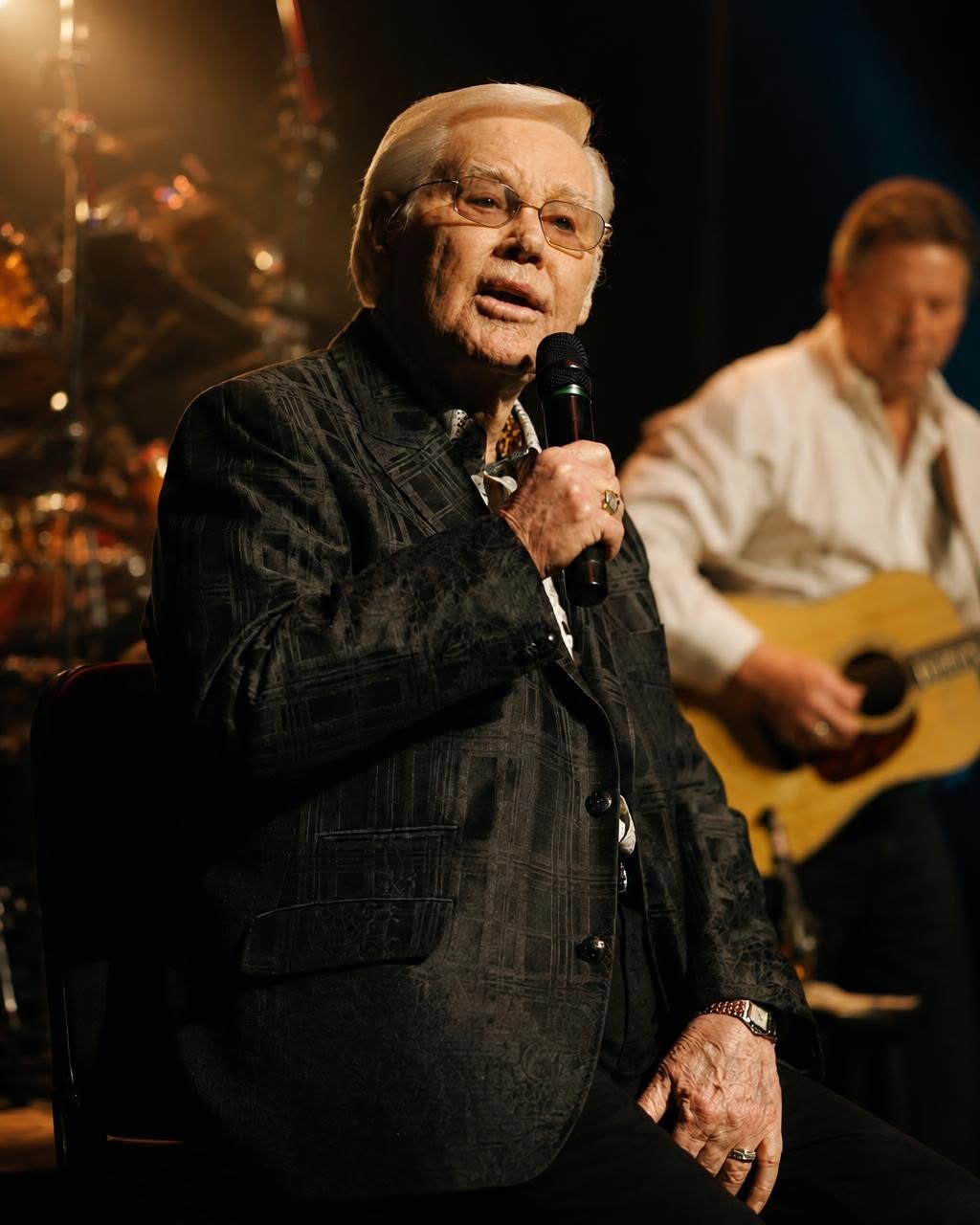
George Jones Planned His Farewell. Nashville Kept the Promise.
By the end of 2012, George Jones knew the road was getting harder. He was 80 years old, his breathing was strained, and the long miles of country music had begun to feel heavier than ever. Still, George Jones did what he had always done: he kept going. He announced The Grand Tour, a farewell run meant to bring him one last time to the fans who had carried him for decades.
The plan was bold. Sixty dates. A final night at Bridgestone Arena in Nashville on November 22, 2013. It was the kind of goodbye only George Jones could make: stubborn, honest, and a little defiant. The man known for missing shows in his younger years was now trying to make sure he did not miss this one. That contrast alone made the farewell feel bigger than a concert. It felt like a closing chapter in country music history.
The road did not cooperate
George Jones made it partway through the tour, but his health did not allow him to finish. His last performance came in Knoxville on April 6, 2013. By then, the songs were being lowered to fit his voice, but he still sang them with the grit and feeling that made him a legend. Fans knew they were hearing something fragile and unforgettable at the same time. The set ended, and the meaning of the night became clear only later.
He gave those songs everything he had left.
Not long after that Knoxville show, George Jones was hospitalized. On April 26, 2013, he died in Nashville at age 81. The farewell tour had become something else: not an ending he could complete, but a story country music would finish for him.
Nashville filled the silence
Even without George Jones onstage, Nashville still gathered for the concert that had been planned in his honor. The arena sold out. George Jones’s name pulled people in, but the scale of the tribute came from the respect he had earned over six decades, with 143 Top 40 hits, two Grammys, and a place in the Country Music Hall of Fame since 1992.
Artists who loved him turned the night into a living tribute. Garth Brooks was there. George Strait was there. Alan Jackson was there. So were many others, creating a lineup that felt less like a program and more like a country music reunion. Seventy artists were said to have shown up, each one carrying a piece of George Jones’s legacy onto that stage.
A final joke, and a final truth
For years, George Jones had lived with the nickname “No-Show Jones,” a label that had once followed him like a shadow. On this night, that old accusation was transformed into something kinder, almost poetic. The concert became the last joke he ever got to tell without speaking. George Jones had not been able to be there, but his presence filled the building anyway.
In the end, the farewell was larger than the man who planned it. George Jones had wanted one last show. Instead, he left behind something more lasting: a reminder that the best goodbyes are not always tidy, and that sometimes an artist’s final bow is carried by the voices of everyone who loved him enough to sing on when he could not.