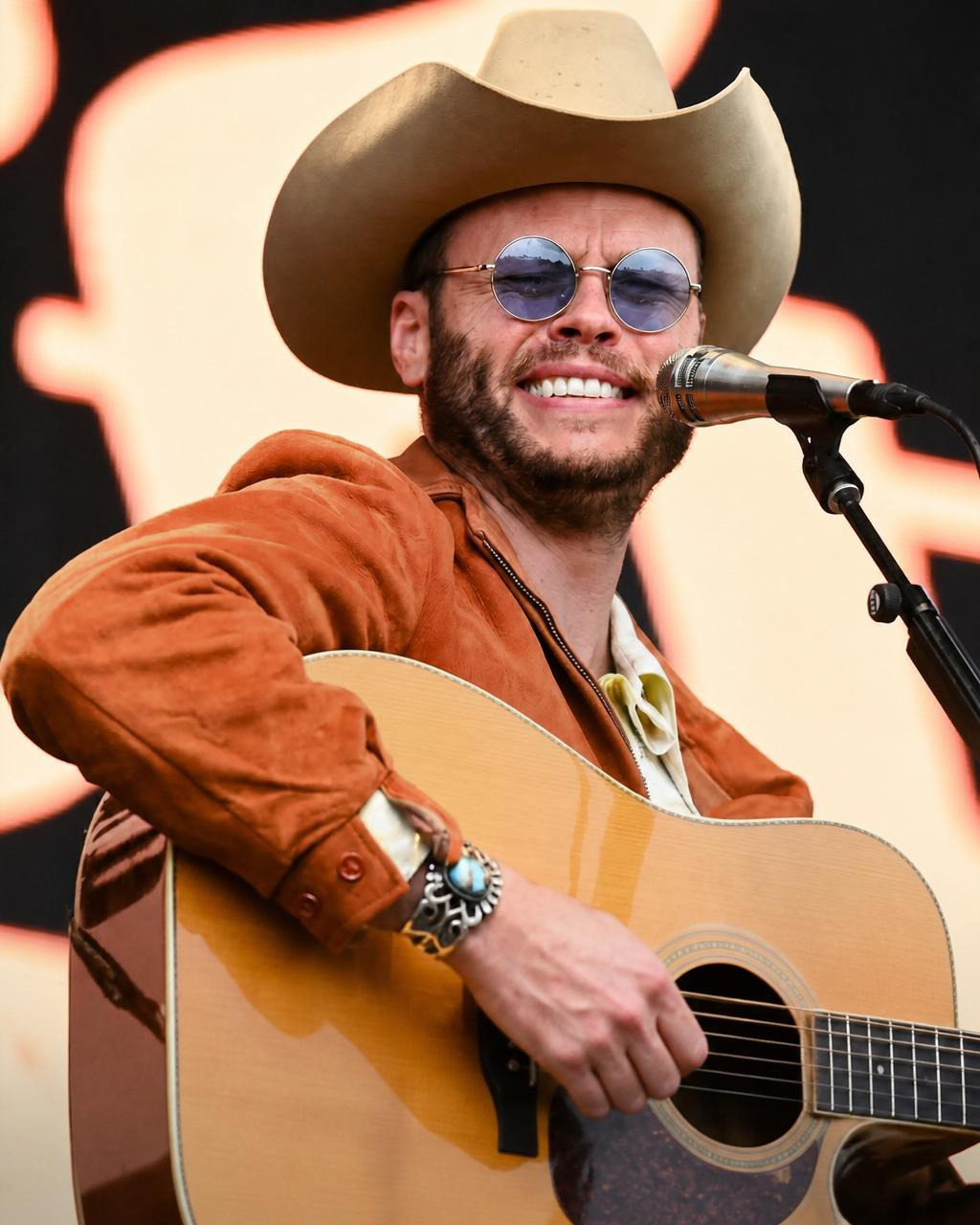
Charley Crockett Removed an Opening Act, and His Response Sparked a Bigger Conversation
Charley Crockett has built his career on speaking plainly, trusting his instincts, and refusing to polish away the rough edges that make him who he is. So when he dropped an opening act from two upcoming shows on his tour, the reaction was immediate. Fans, critics, and fellow musicians all rushed to the same question: was this a matter of principle, image, or simply a hard line drawn too late?
The band at the center of the controversy was Twin Temple, who had been booked to open two of Charley Crockett’s dates. After taking a closer look at the group’s satanic imagery and stage presentation, Charley decided it was not a fit for a bill carrying his name. He later admitted that he had misunderstood what he was signing up for in the first place.
“I thought they were like Black Sabbath, but they ain’t,” Charley Crockett said.
That one sentence set the tone for everything that followed. Some listeners understood immediately that Charley Crockett was making a judgment about the atmosphere of his own show, not trying to ban a band from performing. Others saw it as a clumsy but honest overcorrection. And plenty of people saw it as a betrayal of a touring act that had already been announced.
Once the backlash began, Charley Crockett did not hide. He did not point fingers at management. He did not say the decision had been made without his knowledge. Instead, he owned it completely, even as the criticism got louder.
“There are many things I’ve done in my life to apologize for, but this ain’t one of them,” Charley Crockett wrote.
That statement made the controversy bigger, not smaller. Supporters said Charley Crockett was simply exercising control over his own stage, the same way any headliner should. Critics argued that once a show is announced, dropping an opener sends the wrong message and punishes musicians who were invited in good faith. The debate quickly moved beyond one band and one tour date. It became a broader argument about responsibility, boundaries, and what an audience can reasonably expect from a live show.
Charley Crockett, however, seemed uninterested in softening the blow. He made it clear that in his view, the artist at the top of the bill carries responsibility for everything that happens underneath it. That includes the tone, the message, and the experience being sold to the crowd.
“I might wake up on the back of that bus and find out that the opener ain’t working for me that night. Tough luck. Life is hard. This ain’t no temp agency.”
It was a sharp, old-school way of saying that touring is not always neat, and not every decision will please everyone. For Charley Crockett, the matter was not about whether Twin Temple had the right to exist as a band. It was about whether their presentation belonged on his stage, in front of his audience, under his name. He believed it did not.
A decision that revealed Charley Crockett’s priorities
There is always a cost to decisions like this. Removing an opening act after a show has been announced can damage relationships, create disappointment, and invite public criticism. But Charley Crockett did not appear interested in protecting his image by staying silent. He chose instead to say exactly what he believed, even knowing it would bring consequences.
That honesty is part of what keeps people talking about him. Charley Crockett has never presented himself as a polished industry product. He comes across as someone who sees the road in practical terms: the bill, the bus, the audience, the music, and the responsibility that comes with putting his name first on a flyer. Whether people agree with him or not, they can see that he made the call himself and stood behind it.
In the end, the story was not only about an opening act being removed. It was about a headliner deciding that the stage he built needed to reflect his own standards, then accepting the fallout when those standards were challenged. Charley Crockett did not ask for everyone to agree. He simply said what he believed and let the public respond.
And that may be the real reason the story traveled so far. In an age when so many public figures try to soften every controversy, Charley Crockett did the opposite. He spoke directly, took ownership, and refused to apologize for a decision he believed was his to make.
Whether people see that as integrity or overreach, Charley Crockett made one thing unmistakably clear: when it comes to his stage, he will decide what belongs there, and he will stand by it.