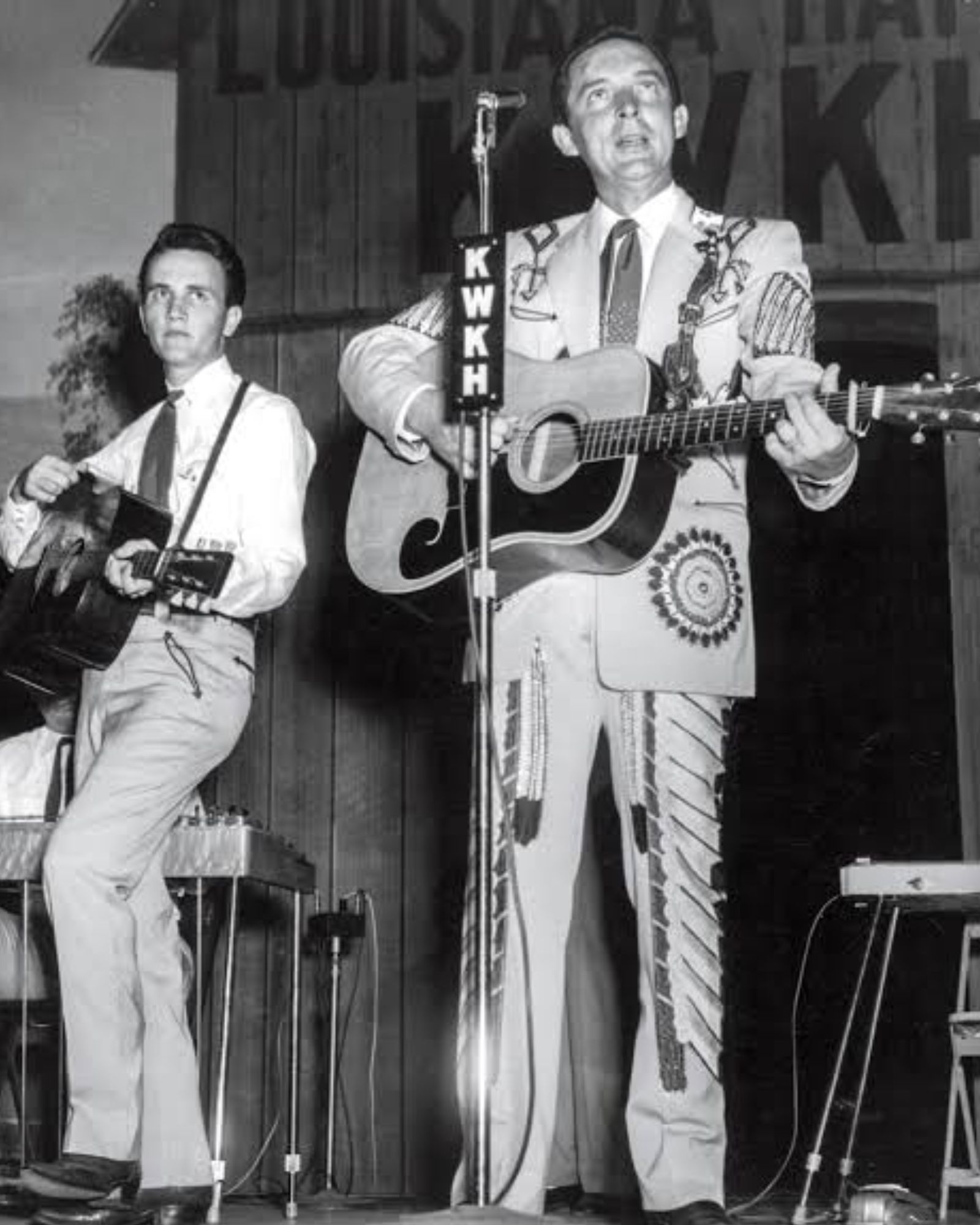
When Ray Price Opened the Door for Roger Miller
In 1958, Ray Price was already one of country music’s biggest names. He had the kind of standing that could turn a record into a standard and a singer into a star. Roger Miller, by contrast, was still trying to prove he belonged in Nashville at all. He had missed chances, taken odd jobs, and worked behind other performers while waiting for someone important to hear what he could really do.
That break came when Ray Price hired Roger Miller to join the Cherokee Cowboys, one of the most respected bands in country music. It was an important step, but the bigger turning point arrived through a song. Roger Miller brought Ray Price “Invitation to the Blues,” and Ray Price recorded it as the B-side to his huge hit “City Lights.” The result gave Roger Miller his first major Nashville success, with “Invitation to the Blues” rising to No. 3 on the country chart.
For a young songwriter, that kind of moment matters more than applause. It tells the room to listen. It tells other artists that the songs are real, even if the singer is still waiting for his own spotlight. After that, Roger Miller’s name started circulating in the right circles. Ernest Tubb recorded “Half a Mind.” Faron Young found success with “That’s the Way I Feel.” Jim Reeves took “Billy Bayou” all the way to No. 1. Long before many fans knew Roger Miller’s voice, they were already hearing his words.
The long road to his own spotlight
Roger Miller’s own rise was slower than his songs. He was talented, but talent alone rarely opens every door in Nashville. What changed everything was patience, persistence, and a style that eventually felt unmistakable. When “Dang Me” arrived in 1964, it sounded fresh and funny in a way that only Roger Miller could make work. Then came “King of the Road” in 1965, and the man who had once been struggling for a break became one of country music’s most recognizable stars.
Still, that later fame did not erase the earlier years. In some ways, those years made the story stronger. Roger Miller was not handed success all at once. He earned it one song at a time, and one of the most important early believers was Ray Price.
Ray Price did not make Roger Miller famous. But Ray Price gave Roger Miller room to grow, and that mattered.
That is why this story feels so lasting. It is not just about one hit record or one lucky break. It is about a major star recognizing a young writer before the rest of the world caught on. Ray Price heard something worth recording. Roger Miller brought the song. And country music, quietly at first, began to change.