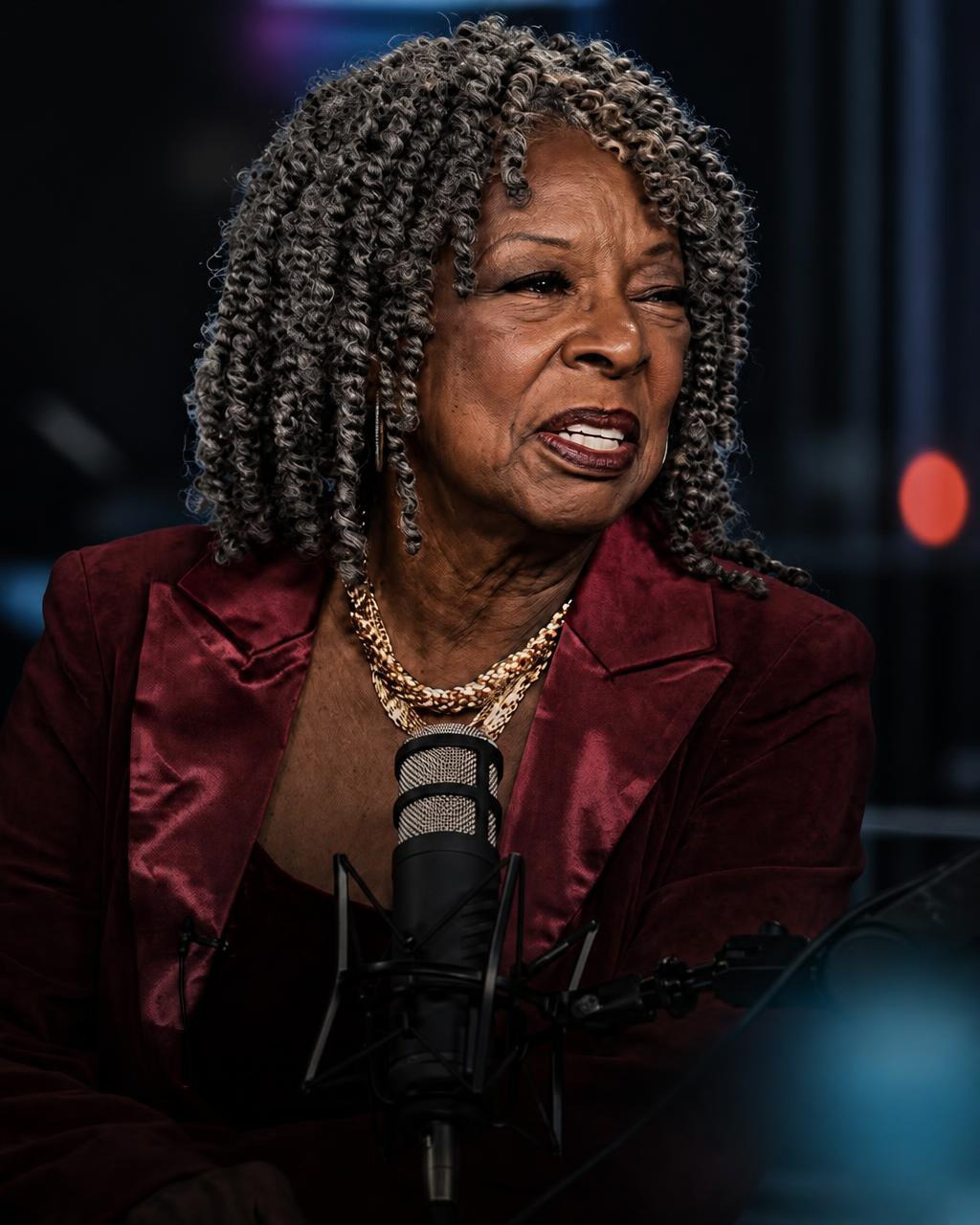
Martha Reeves Answers Criticism the Way Only a Motown Legend Can: By Singing Again
When Martha Reeves appeared on Fox 2 Detroit to talk about the national anthem performance that had sparked so much conversation at the Women’s Pro Baseball League opener in Springfield, she did not arrive sounding defeated. She sounded like Martha Reeves: direct, funny, and fully aware of who she is.
The performance drew attention because of the unusual on-field setup, with backup singers joining in beside the Motown legend. As the clip spread, so did the commentary. But Reeves did not treat the moment like a disaster. When asked whether she wanted another chance, she made it clear that she had no interest in starting over.
“I don’t have to redo anything,” she said, pushing back with the confidence of someone who has spent a lifetime onstage.
Reeves also pointed to the backup singers as the part that did not land the way she expected. It was a sharp comment, but it also fit her personality. Martha Reeves has never been a performer who hides behind vague explanations. She has always spoken with the same force that made her one of Motown’s defining voices.
Then came the moment that turned a television interview into something people would remember.
Right there in the studio, with no band and no backing track, Martha Reeves began singing the anthem again. The room shifted. The conversation stopped being about criticism and became about presence. Even stripped down to just her voice, Reeves still carried the room with the kind of instinct that comes from decades of performing.
She was not trying to prove she was perfect. She was proving she was still herself.
Afterward, Reeves was not apologetic. She was proud, amused, and still very much in control of the story. “I’m proud. I’m happy,” she said, before adding with her familiar humor that at least she “didn’t take the mic and hit that girl.”
That line landed because it sounded exactly like Martha Reeves: witty, blunt, and unwilling to let strangers define the moment for her. At 85, she did not answer criticism with silence. She answered it with rhythm, nerve, and a little laughter.
In the end, the story was never only about one anthem performance. It was about an artist who has spent her life meeting the spotlight head-on, even when the spotlight gets uncomfortable. Some people explain themselves. Martha Reeves sings.