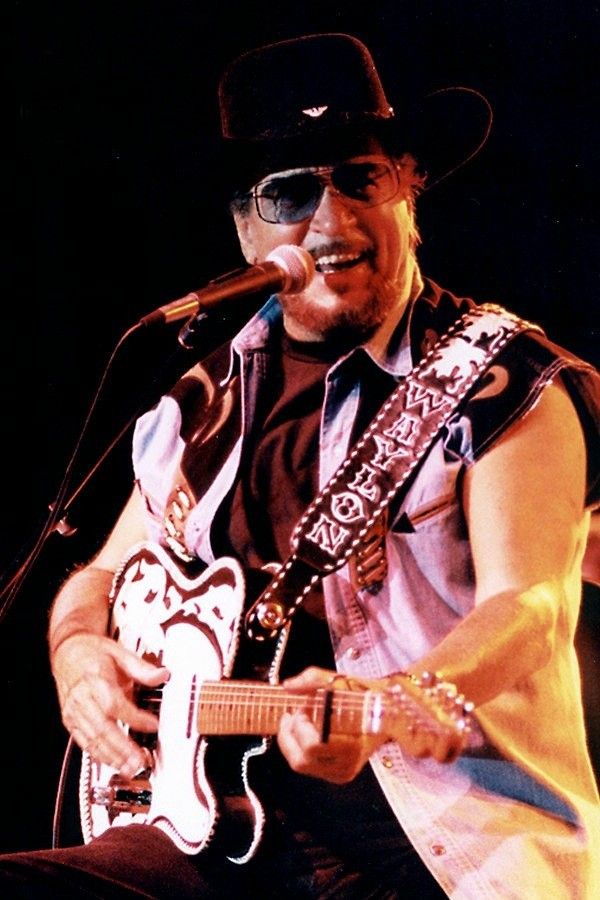
On March 23, 2002, friends and fans gathered at Nashville’s Ryman Auditorium to remember Waylon Jennings. The country music star had died five weeks earlier, but the evening would end with something few people could have expected: a recording of Waylon Jennings singing one of the final songs of a remarkable career.
When the song finished, people in the audience called out to Waylon Jennings as though the singer were still standing onstage.
It was a fitting farewell for an artist who had spent decades doing things on his own terms.
Waylon Jennings’ Final Major Concert at the Ryman
On January 5 and 6, 2000, Waylon Jennings performed two nights at the historic Ryman Auditorium. The concerts were recorded and became known as Never Say Die.
By then, Waylon Jennings was dealing with serious health problems. Standing through an entire performance had become difficult, so the singer performed while seated on a stool.
On January 6, Waylon Jennings acknowledged the situation with the same humor that country fans had come to expect.
“Y’all don’t worry about me. I can still kick ass.”
The audience heard familiar songs including “Good Hearted Woman,” “Amanda,” and “Waymore’s Blues.” Jessi Colter joined Waylon Jennings, while Travis Tritt, John Anderson, and Montgomery Gentry were among the guest performers.
The concerts became Waylon Jennings’ final major concert engagement. A live album appeared in 2000, and a more complete collection followed in 2007 under the title Never Say Die: The Complete Final Concert.
A Private Goodbye in Arizona
Waylon Jennings died on February 13, 2002, at home in Chandler, Arizona. The singer was 64 years old.
Although Waylon Jennings had become one of country music’s most recognizable performers, the arrangements following the death were deliberately quiet.
According to longtime publicist Schatzi Hageman, Waylon Jennings had specifically requested a private burial. The family honored that wish, holding a graveside service in Mesa, Arizona, on February 15.
Jessi Colter understood that fans also wanted an opportunity to say goodbye. Plans were soon announced for a public memorial in Nashville.
The chosen location was the Ryman Auditorium, the same building where Waylon Jennings had delivered those memorable performances just two years earlier.
Friends Returned to the Ryman
On March 23, 2002, the Ryman hosted a two-hour memorial celebrating Waylon Jennings’ life and music.
The stage displayed the black backdrop bearing the silver “W” logo from Waylon Jennings’ road show. A black guitar and cowboy hat were arranged together, with red rose petals nearby.
Kris Kristofferson, Travis Tritt, Billy Ray Cyrus, and David Lee Murphy were among the performers. Shooter Jennings also appeared with the band Stargunn.
Travis Tritt performed “Lonesome, On’ry and Mean,” a song closely associated with Waylon Jennings’ independent approach to country music.
Shooter Jennings spoke about the musical influence of Waylon Jennings, telling the audience that the singer had taught a generation of musicians how to rock.
The eulogy came from Reverend Will Campbell, a writer and civil rights activist who had once worked as Waylon Jennings’ cook. Will Campbell remembered a man who was never particularly interested in accepting things simply because they had always been done a certain way.
Jessi Colter attended the service, along with producer Cowboy Jack Clement and other longtime friends.
The Song That Closed the Memorial
At the end of the evening, the audience heard a recording titled “The Dream.”
The song was among the final recordings made by Waylon Jennings and was described in contemporary reporting as the last song Waylon Jennings had written and recorded.
Unlike the hard-driving outlaw songs that helped establish Waylon Jennings’ reputation, “The Dream” was a reflective ballad about the difference between what people imagine life will be and what real experience can offer.
The recording brought Waylon Jennings’ unmistakable voice back into the Ryman, where the singer had performed only two years earlier.
As the song ended, audience members shouted:
“God bless you, Waylon!”
“We love you, Waylon!”
Those words were recorded by Associated Press journalist Jim Patterson, who covered the memorial service. The response was spontaneous, a final exchange between the audience and a voice that had been part of country music for generations.
The Recording That Continued Waylon Jennings’ Story
“The Dream” would reach listeners beyond the Ryman.
In 2003, the recording appeared as the closing track of I’ve Always Been Crazy: A Tribute to Waylon Jennings, an album featuring performances by Travis Tritt, Alison Krauss, Jessi Colter, Shooter Jennings, Hank Williams Jr., and other artists.
While the other musicians revisited songs associated with Waylon Jennings, the tribute collection ended with Waylon Jennings singing “The Dream.”
That choice gave fans an opportunity to hear one of the singer’s final recordings, including those who had never attended the memorial.
Waylon Jennings had returned to the Ryman in January 2000 determined to perform despite physical difficulties. In March 2002, the same auditorium welcomed the people who had loved the music for so many years.
Waylon Jennings’ voice closed the service, and the audience answered with words that needed no explanation.
For those who were there, that final exchange became part of the history of the Ryman Auditorium and the farewell to one of country music’s most distinctive voices.