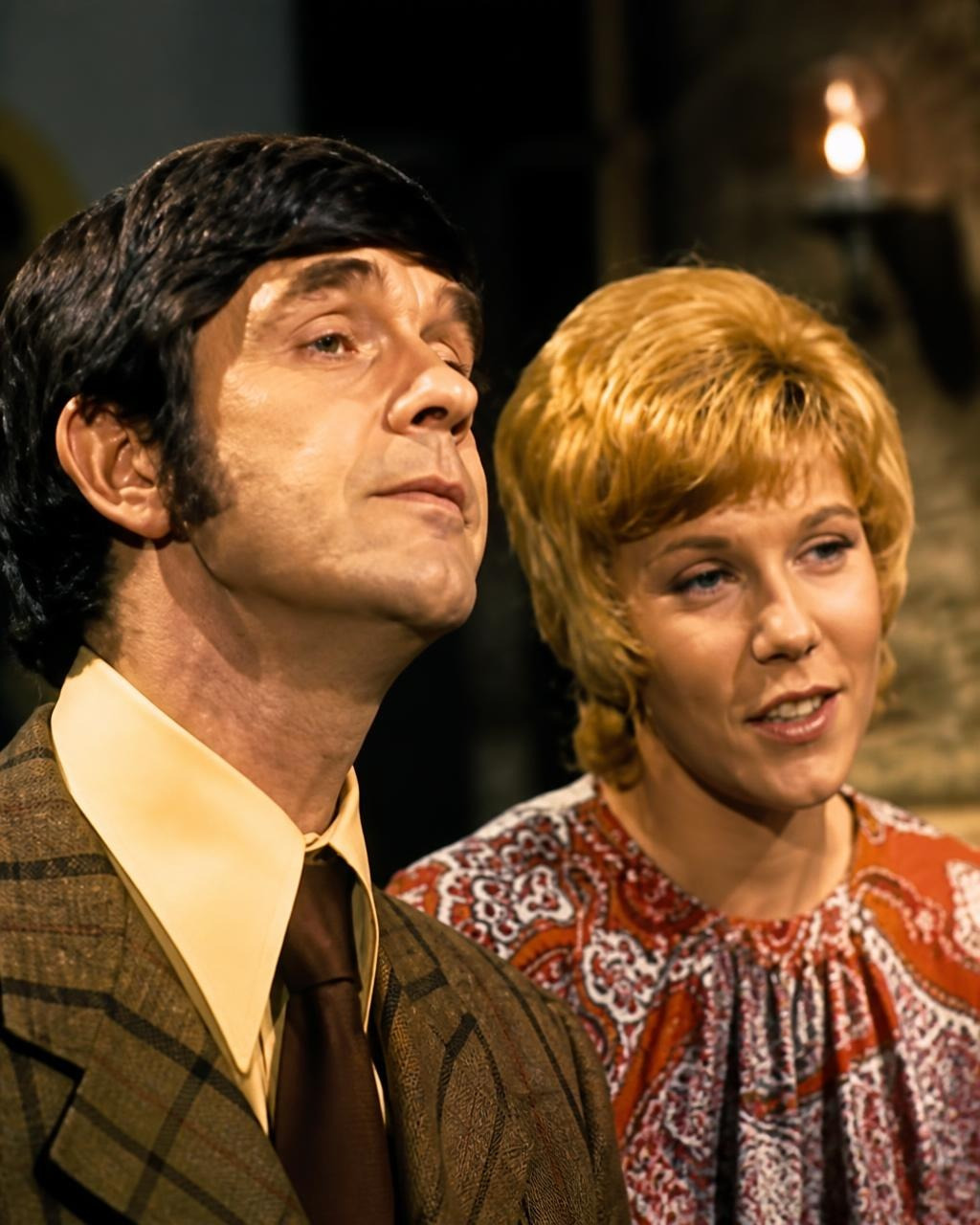
Anne Murray, Bill Langstroth, and the Love Story Behind a Career Breakthrough
Anne Murray’s rise was never just about a hit song. It was also about the complicated, deeply human chapter that began when her career crossed paths with Bill Langstroth in Halifax. In the late 1960s, Anne Murray was a young singer finding her way on Singalong Jubilee, the CBC series that gave her some of her first steady professional work. Bill Langstroth was already part of that world as a producer and co-host, which meant Anne Murray’s early career moved through his orbit from the start.
That connection became personal in 1968. By Anne Murray’s own account, the feelings were not gradual or tidy. She later wrote that she was “falling in love, fast, and powerless to do anything about it.” Bill Langstroth was still married at the time and had two young children, and Anne Murray has said she knew that from the beginning. She was also about fifteen years younger than Bill Langstroth. The relationship remained private for years, unfolding away from public view while Anne Murray’s career kept climbing.
A private relationship in public life
Those seven years were full of professional change. In 1970, Anne Murray’s recording of Snowbird became a defining breakthrough. The song helped make Anne Murray the first Canadian solo woman to earn an American gold record, and it turned her into a household name in Canada almost overnight. The image that followed was tidy and familiar: a warm, grounded singer from Springhill, Nova Scotia, suddenly presented as a national treasure.
But the real story was more complicated than the public portrait. While audiences heard the polished voice and saw the success, Anne Murray and Bill Langstroth were living with a situation that could not easily be explained in magazine headlines or television interviews. They kept their relationship discreet, and Anne Murray later wrote about that period with unusual directness instead of softening it into a cleaner version of romance.
June 20, 1975
Bill Langstroth’s divorce was eventually finalized, and on June 20, 1975, Anne Murray and Bill Langstroth married. It was also Anne Murray’s thirtieth birthday, which gives the date an almost cinematic weight. For Anne Murray, the moment joined two truths that had been living side by side for years: the public success that had made her famous, and the private relationship that had shaped so much of what came before it.
Anne Murray did not present that chapter as perfect or easy. She presented it as real.
That honesty is part of why the story still resonates. It is not a simple love story, and it is not a scandal story either. It is the story of a young artist, a powerful professional relationship, a long private wait, and a marriage that began only after the earlier bond had been tested by time, fame, and consequence. Anne Murray’s memoir later placed the whole experience in full view, without pretending the choices were painless.
What lasted
In the end, the relationship became part of the larger Anne Murray legacy: the music, the career, the public admiration, and the private cost of growing into all of it at once. Anne Murray’s life with Bill Langstroth began in a complicated place, but it became one of the most closely watched chapters in Canadian popular history. What stood out then, and still stands out now, is the fact that Anne Murray told the story in her own words and refused to make it prettier than it was.