She Sang It Every Night. He Was Standing on the Same Stage.
By the time Tammy Wynette married George Jones in February 1969, “Stand By Your Man” was already the song that had made her one of country music’s biggest names. It was a record people argued about, praised, and remembered. Onstage, it became part of the routine. Night after night, Tammy Wynette sang the song to crowds who knew every word, while George Jones stood there in the same lights, sharing the bill and the life behind it.
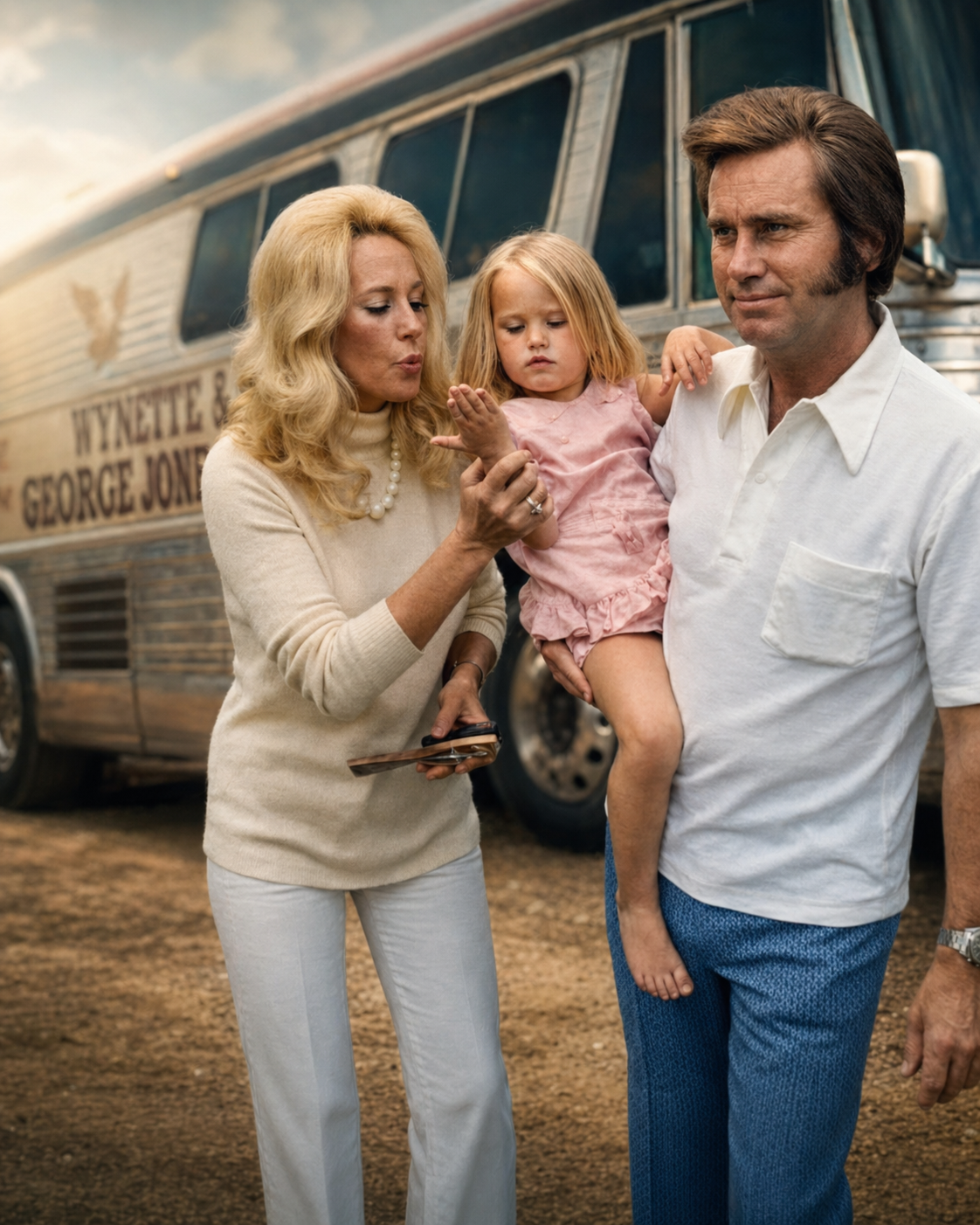
What made their story so unforgettable was not only the music, but the contrast between the public image and the private strain. They were marketed as a power couple, and for a while the image worked. Their traveling bus was famously lavish, and the painted billing along the side turned them into a rolling advertisement for country music romance. To audiences, the bus looked like proof that the story was real.
But behind the curtain, the marriage became part of the myth and part of the trouble. Tammy Wynette later wrote about those years in her 1979 autobiography, also titled Stand By Your Man. In that book, she described fear, humiliation, and violence, including claims that she covered bruises with stage makeup before performing and that George Jones had acted in ways that left her frightened and desperate to leave. One of the most serious claims she made was that he once chased her with a rifle in a Florida home.
George Jones denied that version of events. He said the marriage was shaped by two exhausted people living close together, working hard, and losing trust. He rejected key parts of Tammy Wynette’s account. The public never got a courtroom verdict, only two sharply different memories of the same years.
A Song That Outlived the Fight
That is what makes the story linger. “Stand By Your Man” was never just a hit single. It became a symbol, a promise, and later a point of argument. Yet Tammy Wynette kept singing it, even while the man in the song was the man standing beside her in real life. That detail gives the whole chapter its strange power: the performance did not hide the conflict, it exposed it.
There is sadness in that image, but also strength. Tammy Wynette did not stop being an artist because her private life was difficult. She kept working, kept singing, and kept telling her story in her own words. Whether listeners believed every detail or not, they understood that the voice behind the song had lived through something far more complicated than the record industry wanted to package.
In the end, the title of her book says almost everything. Stand By Your Man was a hit, a slogan, a memory, and a challenge. Tammy Wynette sang it every night. George Jones stood on the same stage. And together they left behind one of country music’s most famous love stories, even if it was never a simple one.