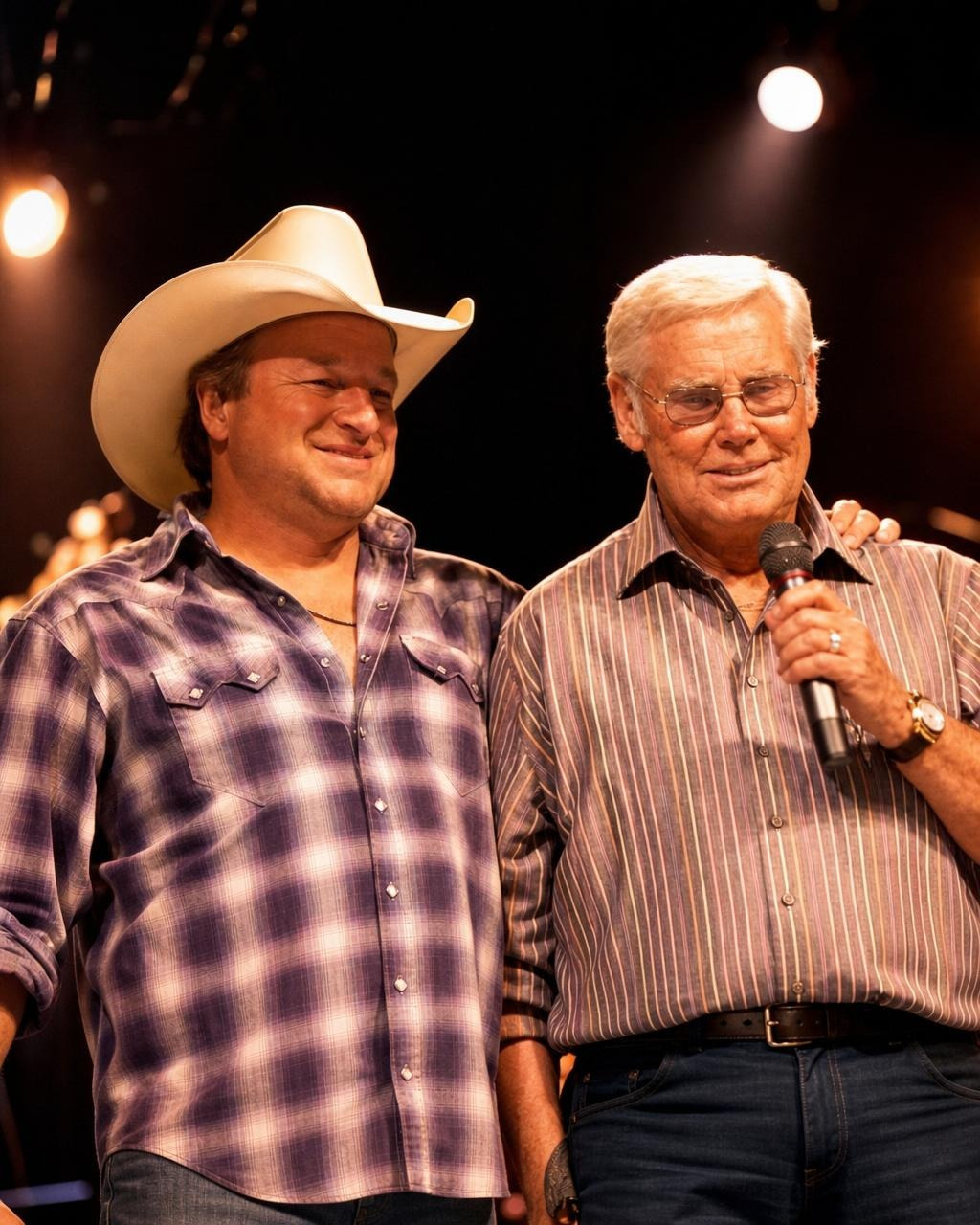
When George Jones Called Mark Chesnutt “The Real Deal” at the CMAs
In 1993, a moment on the CMA Awards stage said more about country music than a long speech ever could. George Jones, already one of the most respected voices in the genre, stood before a national audience and looked at a younger singer from Beaumont, Texas, Mark Chesnutt, with open pride. Then he said it plainly: “A boy from Beaumont, Texas — the real deal.”
For Mark Chesnutt, that line was more than praise. It was a stamp of approval from the man whose records filled his childhood home. Mark had grown up listening to George Jones the way some kids study history books. Every crack in the voice, every pause, every line that seemed to hang in the air a second longer than expected — Mark remembered it all. George Jones was not just another country star to him. George Jones was the reason he believed a voice could carry truth.
A Hero From Beaumont’s Backyard
Mark Chesnutt came from the kind of place where country music felt close to the ground. In Beaumont, Texas, songs were part of everyday life, not something distant or polished. By the time Mark stepped into the spotlight, he already understood what the great singers of country music were trying to do: tell stories honestly, without dressing them up too much.
That is why sharing a stage with George Jones mattered so deeply. It was not simply a professional moment. It was personal. George Jones represented a standard, and Mark had spent years trying to measure up to it in his own way. When George Jones welcomed him so warmly, the gesture carried the weight of experience, respect, and shared roots.
Ralph Emery Brings Them Together
Ralph Emery, who helped bring country music into millions of homes through Nashville Now, played a key role in connecting generations of artists. He understood the value of placing a rising singer beside a legend. In that setting, the audience could see the lineage of the music clearly.
On that CMA night, George Jones did something more powerful than simply hand Mark Chesnutt a spotlight. He shared it. He let the younger singer stand in the moment, then made sure everyone in the room knew exactly who Mark was. That kind of recognition is rare. It cannot be manufactured, and it cannot be forgotten.
“A boy from Beaumont, Texas — the real deal.”
A Moment That Lasted
George Jones had already built a towering career, with 143 Top 40 hits and five Grammys to his name. He did not need to validate anyone. Yet he chose to do it anyway, and that choice gave the night its heart. To be recognized by your hero in front of the entire country is the sort of memory that stays with a person for life.
For Mark Chesnutt, that moment became part of his story every time he walked onstage afterward. It lived in the back of the mind during long tours, late nights, and every performance that demanded honesty. It was a reminder that the music had roots, and that those roots mattered.
Why It Still Resonates
Country music has always been about more than chart positions. It is about inheritance, respect, and the passing down of something real from one voice to the next. George Jones saw that in Mark Chesnutt, and he said it out loud. That simple act turned a performance into a legacy moment.
Long after the applause faded, the meaning remained. George Jones was Mark Chesnutt’s hero then, and in every story Mark tells about that night, he still is.