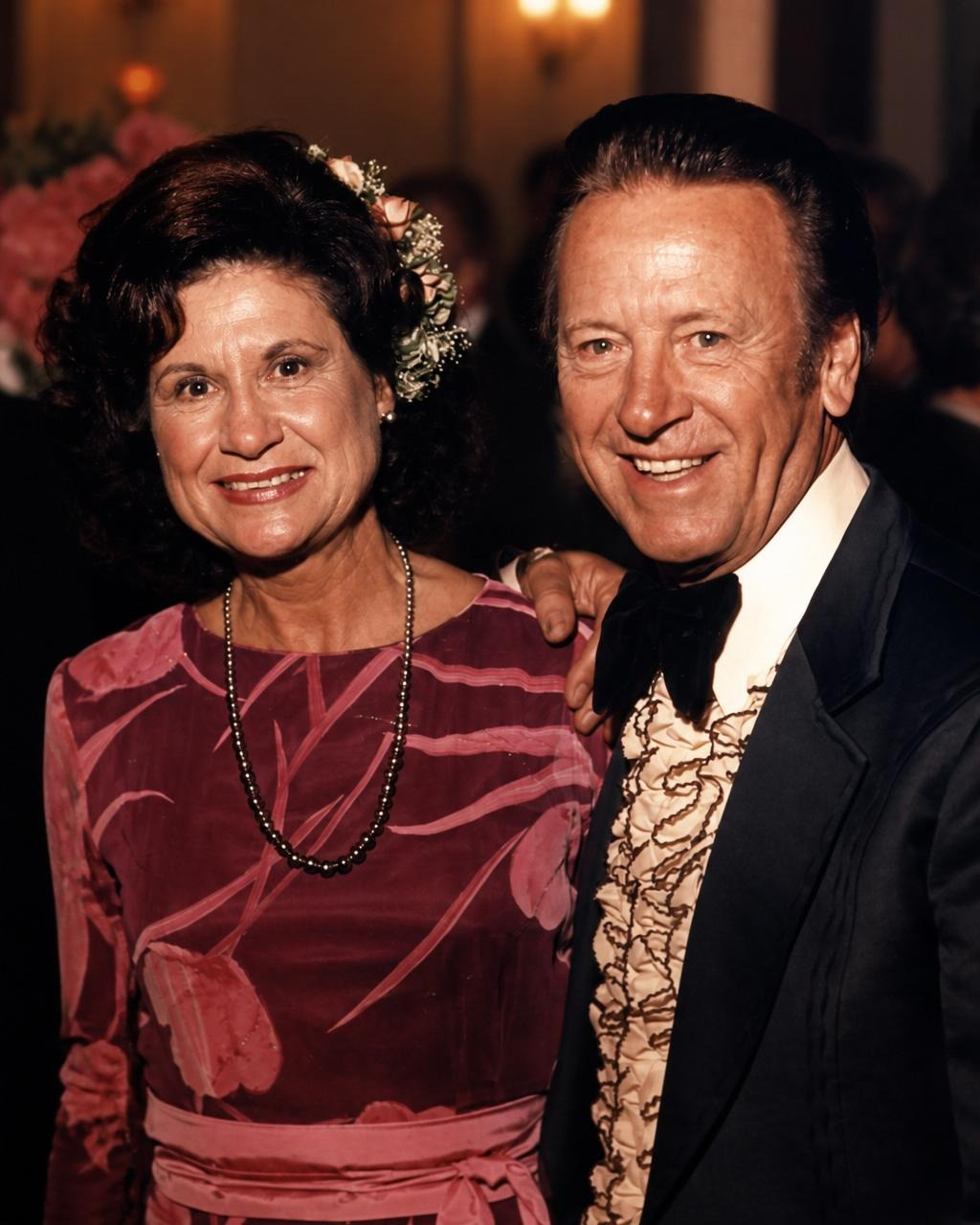
Kitty Wells, Johnnie Wright, and the School Down the Road
For years in Madison, Tennessee, a country music story kept circling back to one quiet tradition. When the second grade class at Goodpasture Christian School studied country music, Kitty Wells and Johnnie Wright would bring their tour bus over and let the children climb inside. The visit was simple, warm, and unforgettable. The kids explored the bus with the kind of wonder only second graders can bring, and then Kitty Wells and Johnnie Wright would sing a song or two before heading home.
It was never treated like a grand public event. That was part of its charm. The gesture felt personal, almost neighborhood-sized, even though Kitty Wells was one of country music’s most important voices. The connection grew out of family and time, not publicity. In the fall of 1969, their grandson John Sturdivant Jr. started at Goodpasture Christian School, and the school became part of the family’s rhythm. Over the years, more grandchildren, great-grandchildren, nieces, and nephews followed. For decades, someone from that family was enrolled there, and the bond only deepened.
A Family Tied to a School
Goodpasture Christian School was not just a place the family visited. It became a place they helped sustain. The couple played benefit concerts in the high school gym, and when the school needed support for a band room, their donation helped start the fundraising effort. That kind of generosity rarely makes noise at the time, but it leaves a lasting mark. Students who never met the couple still benefited from the way they showed up for the school community.
Later, when Kitty Wells and Johnnie Wright opened their museum in Madison, they extended that same generosity in a new way. The second grade class was welcomed to walk through it free. For the children, it turned country music history into something they could touch and see. For the school, it was another reminder that famous names can still belong to local people, especially when they keep returning to the same places year after year.
Loss, Memory, and a Scholarship
Johnnie Wright died in September 2011 after 74 years of marriage. Kitty Wells died the following July at her home in Madison at age 92. By then, her name was already secured in music history. She had become the first female singer to reach No. 1 on the country chart, a milestone that opened doors for generations of women who followed.
Yet the most moving part of this story is not only the scale of her fame, but the scale of her loyalty. Her family asked for no flowers after her death, and mourners were directed to Goodpasture instead through the Kitty Wells/Johnnie Wright Scholarship Fund. The gesture brought everything full circle: the school that welcomed the family for decades became the place where memory was turned into tuition support for children down the road from the house where Kitty Wells died.
Some legacies are built on stages. Others are built on school visits, borrowed buses, and the quiet habit of giving back.
That may be why this story still resonates. It is not only about country music royalty. It is about a couple who kept choosing the same community, again and again, until that community became part of their family history. In Madison, Tennessee, that mattered just as much as any trophy, chart position, or memorial ever could.