9 Years Later, Loretta Lynn’s Final Opry Night Feels Like a Goodbye Nobody Knew They Were Watching
On January 21, 2017, Loretta Lynn walked onto the Grand Ole Opry stage and did what she had always done best: she made the room feel honest. There was no dramatic announcement, no final speech, and no hint that country music was witnessing the closing of a chapter. The audience saw Loretta smiling, laughing, and standing in the place that helped turn a girl from Butcher Hollow into one of the most important voices in American music.
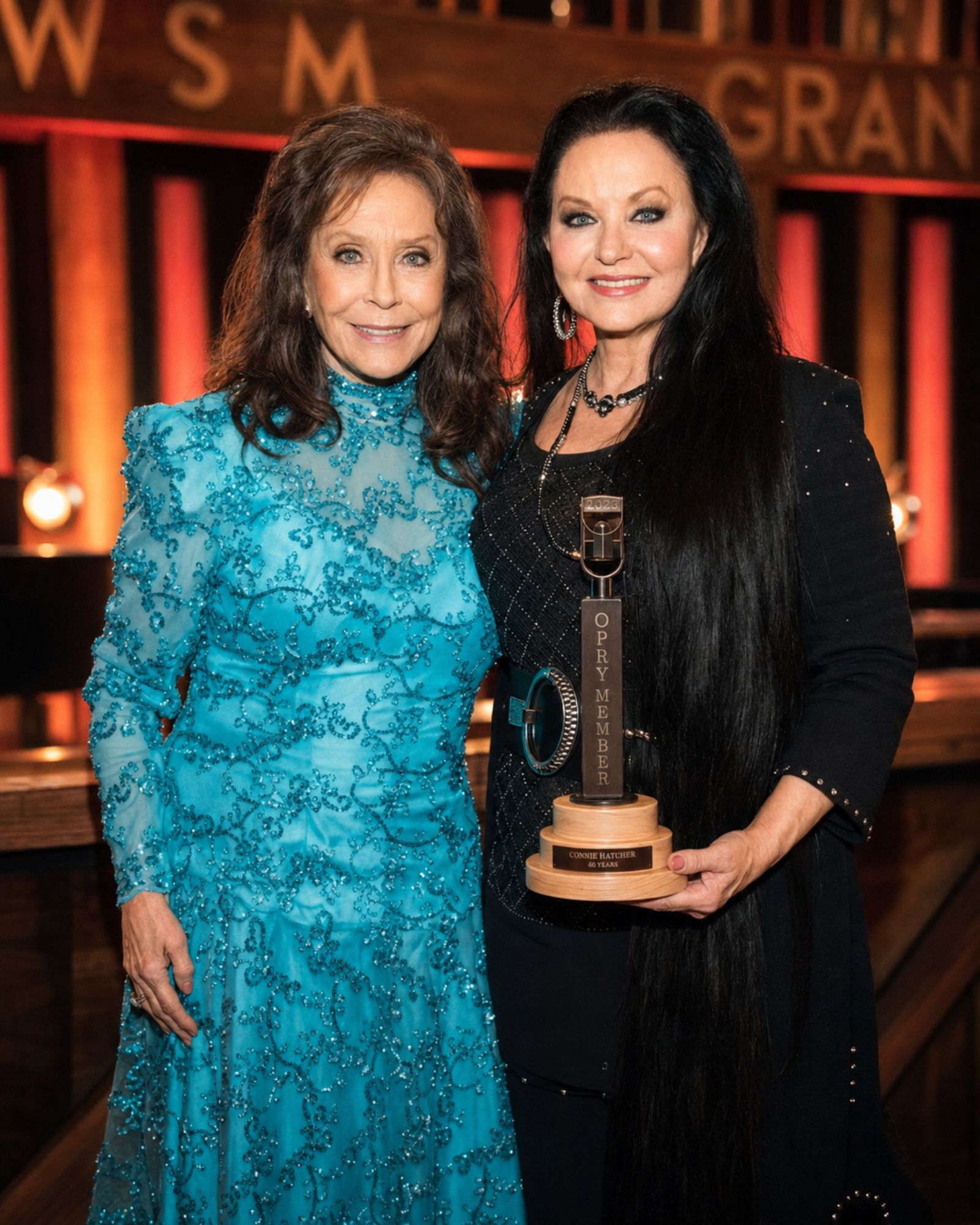
At the time, the night belonged to a joyful occasion. Crystal Gayle was being inducted into the Grand Ole Opry, and Loretta Lynn was there as a proud sister, a legend, and a living piece of country music history. The moment felt warm and familiar. It felt like family. Nobody in the room was looking for a goodbye.
A Night Full of Familiar Magic
Loretta Lynn did not arrive like a star trying to create a scene. She arrived like Loretta Lynn always arrived: direct, real, and unmistakable. When she sang You Ain’t Woman Enough, Coal Miner’s Daughter, Fist City, and You’re Lookin’ at Country, it felt less like a performance and more like a reminder of who she had always been. These were not just hit songs. They were statements. They were part autobiography, part challenge, part comfort.
Each lyric carried the weight of a life lived in public, a life where Loretta Lynn never softened herself just to fit in. She sang about pride, hardship, love, and survival in a way that made people listen closely. On that Opry night, the songs landed the same way they always had, but looking back now, they feel different. They feel like a final circle closing quietly in front of an audience that did not yet know it was saying farewell.
Loretta Lynn never needed to announce her final bow. She had spent her whole life saying the truth plainly.
The Power of a Quiet Goodbye
What makes Loretta Lynn’s final Opry night so moving is not what happened in the moment, but what did not happen. There was no big curtain call. No speech about the end of an era. No dramatic framing to tell the crowd to hold onto the memory. Loretta Lynn simply showed up, sang from the heart, and left behind a moment that would only reveal its meaning later.
That is why the night still lingers in the minds of fans. In 2017, it was just another beautiful evening at the Grand Ole Opry, filled with music, family, and celebration. In 2026, it feels heavier. Time has turned the memory into something tender. Every smile, every pause, every familiar note now carries the ache of hindsight.
Fans did not know they were watching the final Opry performance of a woman who had helped define the genre. They did not know that this would be the last time Loretta Lynn would stand in that sacred circle and sing the songs that changed country music forever. The sadness comes from that lack of warning. The goodbye was real, but it was hidden inside a moment of joy.
Why Loretta Lynn Still Matters So Deeply
Loretta Lynn’s legacy is bigger than one stage, one performance, or one night in Nashville. She mattered because she told the truth in a world that often asked women to be quieter. She sang about marriage, work, heartbreak, strength, and stubbornness with a voice that sounded like lived experience. That honesty made her unforgettable.
Her final Opry night captures everything people loved about her. She was present. She was warm. She was funny. She was unafraid to be herself. Even without a formal farewell, the performance carried the feeling of a life completed with grace. It did not need to be announced because Loretta Lynn’s entire career had already been one long, fearless conversation with her audience.
What the Night Leaves Behind
Looking back, Loretta Lynn’s final Grand Ole Opry performance feels less like an ending than a final gift. She gave the crowd one last moment of truth, wrapped inside music they already loved. She gave them laughter, memory, and the comfort of hearing the Coal Miner’s Daughter sing where she belonged.
That is why the night still hurts. Not because it was dramatic, but because it was ordinary in the most extraordinary way. Loretta Lynn did not leave behind a theatrical goodbye. She left behind a memory that only grew deeper with time.
And maybe that is the most Loretta Lynn thing of all. She never needed to tell people she was making history. She just lived it, sang it, and let the world catch up later.
Nine years later, that final Opry night still feels like a goodbye nobody knew they were watching.