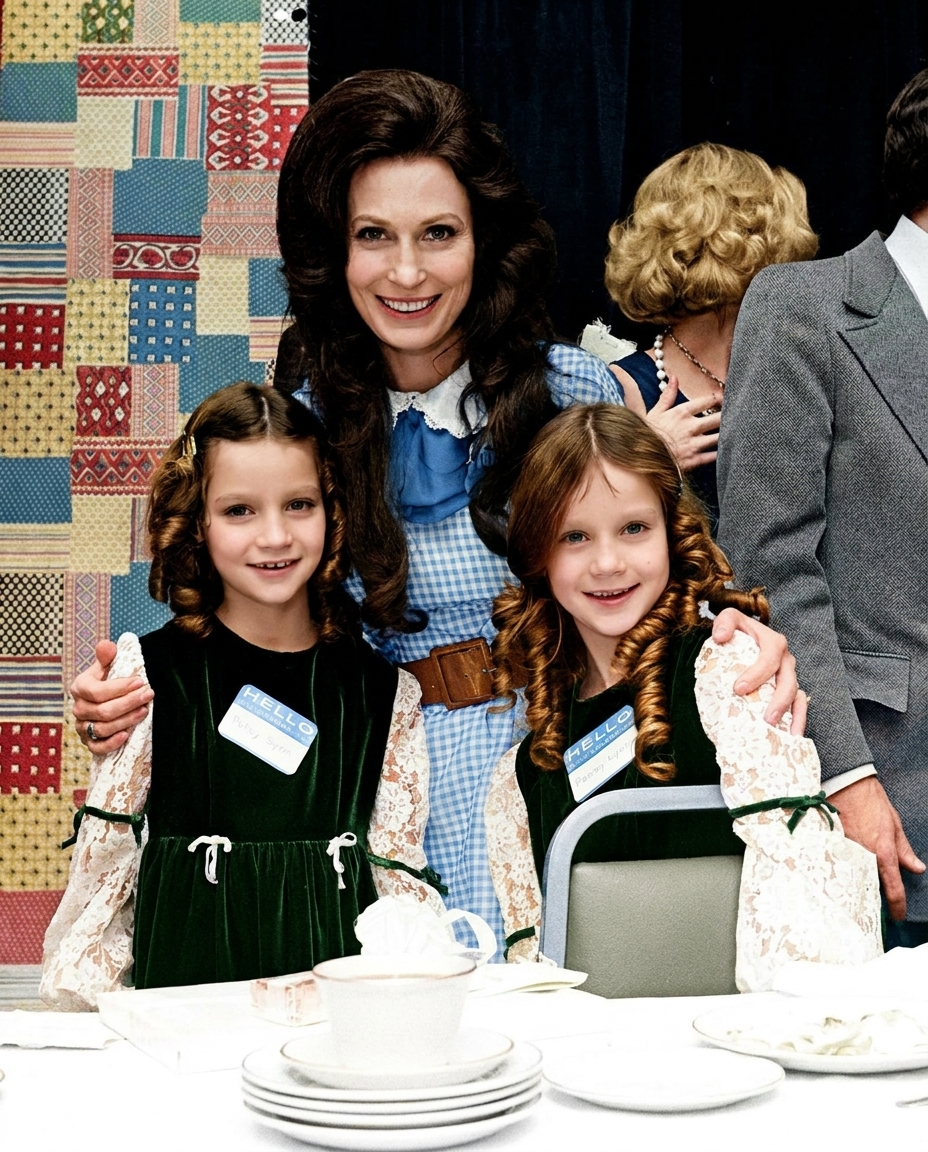
The Girl Who Baked a Pie With Salt Instead of Sugar and Sang Her Way Out of a One-Room Cabin
Long before the bright lights, the awards, and the crowded stages, Loretta Lynn was a girl from Butcher Hollow, Kentucky, growing up in a one-room log cabin where every day demanded work, patience, and grit. She was one of eight children in a coal miner’s family, and life there was built on hard seasons and hard choices. There was little room for dreams that seemed too large, but there was always room for honesty. That honesty would later become the heart of her music.
As a teenager, Loretta Lynn was already helping carry the weight of a busy household. She knew what it meant to stretch meals, mend clothing, and keep going even when the cold seemed to settle into the walls. At fifteen, she baked a pie for a school social, hoping for something simple and good. Instead, she accidentally used salt instead of sugar. It was the kind of mistake that could have ended with embarrassment and laughter from the crowd. But life had a different plan.
A young man named Doolittle Lynn bid on that pie anyway. He was not buying a perfect dessert. He was buying a moment, a gesture, a chance. Soon after, he walked Loretta Lynn home, and not long after that, the two were married. It was the beginning of a partnership that would shape her life in ways she could not yet see.
By the time Loretta Lynn had four children, she still was not thinking like a performer. She was thinking like a mother, a wife, and a woman trying to hold everything together. The stage was not the first thing on her mind. Survival was. But Doolittle Lynn saw something in her that she had not fully claimed for herself. He bought her a $17 Sears guitar and told her she was better than the women on the radio. At first, Loretta Lynn did not believe him. She had too much real life behind her to imagine that her voice belonged anywhere special.
Still, Doolittle Lynn kept encouraging her. He pushed her toward the stage, toward songs, toward the kind of public life that felt unfamiliar and risky. Loretta Lynn began to write from the place she knew best: the truth. One of her first songs, “I’m a Honky Tonk Girl,” became the spark that changed everything. She and Doolittle Lynn drove from radio station to radio station, hand-delivering the record from the trunk of their car. There was no big label machine behind them, no polished path, no powerful Nashville connection waiting to open doors. There was only determination.
The night before her Grand Ole Opry debut, Loretta Lynn and Doolittle Lynn slept in that same car.
That detail says almost everything about the woman she was becoming. Fame did not arrive with comfort. Success did not erase the struggle. Loretta Lynn came up from the kind of life where people learn to do what they must with what they have. When she stepped into country music, she brought that life with her, unchanged and unpolished in the best way.
And then she did something country music was not fully ready for. She sang about women’s lives as they were actually lived. She wrote about cheating husbands, empty fridges, birth control, and the quiet anger that lived in kitchens all over America. These were not distant stories or neatly packaged emotions. They were sharp, funny, wounded, and real. Some radio stations banned her records. But women listened anyway. They heard themselves in her words. They heard frustration, resilience, and the relief of being understood.
Loretta Lynn never softened her voice to make people more comfortable. Instead, she made room for the truth. That is what made her powerful. She did not pretend that married life was always romantic or that family life was always easy. She sang about what many women were expected to keep private. In doing so, she turned ordinary pain into something that could be shared, discussed, and remembered.
In 1972, Loretta Lynn became the first woman ever named CMA Entertainer of the Year. Her acceptance speech lasted thirty seconds. Doolittle Lynn had gone hunting and missed it. It was a small, funny, deeply human moment that somehow fit her life perfectly. Even at the height of success, Loretta Lynn remained connected to the same world she had come from.
Most icons are remembered for becoming larger than life. Loretta Lynn built her legacy by refusing to become anything other than exactly what she was: a coal miner’s daughter who never forgot the taste of salt in a pie that changed everything. Her story is not just about talent. It is about belief, persistence, and the courage to tell the truth in a world that often prefers silence.
From a one-room cabin in Kentucky to the center of country music history, Loretta Lynn sang her way forward one honest song at a time. And that is why her story still matters. It began with hardship, but it rose on a voice that would not be ignored.