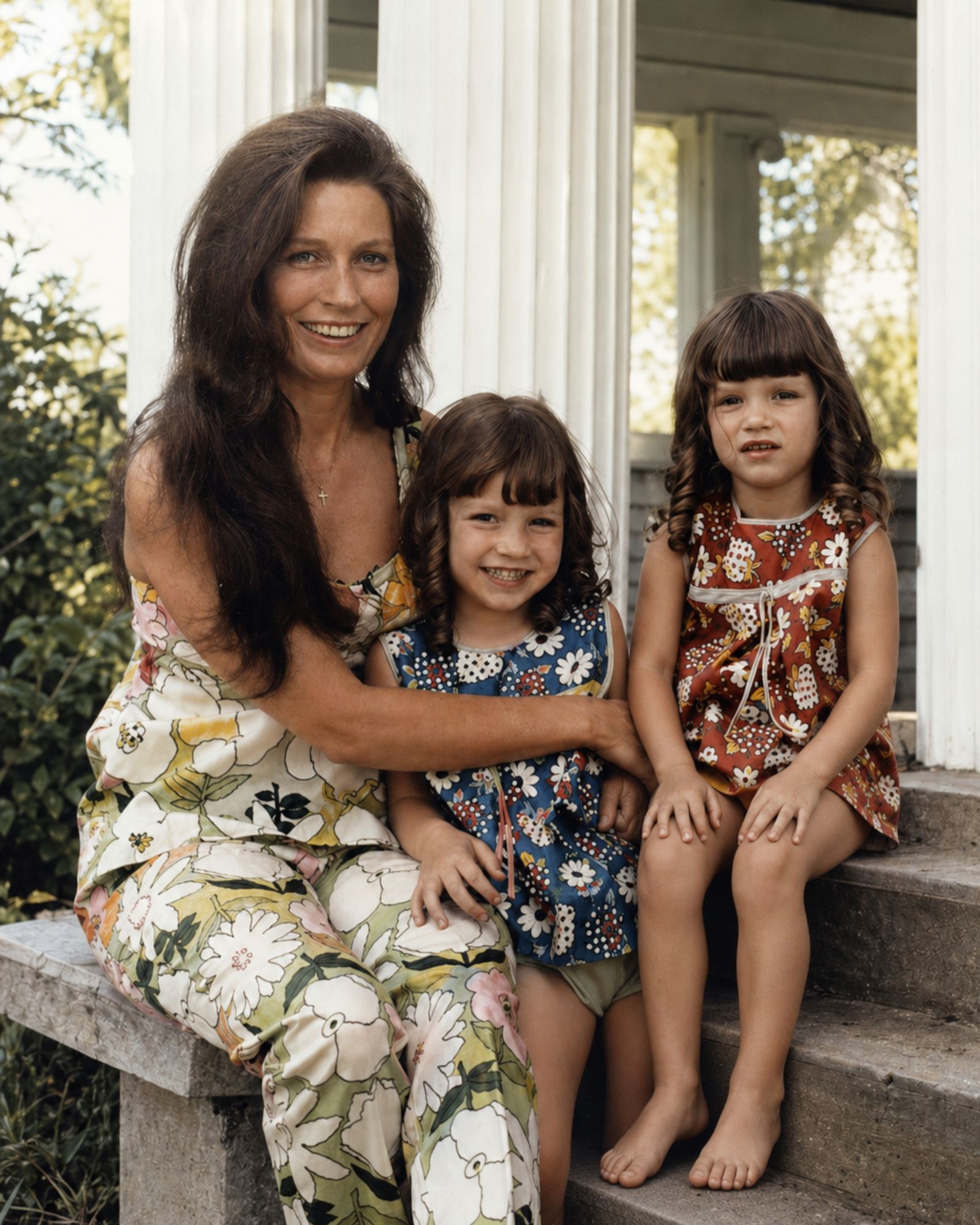
The Three-Hour Meeting at the Grand Ole Opry, 1975
On a summer night in 1975, Loretta Lynn walked onto the Grand Ole Opry stage with a song that had already caused trouble all over America. She did not know that, behind the scenes, the most powerful institution in country music had been arguing about her for hours. She did not know that a secret meeting had taken place. She only knew she had a song to sing, and she intended to sing it.
The song was “The Pill,” a sharp, fearless record about a woman refusing to apologize for wanting control over her own life. Decca Records had held it back for three years before finally releasing it. By the time it reached listeners, some radio stations had already banned it. In some places, people acted as if the song itself had broken a sacred rule. In others, fans heard something else entirely: honesty.
Loretta Lynn was no stranger to honesty. She had lived it. She had married Doolittle at fifteen. She had become a mother before she was old enough to vote. By the time she was twenty, she had four children and a hard-earned understanding of what it meant to carry responsibility without much say in the matter. When she sang, she was not posing. She was speaking from life.
A Song That Made People Nervous
“The Pill” did not sound like a lecture. It sounded like a woman finally laughing after years of being told to keep quiet. That may be exactly why it made so many people uncomfortable. In the country music world of that era, women were often expected to sing about heartbreak, faithfulness, and waiting. Loretta Lynn sang about waking up to a different kind of freedom.
Some listeners were outraged. A preacher in Kentucky, Loretta Lynn’s home state, condemned her by name from the pulpit. But the reaction did not end there. The congregation walked out and bought the record. That response said a lot about the tension surrounding the song. People might argue in church, on the radio, or in the press, but many still wanted to hear the truth for themselves.
Loretta Lynn took that night at the Grand Ole Opry seriously, but not fearfully. She performed “The Pill” three times on that stage. Each time, she carried the same steady nerve. She did not ask permission from the audience to exist. She simply sang.
If they hadn’t let me sing the song, I’d have told them to shove the Grand Ole Opry.
That line captures the force of Loretta Lynn better than any polished speech ever could. She was respectful, but she was not submissive. She had earned the right to speak plainly, and she knew it.
The Secret Meeting Nobody Told Her About
A week after she sang “The Pill” on the Opry, Loretta Lynn learned something that would have stunned many performers. The Grand Ole Opry had held a three-hour secret meeting to decide whether she should ever be allowed to perform the song there again.
Think about that for a moment. While Loretta Lynn was onstage doing what she had always done, powerful people were offstage deciding whether her voice should be restricted. That contrast tells the whole story. The song was not just about birth control. It was about control itself: who has it, who fears it, and who gets punished for asking questions.
The meeting was proof that “The Pill” had hit a nerve far beyond radio playlists. It reached into the core of a culture that often preferred women to be grateful, quiet, and careful. Loretta Lynn was none of those things when it mattered most. She was brave enough to make people uncomfortable.
What Loretta Lynn Stood For
Loretta Lynn’s power came from more than controversy. It came from the fact that her life made her believable. She understood work, marriage, motherhood, and the sacrifices demanded by all three. When she sang about women’s lives, she did not speak from theory. She spoke from memory.
That is why the reaction to “The Pill” still matters. The song was not simply rebellious for rebellion’s sake. It gave language to a feeling many women already knew but rarely heard in public. In 1975, that mattered. It still matters now.
The Grand Ole Opry meeting, the bans, the sermons, and the outrage all became part of a larger story: a woman with a microphone refusing to make herself smaller. Loretta Lynn did not wait for permission to tell the truth. She sang it, and people had to decide what to do with that truth.
Why the Story Still Stands Out
Looking back, the drama of that night is not only about country music history. It is about how institutions react when someone with real experience says something they would rather not hear. Loretta Lynn did not set out to start a culture war. She set out to sing a song that reflected women’s lives in a way country music had rarely allowed.
That is why the story endures. It has tension, courage, backlash, and surprise. It has a woman who knew exactly where she stood, and a system that spent three hours wondering whether it could contain her. In the end, it could not.
Loretta Lynn walked onto that stage not knowing what had been decided about her. She only knew the song was hers to sing. And in country music history, that was enough to change the room.