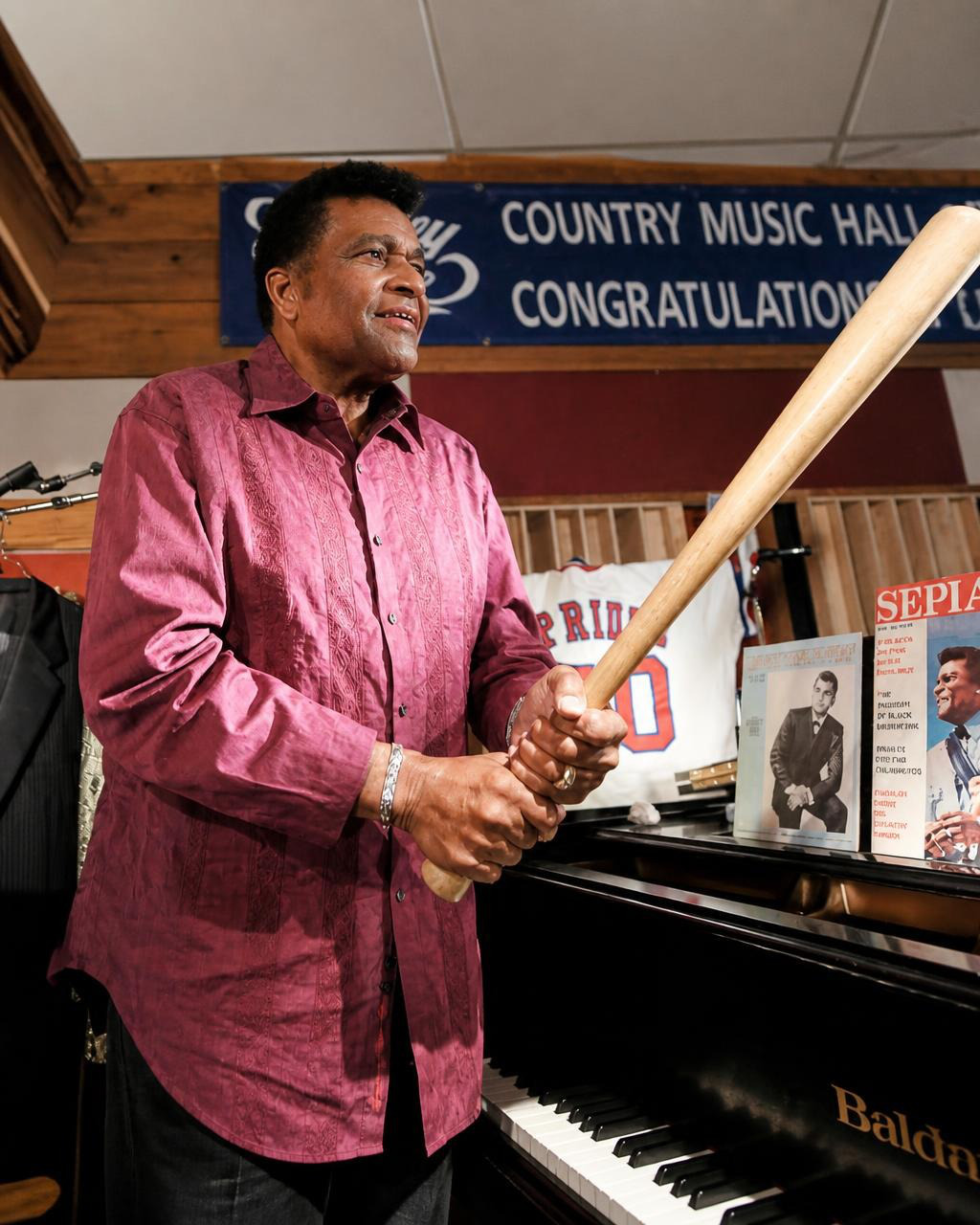
They Paid Charley Pride $10 to Sing the Anthem — The Same Amount They Paid Him to Pitch
Charley Pride did not arrive in music first. He arrived in work boots, with a baseball dream and a voice that would later carry far beyond Montana. Born the fourth of eleven children near Sledge, Mississippi, Charley Pride grew up picking cotton with his family. At fourteen, he ordered a $10 Silvertone guitar from the Sears catalog, a small purchase that hinted at a future he could not yet see.
Baseball pulled Charley Pride north. By 1960, he was in East Helena, Montana, working a tough industrial job and pitching for the company team. The money was practical, not glamorous: a hundred dollars a week for labor, and later, a little extra when someone realized the pitcher could also sing. According to Charley Pride’s story, the team manager began paying him $10 a game to sing before first pitch. Fifteen minutes of music. Ten dollars. And, as the crowds grew, so did the attention around the ballpark.
That detail still lands because it feels so perfectly American: a working man earning the same amount for a fastball as for a song. Charley Pride came to Montana for baseball, but music kept stepping into the frame. His first summer there, he batted .444, a number that told one story. The other story was quieter and more lasting. People came for the game, then stayed for the voice.
The Voice That Changed the Room
Charley Pride would go on to become country music’s first Black superstar, a milestone that mattered not only because of fame, but because of what it made possible for audiences listening across boundaries. His hit-making years were long and steady, stretching from the mid-1960s through the 1980s. He earned 29 No. 1 hits and 52 Top 10 songs, and in 2000 he was inducted into the Country Music Hall of Fame.
But those numbers only tell part of the story. The deeper part is the one that begins before the lights, before the applause, before the records. It begins with a cotton field, a catalog guitar, a baseball diamond, and a man who could do both jobs well enough that people paid him twice.
Baseball was what Charley Pride came for. The ten dollars was what stayed.
There is something moving about that kind of beginning. Not because it is neat, but because it is honest. Charley Pride was building a life one shift, one inning, and one song at a time. The anthem money was small, but it marked a turning point: the moment when talent became impossible to separate from opportunity.
Long before the charts and honors, Charley Pride had already learned the lesson that would shape his life. Sometimes a career starts as a side note. Sometimes the thing you are paid to do becomes the thing the world remembers you for.