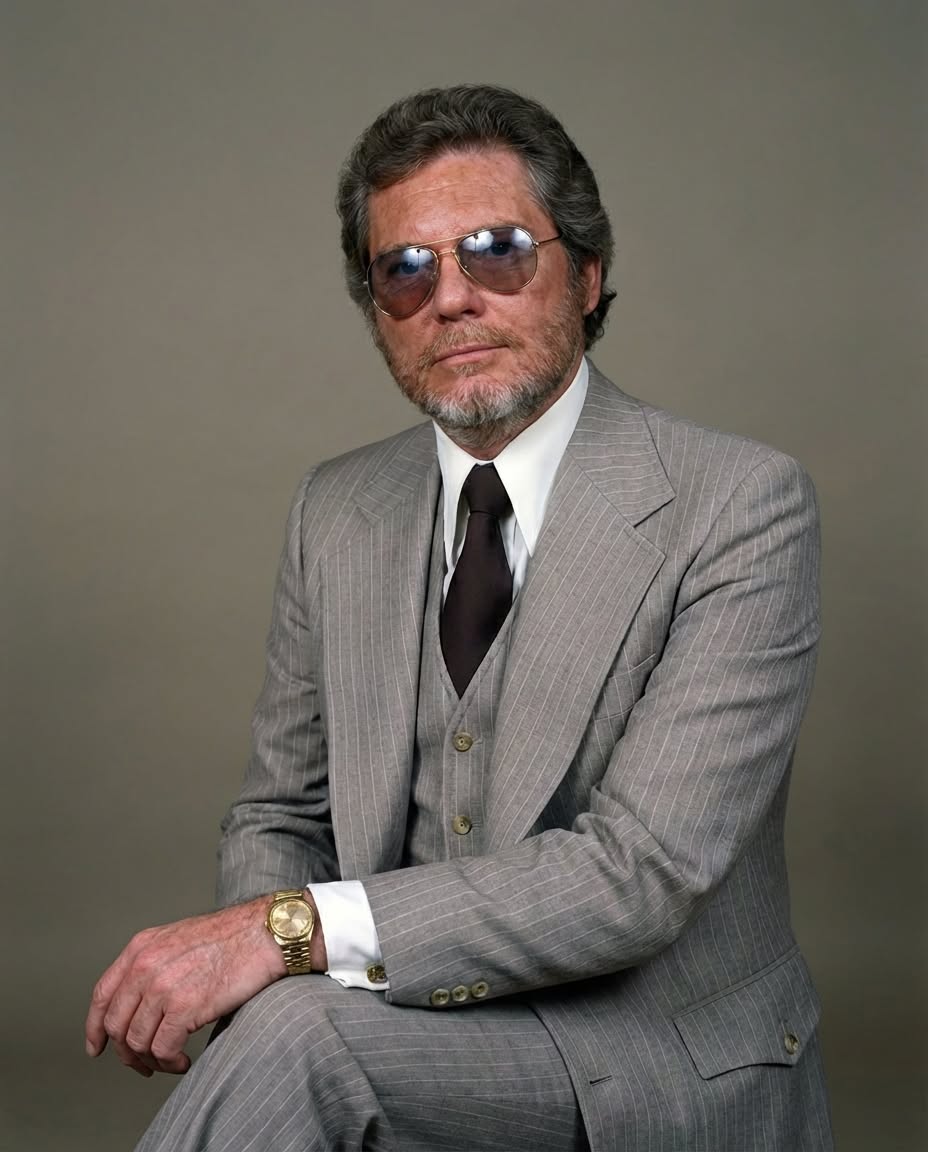
He Left Without a Crowd, but His Song Never Did
There was no public funeral. When Lew DeWitt died at home in Waynesboro on August 15, 1990, the goodbye was private, quiet, and deeply personal. His remains were cremated, and his widow kept his ashes. For a man whose voice had once floated over radio stations across America, the end came with almost no public ceremony at all.
Lew DeWitt was only 52. Crohn’s disease had been part of his life since his teenage years, and it eventually forced him out of the Statler Brothers in 1982. The illness did not just interrupt a career; it shadowed it for decades. Even so, his name remained tied to some of the group’s most enduring music, especially the song that first opened the door for them: “Flowers on the Wall.”
That song was Lew DeWitt’s. It became the Statler Brothers’ first major hit, reaching No. 2 on the country chart and No. 4 on the pop chart in 1965. The following year, it helped win the group a Grammy. For a new generation of listeners, it sounded clever and almost easy. Behind that ease was a songwriter and singer who knew how to make close harmony feel intimate, lived-in, and unmistakably human.
Lew DeWitt sang tenor on every Statler Brothers record from 1965 to 1982. That voice sat at the top of the blend, bright and steady, the kind of part that can be missed by casual listeners and never forgotten by fans. The Statler Brothers became known for a sound that was polished but warm, and Lew DeWitt helped shape it from the beginning.
After his death, the recognition slowly continued. In 1992, Waynesboro named a road for him: Lew DeWitt Boulevard. Years later, his influence reached another kind of audience when “Flowers on the Wall” appeared in Pulp Fiction in 1994. The song suddenly traveled again, this time to people who had never known the Statler Brothers by name.
Then, in 2008, the Country Music Hall of Fame inducted the Statler Brothers, and Lew DeWitt’s name entered with theirs. There is also a cenotaph at Augusta Memorial Park, and fans still visit it. They leave notes, flowers, and memories. Some even make videos there, proving that a life does not end only in the moment of death. Sometimes it continues in a road sign, a record, a film scene, and a quiet stone where strangers still pause.
Lew DeWitt did not get a large farewell. But he got something else: a lasting place in the music, and in the memory of people who still find their way back to his song.