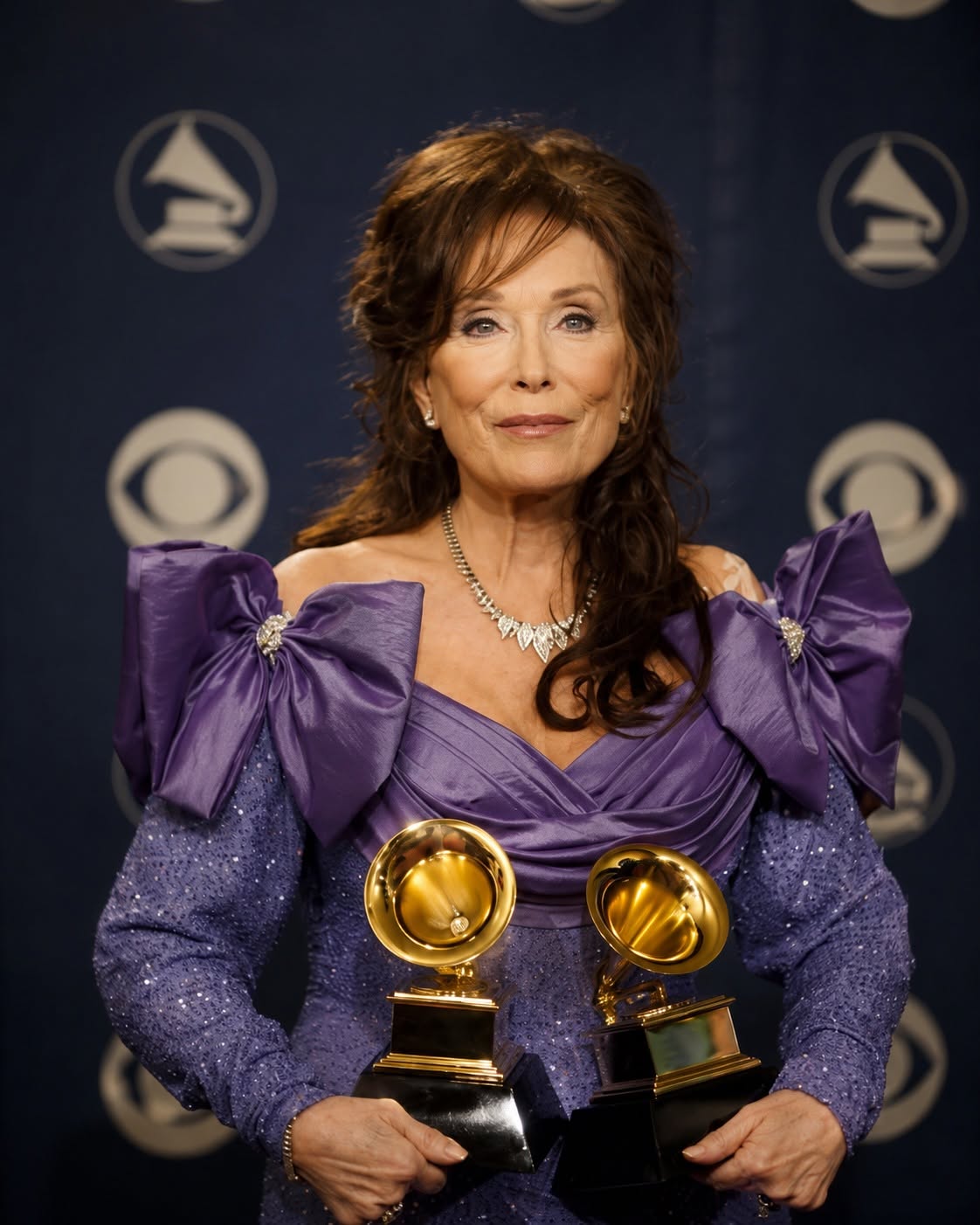
Loretta Lynn: The Woman Behind the Movie, the Music, and the Myth
For many people under 30, Loretta Lynn is first discovered on a screen. They watch Coal Miner’s Daughter, hear the name, and then start asking questions. Who was this woman with the steady voice and sharp honesty? Why did her story feel so big, so personal, and so impossible to reduce to a two-hour film?
The answer is simple: Loretta Lynn was already legendary long before Hollywood arrived.
She was born in Butcher Hollow, Kentucky, into a life shaped by hard work, poverty, and responsibility. She married young, became a mother early, and lived a life that was not polished for public approval. Instead of hiding that truth, Loretta Lynn turned it into songs. She sang about marriage, temptation, heartbreak, motherhood, and female frustration in a way country music had rarely heard before. Her voice was direct, emotional, and brave.
That bravery changed everything.
A Woman Nashville Could Not Ignore
Loretta Lynn did not wait for permission to matter. She wrote songs that felt lived-in because they were. When she sang about a woman’s point of view, she was not pretending to be bold. She was speaking from experience. That made her music powerful, and at times controversial, because she told truths many people preferred to keep quiet.
She became the first female country artist to earn a Gold album, a major breakthrough in an industry where women were often treated as supporting acts rather than leaders. Then she made history again as the first woman to win CMA Entertainer of the Year. These were not just trophies. They were signs that country music had been forced to recognize a woman who had already been winning the deeper battle: the fight to be heard clearly.
Loretta Lynn’s success was not built on image alone. It was built on real life, and real life has a way of sounding unforgettable when it is sung honestly.
The Song Came Before the Film
Many younger fans meet Loretta Lynn through the movie Coal Miner’s Daughter, but that film came after the story had already been lived and sung. The title was first a song, and that song captured something essential about her identity. She was proud of where she came from. She did not treat her background as a marketing angle. She treated it as truth.
That is part of what makes Loretta Lynn so enduring. She was never manufactured into authenticity. She was authentic before authenticity became a trend. Hollywood may have helped new audiences find her, but it did not create her. The woman who walked onto that stage had already survived a life that demanded strength, endurance, and a sense of humor.
More Than a Story on Screen
It is easy to turn a famous life into a neat summary. But Loretta Lynn was never neat. She was complicated, emotional, funny, stubborn, and fearless. She could write about ordinary life in a way that felt extraordinary. She made space for women who wanted to be honest about love and disappointment. She gave voice to people who were often expected to stay quiet.
Her legacy grew beyond music. She became a Hall of Famer. She received the Presidential Medal of Freedom. She became a symbol of resilience, not because she tried to be one, but because she kept showing up as herself.
And maybe that is why her story still lands with new generations. In a world full of carefully edited public images, Loretta Lynn’s life feels refreshingly direct. She did not need a rewrite. She had already written the hardest parts herself.
The Woman Came First
The movie helped. The awards mattered. The headlines mattered too. But Loretta Lynn was never made by any of them.
She was a coal miner’s daughter who became a country music giant. A teenage bride who became a cultural force. A woman who turned pain into songs and songs into history. And when people under 30 discover her through a film first, that is only the beginning of the real story.
The real story is the voice. The truth. The courage. The woman who kicked open doors so hard that Nashville had to act surprised they were already open.
Loretta Lynn was not just a legend because a movie said so. She was a legend because she lived like one long before the cameras arrived.