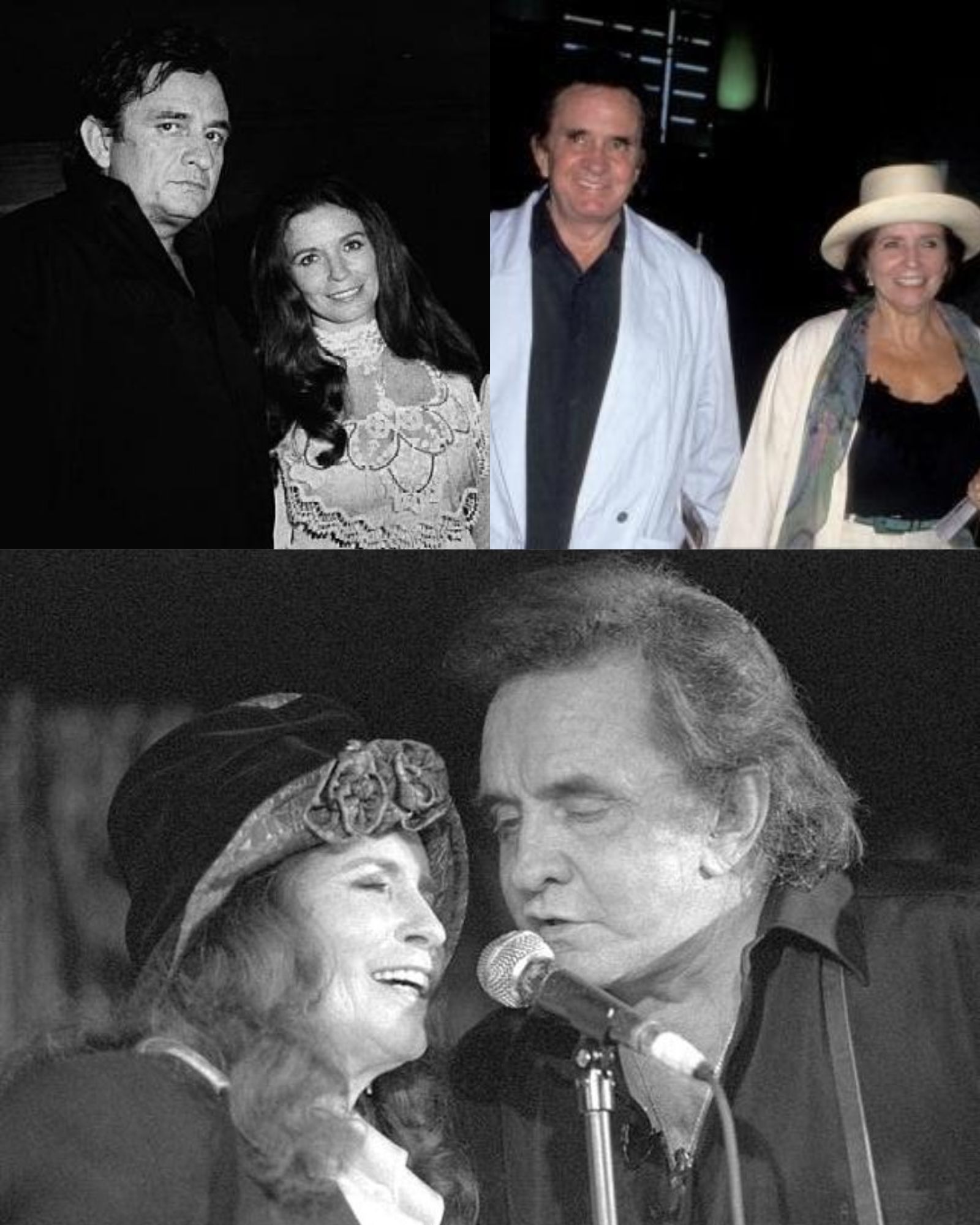
June Carter Cash died on May 15, 2003, from complications after heart valve surgery. She was 73. She and Johnny Cash had been married for 35 years.
The next day, Johnny Cash called his producer, Rick Rubin. He was not calling to cancel sessions or to ask for time alone. He was calling to ask for more work.
Rubin later told Rolling Stone what Cash said on that call:
“I have to get to work. If you don’t have something for me to do every day, I’m going to die.”
Rubin believed him. In Rubin’s words, Cash “really believed music was the only thing he had left to live for.”
A Man Who Could Barely See, Still Showing Up to Sing
Johnny Cash was 71. Diabetes had taken much of his sight, and he needed a wheelchair. Years earlier he had been diagnosed with Shy-Drager syndrome, a nerve disease that wore his body down.
So Rubin did what Cash asked. Sessions were booked every day. If Cash woke up and felt strong enough, he would call and say, “Let’s do it.” If he didn’t, they would try again tomorrow.
Rubin spoke with him every day during those months. He said later that after June died, Cash was ready for whatever came, but he still wanted to work. The songs from those sessions became the album American V: A Hundred Highways, released after his death.
One Last Night at the Carter Family Fold
On July 5, 2003, less than two months after June’s death, Johnny Cash went to the Carter Family Fold in Hiltons, Virginia. The music hall was founded by members of June’s family, and Cash had played there several times over the years.
He was too weak to walk to the microphone on his own. He still refused to be brought onto the stage in a wheelchair. He sat down, said “Hello, I’m Johnny Cash,” and opened with “Folsom Prison Blues.”
He even told a joke. The Fold had a rule that performers play acoustic. The first time Cash brought electric instruments there, June’s cousin Janette Carter told the crowd that June said Johnny Cash was already plugged in when she met him.
Then he spoke about June. He read words he had written shortly before he went onstage:
“The spirit of June Carter overshadows me tonight with the love she had for me and the love I have for her.”
He went on to say he thanked God for June Carter and loved her with all his heart.
Then he sang “Ring of Fire.” June had co-written that song with Merle Kilgore, about her feelings for Johnny before they were ever a couple. That night, it was the song of a widower singing about the woman he had just lost.
The set lasted about 30 minutes. It was the last time Johnny Cash ever performed in public.
The Last Song He Wrote
After the Fold, Cash went back to recording. One of the songs from those final weeks was an original called “Like the 309,” about a train. It is the last song Johnny Cash wrote. He had loved trains since he was a boy, and in the song he sings about being carried home on one.
Accounts differ on how many songs he recorded in those last four months. Some sources say about 30, others say as many as 60. What is clear is that he finished his final track for American V about a week before he died.
Johnny Cash died of complications from diabetes on September 12, 2003, at Baptist Hospital in Nashville. It was four months after June.
The Tapes Nobody Could Play
After Cash died, the recordings sat in storage. Rick Rubin could not face them. He later said he couldn’t listen to those recordings for two years, and that it was heartbreaking when they finally did.
When the album finally came out in 2006, people heard what Rubin had heard in that room: a man who had lost almost everything, still singing every day because he had asked for it.
Where were you the first time you heard “Ring of Fire”?