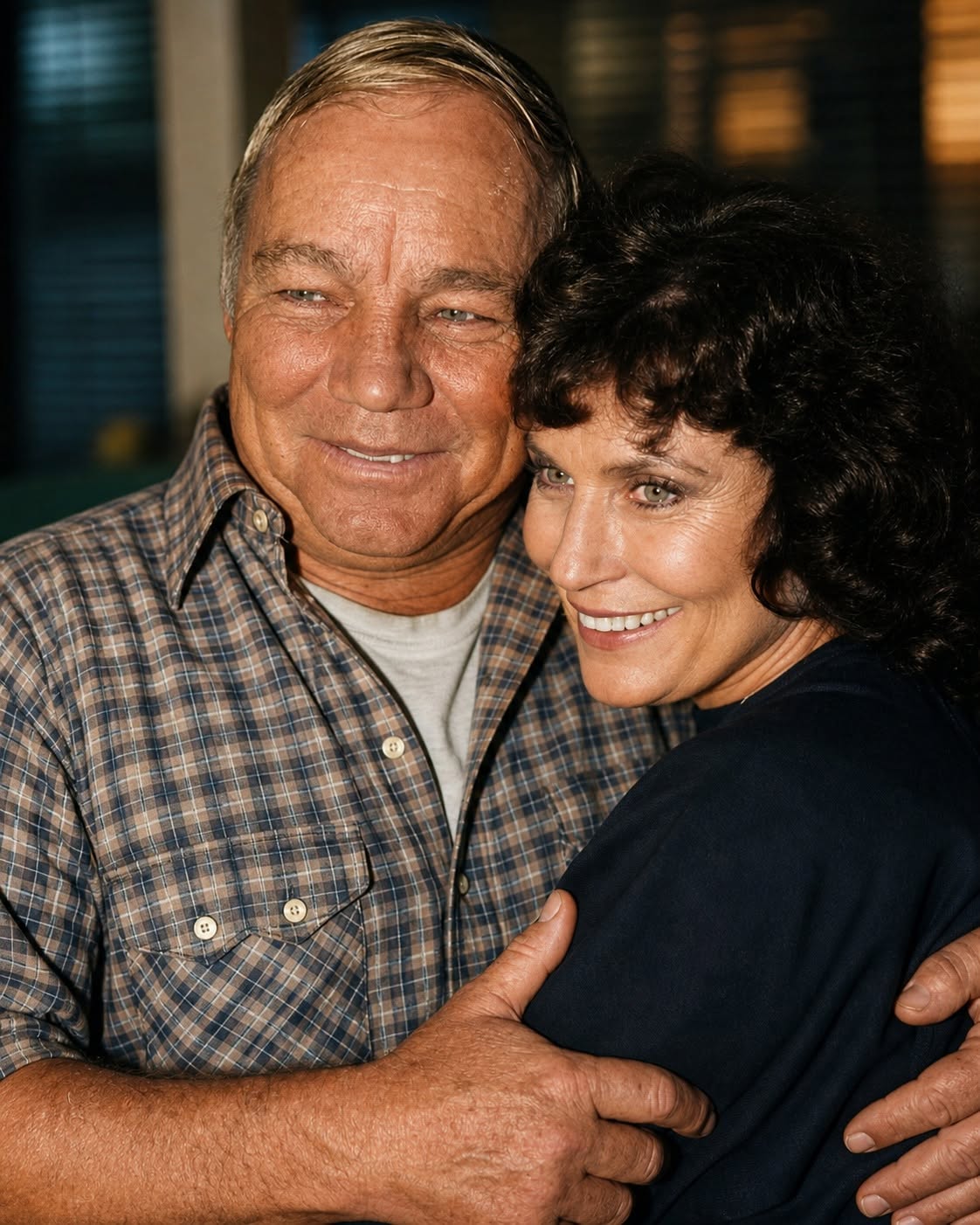
The Love Story Loretta Lynn Kept Turning Into Songs
Loretta Lynn was 64 when she buried the man she had been writing about for decades. His name was Oliver Vanetta Lynn Jr., though the world knew him by the nicknames Doolittle, Doo, and Mooney. For 48 years, he had been her husband, her promoter, her burden, and, in many ways, the engine behind the start of her career. He died on August 22, 1996, at their home in Hurricane Mills, Tennessee. She had spent a lifetime turning their marriage into music. Then, for a while, she fell silent.
A Marriage That Fueled a Career
The story began with a guitar. Loretta Lynn’s first one cost seventeen dollars, and Oliver Lynn bought it for her. He also pushed her onto stages when she did not feel ready, and he drove her across the country with a box of records in the trunk, knocking on radio station doors and refusing to let the dream stay small. He ran her business for years, long before she became a legend.
That help came with complications. Oliver Lynn drank. He was unfaithful. Everyone in Nashville seemed to know it, because Loretta Lynn never hid it in her writing or in her plainspoken way of talking about life. She did not polish the pain into something neat. She sang it as it was.
When Personal Life Became Country Music
Some of Loretta Lynn’s biggest songs carried the tension of that marriage. “Don’t Come Home A-Drinkin’ (With Lovin’ on Your Mind)” spoke for a woman who had reached her limit. “Fist City” felt like a warning delivered with a steady stare. “You Ain’t Woman Enough” began with a woman telling another woman exactly where the line was.
Loretta Lynn later said that half of every song she wrote had Oliver Lynn in it, and that he never knew which lines were his. That was part of the arrangement. She could not always say everything at the kitchen table, but she could say it in front of twenty thousand people. And once it was sung, it no longer sat heavy inside her alone.
“It eased me just to have finally said it.”
After the Funeral
Oliver Lynn died in Hurricane Mills on August 22, 1996, and Loretta Lynn did not write another song about him for eight years. When she finally returned to the subject, she was 72 and writing from widowhood instead of conflict. The song was called “Miss Being Mrs.,” and it carried a different kind of ache: not the heat of an argument, but the emptiness that follows a long marriage after the noise is gone.
What makes the story last is not just the drama. It is the honesty. Loretta Lynn did not pretend the marriage was simple, and she did not pretend it was easy to lose the man who had helped build her life. She kept both truths at once. That is why the songs still feel alive. They were never just about fame or scandal. They were about a woman trying to tell the truth in the only way she fully trusted.
In the end, Loretta Lynn’s greatest love story was not tidy. It was lived hard, sung plainly, and remembered line by line.