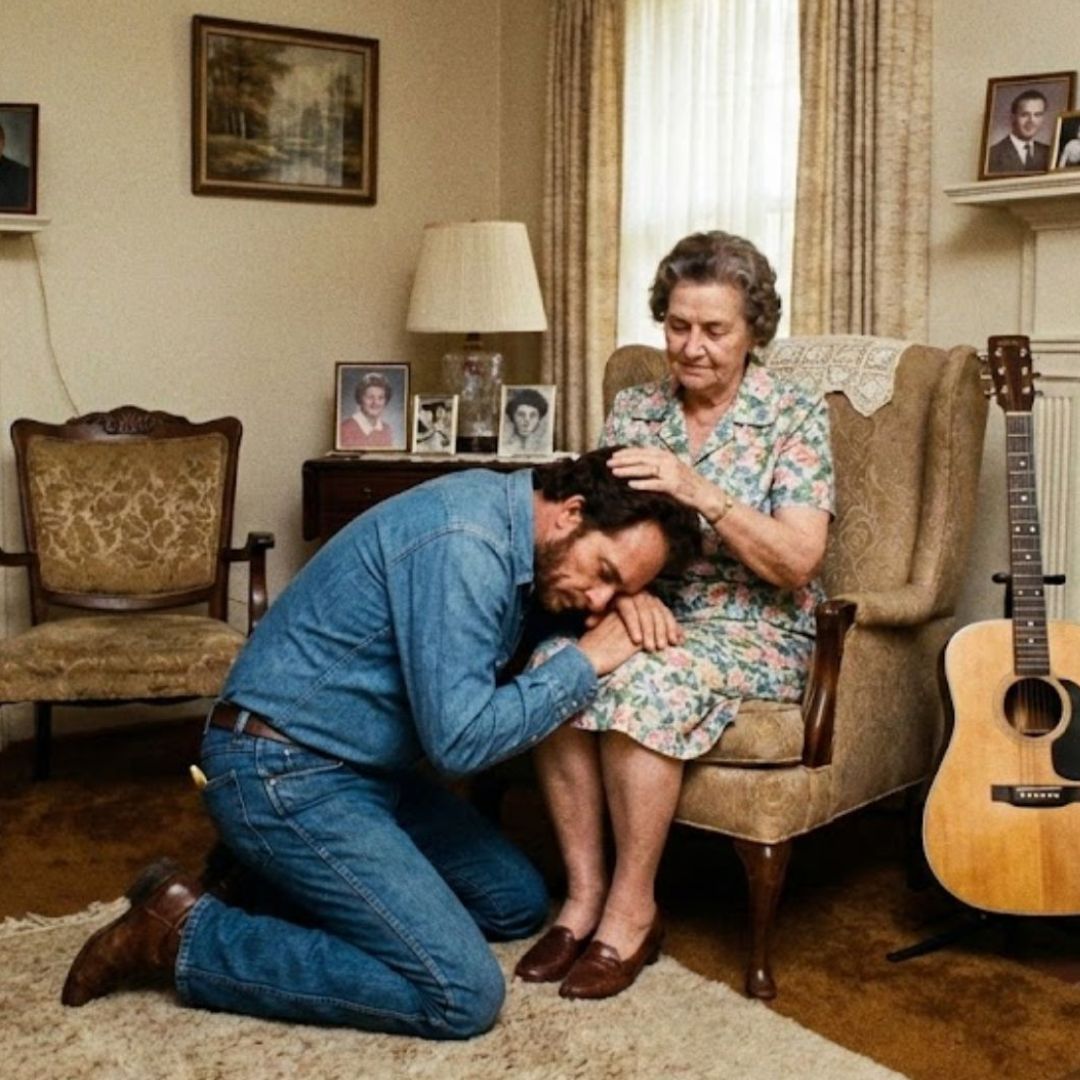
Merle Haggard, Flossie Mae, And The Courtroom Silence Behind “Mama Tried”
Merle Haggard’s mother was sitting in the courtroom the day the judge gave him fifteen years.
That image is hard to shake once you let it settle in. Before Merle Haggard became one of the most honest voices country music ever produced, before “Mama Tried” became a song millions of people could sing from memory, there was a mother named Flossie Mae sitting in a courtroom, watching the youngest boy she had fought to raise be sent away.
Flossie Mae Haggard had already known loss by then. Flossie Mae and Jim Haggard raised their family in Oildale, California, in a converted boxcar that had been turned into a home. It was humble, tight, and far from easy, but it was theirs. Then Jim Haggard died when Merle Haggard was still a boy, and the weight of the family shifted onto Flossie Mae’s shoulders.
Flossie Mae took work. Flossie Mae tried to keep the house together. Flossie Mae tried to keep grief from swallowing the children whole. But grief has a way of slipping into the cracks of a young life, and Merle Haggard began drifting toward trouble almost before anyone could stop him.
A Boy Slipping Out Of Reach
By his teenage years, Merle Haggard was already getting into trouble with the law. What may have started as rebellion slowly became something darker and harder to control. He ran away. He got locked up. He escaped. Then he got caught again.
To fans who later knew Merle Haggard as a legendary singer, it can be tempting to see those years as part of the myth — the outlaw road, the rough edge, the hard past that made the music believable. But for Flossie Mae, it was not a myth. It was her child.
Every mistake Merle Haggard made had a sound at home. A door closing. A late-night worry. A phone call. A name spoken in court. A mother wondering whether the boy she loved was moving farther away from the life she had prayed he would find.
Then came the moment that would live quietly behind one of the greatest country songs ever written.
The Courtroom And The Sentence
After yet another escape and another arrest, Merle Haggard stood before a judge. His record had grown too long to ignore. The judge looked at the history in front of him and gave Merle Haggard the maximum sentence: up to fifteen years in San Quentin.
Flossie Mae was in the room.
That is the detail that changes everything. This was not just a young man hearing his punishment. This was a mother watching the system take her son somewhere she could not follow. Flossie Mae had already buried her husband. Flossie Mae had already worked herself tired trying to hold the family together. Now Flossie Mae had to sit still while her youngest son was sent to one of the hardest prisons in California.
The part most people wonder about is not what the judge said. It is what Merle Haggard saw when Merle Haggard looked at his mother’s face.
There are some memories a man can turn into songs. There are others he can barely say out loud.
San Quentin And The Turn In The Cell
Merle Haggard’s time in San Quentin became one of the defining chapters of his life. He was still young, angry, restless, and lost. At one point, after getting caught for making alcohol in prison, Merle Haggard ended up in solitary confinement.
He later remembered that kind of loneliness as something that forced him to look inward. There was no crowd to impress in that cell. No road to run down. No back door to slip through. Just concrete, silence, and the truth of what his choices had done.
That is where the story begins to turn. Merle Haggard did not become a different man overnight. Real change rarely happens that cleanly. But something inside him began to move. The anger that had once pushed him into trouble slowly found another place to go. It found rhythm. It found words. It found country music.
Why “Mama Tried” Still Hurts
Years later, Merle Haggard wrote “Mama Tried,” and the song became more than a hit. It became a confession. It became a country music prayer for every son who knew he had caused pain he could never fully repair.
The famous line about turning twenty-one in prison “doing life without parole” was not a perfect factual account of Merle Haggard’s sentence. But that never mattered much. The emotional truth was stronger than the legal record. Merle Haggard was not writing a court document. Merle Haggard was writing from guilt.
And at the center of that guilt was Flossie Mae.
“Mama Tried” is often remembered as a song about a bad boy who could not be saved. But listen closer, and it becomes something more tender. It is a son looking back and admitting that his mother was not the reason he fell. Flossie Mae had tried. Flossie Mae had worked. Flossie Mae had loved him through the shame, the trouble, and the heartbreak.
The Apology Flossie Mae Never Demanded
That may be why the song still reaches people. It does not feel like performance. It feels like a man standing in the quiet after the damage is done, finally brave enough to say what he should have said years earlier.
Merle Haggard wrote “Mama Tried” as an apology. But Flossie Mae never seemed to demand one in public. Maybe that was forgiveness. Maybe that was exhaustion. Maybe it was the kind of love that keeps showing up even when it has every right to walk away.
For all the awards, records, and standing ovations Merle Haggard would receive, the shadow of that courtroom never fully disappeared. A judge gave Merle Haggard a sentence. San Quentin gave Merle Haggard a reckoning. But Flossie Mae gave Merle Haggard the memory that turned into one of country music’s most unforgettable songs.
And maybe that is why “Mama Tried” still feels so human. It is not just about prison. It is not just about rebellion. It is about the face of a mother in a courtroom, the silence between guilt and love, and a son who spent the rest of his life trying to sing his way back home.