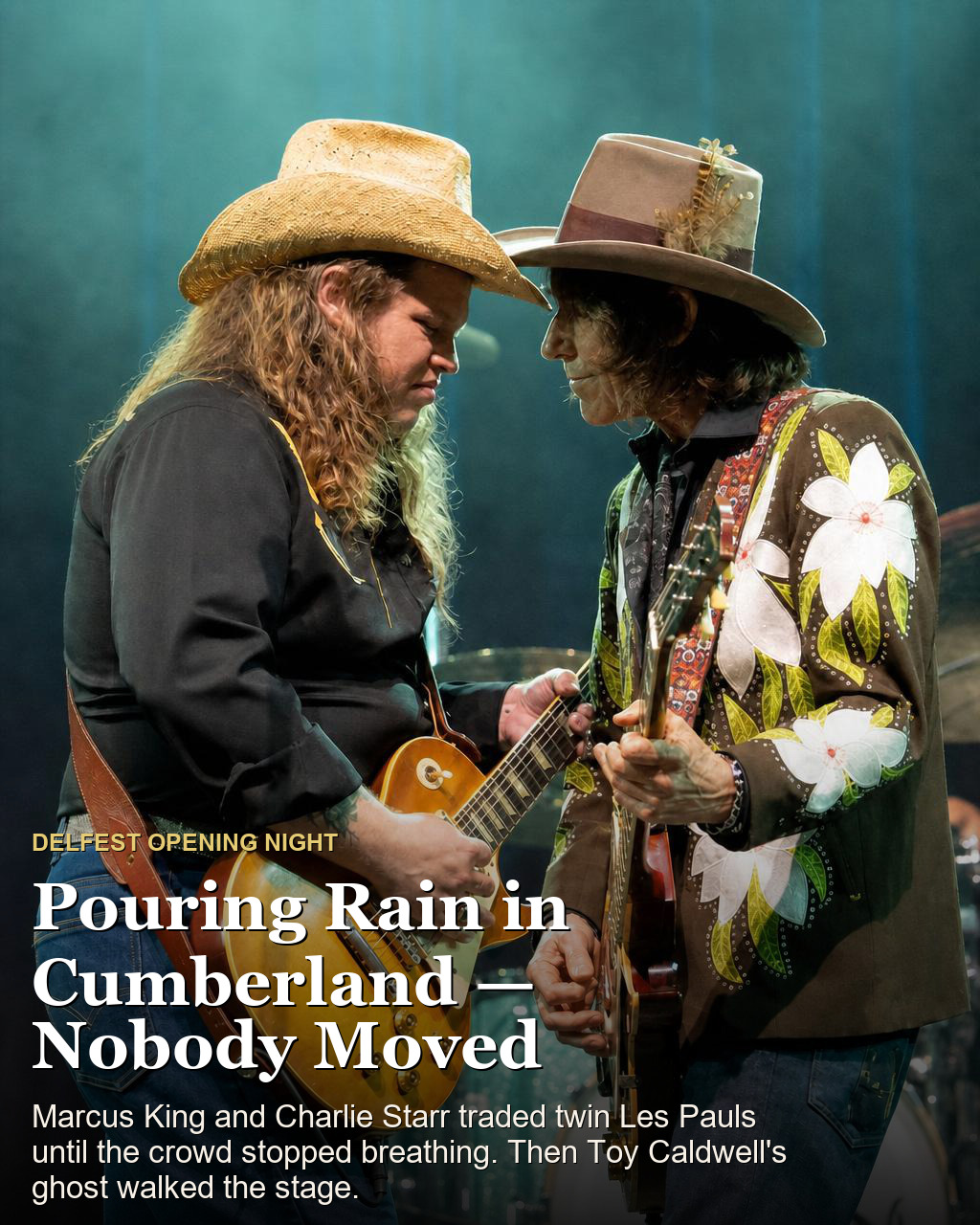
Marcus King, Charlie Starr, Oteil Burbridge, and a Ghost Named Toy Caldwell on That Stage
It was pouring rain in Cumberland, Maryland, on opening night of DelFest, the kind of storm that usually clears a field in minutes. People pack up jackets, grab what they can, and head for cover. That night, though, nobody really moved. Something bigger than the weather had taken hold of the crowd, and it began the moment Toy Factory Project walked onto the stage.
The lineup already felt special before a single note rang out. Marcus King, Charlie Starr, Oteil Burbridge, founding Marshall Tucker Band drummer Paul T. Riddle, Josh Shilling, and Jimmy Rector stepped into the rain with the confidence of musicians who understood exactly what they were there to do. They were not just playing songs. They were reopening a chapter of Southern rock history and letting it breathe again in front of a soaked, grateful audience.
A Night Built on Memory and Fire
The spirit of the performance was centered on the songs of Toy Caldwell, whose writing helped define a sound that still carries weight decades later. Fifty years after those songs were first born, they did not feel old. They felt alive, urgent, and a little dangerous in the best possible way. The rain only added to that feeling. Every chord seemed to land harder because the crowd was standing in water, wrapped in ponchos, refusing to give in.
What made the night so powerful was not just the nostalgia. It was the chemistry. Marcus King brought flash and soul. Charlie Starr brought grit and precision. Oteil Burbridge brought a deep, musical pulse that held everything together. Paul T. Riddle gave the whole set a backbone that reminded everyone where the story started. Josh Shilling and Jimmy Rector helped shape the edges, keeping the arrangement strong and moving forward.
Sometimes a tribute show feels like a museum piece. This was not that. This was a living conversation.
Then Sam Bush Walked In and Changed the Temperature
As if the evening had not already reached a peak, Sam Bush appeared with his fiddle and stepped into the middle of the storm. He was not even on the original lineup, which made the moment feel even more electric. His presence on “24 Hours At A Time” turned the song into something larger than expectation. He played with a fire that brought Charlie Daniels to mind so strongly that it felt, for a few seconds, like another era had slipped through a crack in time and landed onstage in Maryland.
The crowd responded immediately. People who had been standing still all night started leaning forward. Heads turned. Smiles spread. The rain kept falling, but it no longer mattered. The band had shifted the atmosphere completely.
The Moment Everyone Remembered
Then came the part that wrecked everyone.
Marcus King and Charlie Starr stood face-to-face with twin Sunburst Les Pauls, trading blazing licks back and forth like they were finishing each other’s sentences at full volume. One line would fly out from Marcus King, and Charlie Starr would answer with something just as fierce. Then it would swing back again. It was not a competition. It was a duel in the old musical sense, where both players push each other higher until the room itself seems to lift.
The audience went quiet in that rare way crowds do when they know they are witnessing something they will talk about for years. Nobody wanted to miss a note. Every bend, every run, every sharp burst of tone felt like part of the same story: passion, respect, and total command of the moment.
“Can’t You See” in the Rain
When “Can’t You See” arrived, the whole field seemed to gather itself around the song. The McCoury brothers stepped in, adding a beautiful layer of tradition and harmony to an already emotional night. Marcus King picked up that Les Paul one last time, and the crowd did what great crowds do when a song means more than words can explain. They sang.
They sang through the rain. They sang through the cold. They sang with faces turned upward and voices carrying across the muddy ground. The song became bigger than the stage, bigger than the band, bigger than the storm. It belonged to everyone standing there, drenched and smiling and refusing to leave.
That is what made the night unforgettable. Not just the musicianship, though it was extraordinary. Not just the guest appearances, though they were perfectly placed. It was the feeling that something unrepeatable had happened. A ghost named Toy Caldwell seemed to hover over the stage, not as a sad memory, but as a presence full of force and joy.
And when the final notes faded, nobody looked like they wanted to go home. They looked like they had just been part of history.