Loretta Lynn Wrote 160 Songs. Sixty Radio Stations Banned Just One of Them. It Still Hit #5.
There are songs that entertain, songs that comfort, and songs that quietly pass through the world without leaving much behind. Then there are songs that walk straight into a locked room, throw open the windows, and let in air nobody was ready to breathe. For Loretta Lynn, that song was “The Pill.”
By the time it arrived, Loretta Lynn was not a reckless newcomer looking for attention. She was already one of country music’s defining voices, a writer who had turned hard-earned life into songs with uncommon honesty. She had written about marriage, money, heartbreak, double standards, and the daily strain of being a woman expected to carry more than anyone wanted to admit. Nashville knew Loretta Lynn could tell the truth. What worried them was how plainly she was about to tell it.
The song was only three minutes long. The title was only two words. But the message landed like a slammed door.
“The Pill” was not vague, coy, or dressed up in safe language. It spoke from a woman’s point of view with an almost shocking confidence. It joked, it pushed, it challenged, and most of all, it refused to apologize. In a genre where women were often expected to suffer beautifully and stay polite while doing it, Loretta Lynn did something that felt almost rebellious: she talked back.
Nashville executives reportedly begged Loretta Lynn not to release it. They could already hear the complaints coming. Country radio, especially in the mid-1970s, still had gatekeepers who believed some subjects should remain unspoken, at least by women and certainly not with a grin. But Loretta Lynn had never built her career by asking permission to feel what she felt. She sang for real people, and real people did not live inside carefully edited lyrics.
When “The Pill” reached radio, the reaction was swift. Stations pulled it. Some banned it outright. Pastors denounced it. One Tennessee station manager became so furious that he snapped the record in half on the air, as if destroying the vinyl could erase the idea. Around sixty radio stations refused to play it.
And yet the song kept moving.
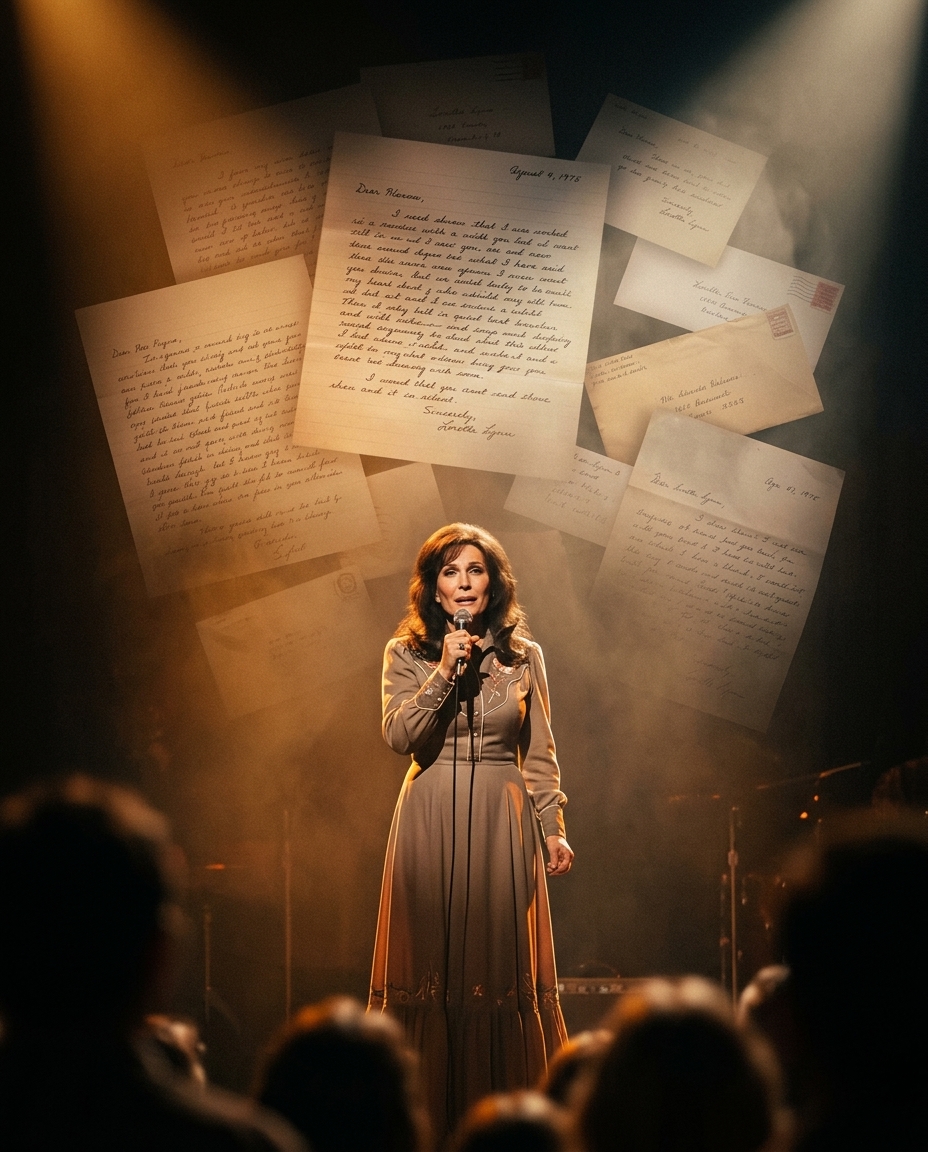
That is what makes this story endure. Even while doors were closing in public, windows were opening in private. Letters began arriving for Loretta Lynn, and they did not come from the men trying to silence the song. They came from women. Farm wives in Kentucky. Mothers in Oklahoma. Widows who had spent years swallowing opinions no one had ever asked to hear. Women who may never have called themselves activists, rebels, or even fans in the dramatic sense. They simply heard something in that record that sounded real.
Sometimes the most controversial thing a woman can do is speak in her own voice and expect to be heard.
Loretta Lynn read those letters. The story has stayed with people because it reveals something deeper than chart history. She kept them in a shoebox under her bed, not as trophies, but as proof. Proof that a song can do more than stir headlines. It can reach someone sitting alone at a kitchen table, someone exhausted, someone embarrassed by feelings they were taught to hide, and tell them they are not strange for thinking what they think.
One letter, said to be from a 19-year-old in West Virginia, reportedly made Loretta Lynn cry for an hour. You do not need to know every word in that letter to understand why. A young woman heard “The Pill” and recognized a truth she had probably never heard spoken aloud on country radio. Not softened. Not scolded. Just stated.
The Song They Tried to Stop
What makes the backlash so revealing is that “The Pill” was not banned because it was incoherent or cruel. It was banned because it was clear. It named a shift in power, however modest, and that alone was enough to unsettle people. The song suggested that women were not just characters in family stories written by others. They had opinions about their own lives. They had frustrations. They had wit. They had limits. And they were capable of saying enough.
Ironically, the controversy only sharpened the song’s place in history. Despite the bans, despite the outrage, despite the pressure to bury it, “The Pill” still climbed to No. 5. That chart position matters, of course. But the more important victory was not numerical. It was emotional. Listeners carried it with them because it broke a silence they had mistaken for permanence.
Should Truth Be Too Plain?
So the question remains: Should a song ever be silenced for telling the truth too plainly?
That depends on whether we believe art exists merely to decorate public life or to confront it. Loretta Lynn understood, perhaps better than many of her critics, that a song can be funny and disruptive at the same time. It can sound conversational while opening a cultural fault line. It can irritate the powerful and comfort the unheard in the same breath.
“The Pill” still matters because it exposed an old habit: when a woman says something uncomfortable with confidence, people often call the tone offensive before they admit the subject is real. Loretta Lynn knew that dynamic. She sang through it anyway.
Years later, the outrage has faded, but the courage has not. What survives is the image of Loretta Lynn reading letters from women who felt seen, folding them carefully, and placing them in a shoebox under her bed. Not because she needed applause, but because she understood what those letters meant. A truth spoken plainly may be punished at first. But once it reaches the people who need it, it becomes very hard to silence at all.