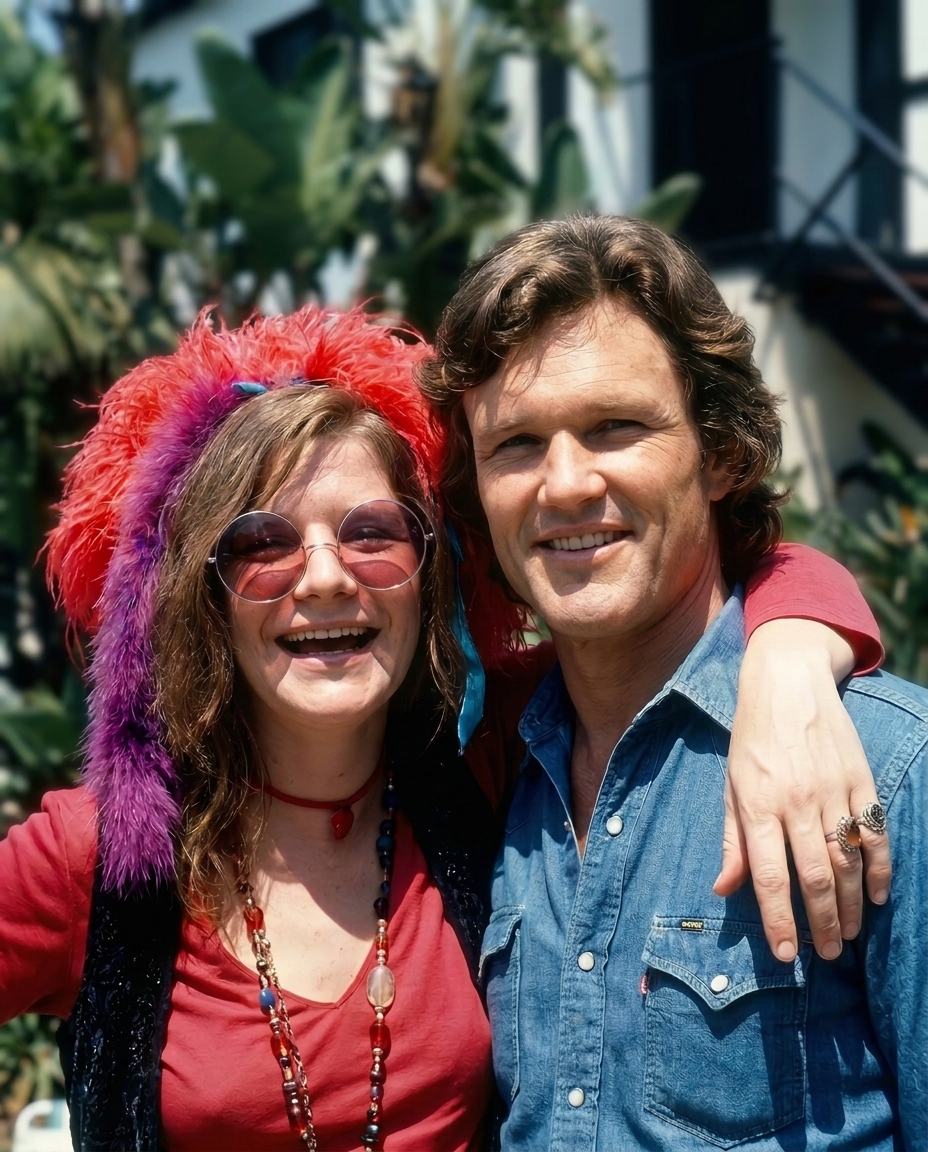
Kris Kristofferson Wrote the Song That Took Janis Joplin to No.1 — But By Then, She Was Already Gone
When Janis Joplin died in October 1970, the music world seemed to stop for a moment. There was no farewell tour, no final interview, no careful ending. There was only a sudden silence where her voice had been, a voice that sounded raw, fearless, and impossible to ignore.
Then, a few months later, something strange and almost heartbreaking happened. Radio stations began playing “Me and Bobby McGee”, the song Kris Kristofferson had written with Fred Foster. Janis Joplin had recorded it and turned it into something unforgettable. By the time the song climbed to No. 1, she was no longer alive to hear it.
That fact changes everything about the song. It is not just a hit. It is a moment suspended between triumph and loss. For Kris Kristofferson, this should have been the kind of success every songwriter dreams about. Instead, it arrived wrapped in grief.
A Song With a Long Road Before Fame
“Me and Bobby McGee” did not begin as a legend. Like many great songs, it started quietly, shaped by collaboration and instinct. Kris Kristofferson and Fred Foster wrote it with a simple emotional center: two people drifting through life, chasing freedom, and carrying each other for a little while before letting go.
It was the kind of song that could belong to many voices, but Janis Joplin made it feel like it had been waiting for her all along. Her version was full of movement and ache. She did not sing it like a polished studio performance. She sang it like someone remembering something that still hurt.
That was Janis Joplin’s gift. She could make a lyric sound lived-in, as if every line had cost her something real.
Kris Kristofferson Did Not Know What She Had Done
One of the most heartbreaking parts of the story is that Kris Kristofferson did not even know Janis Joplin had recorded the song until after she died. The first time he heard her version, she was already gone.
That detail gives the whole story a deeper sadness. A songwriter imagines a song traveling out into the world, finding listeners, maybe becoming a hit. But rarely does a songwriter imagine learning that a great performance exists only after the performer has died.
For Kris Kristofferson, hearing Janis Joplin’s recording was not just a professional moment. It was a personal one, filled with the weight of what might have been. He heard her voice carrying his words, and the world around that voice had already changed forever.
“Freedom’s just another word for nothin’ left to lose.”
That line became the one everyone remembered. It is bold, simple, and painfully honest. Janis Joplin delivered it with a force that made it feel less like a lyric and more like a life statement. But with time, another feeling settled in behind it: grief.
Why the Song Hits So Hard
Some songs become hits because they are catchy. Some become classics because they are beautifully written. “Me and Bobby McGee” became something more because it carried a human truth that people could feel instantly. It sounded like freedom, but it also sounded like loss.
That is why the song feels different now. It is not only remembered for reaching No. 1. It is remembered because Janis Joplin never got to see that success. Her recording came out after her death, which made the achievement feel both triumphant and unbearably sad.
There is something almost cruel about timing in music history. Sometimes the world waits too long to recognize what it has. Sometimes the applause arrives after the performer can no longer hear it.
A Goodbye Disguised as a Hit
In many ways, “Me and Bobby McGee” became Janis Joplin’s final great gift to the world. It was not planned as a goodbye, but that is what it became. People listened to it on the radio, sang along to it, and made it a No. 1 song, even as they were learning that Janis Joplin was gone.
That contrast is what makes the story so powerful. A song can be a celebration and a mourning at the same time. It can bring joy to millions while carrying the private sadness of the people closest to it.
For Kris Kristofferson, the success of the song was real. But so was the loss. The two could not be separated. The song had traveled too far, and Janis Joplin had not been there to make the final stop.
Some songs become hits. This one became a goodbye.