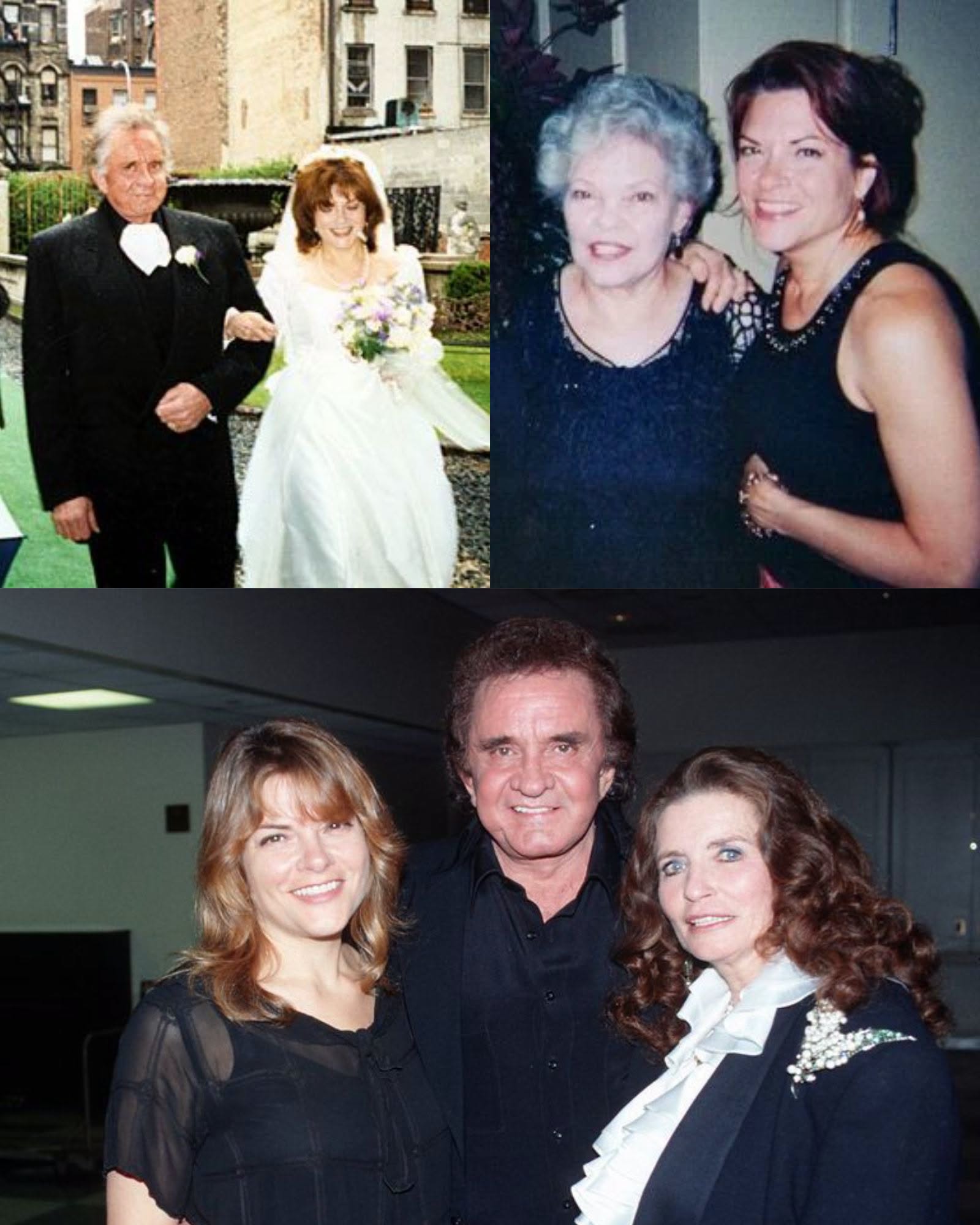
In the summer of 1973, somewhere in the American South, Johnny Cash sat in the back of his tour bus with a legal pad and spent the rest of the afternoon writing. When he was done, he handed the page to his oldest daughter, Rosanne. Across the top he had written “100 Essential Country Songs.” She was 18, and she had just discovered how little of her father’s music she actually knew.
A Summer on the Road With Her Father
Rosanne Cash was born in Memphis in May 1955, just as her father’s career was taking off. The family moved to California a few years later, and in 1966 her mother, Vivian Liberto, filed for divorce. Rosanne and her three younger sisters grew up with their mother in Ventura County, while their father toured and married June Carter.
For most of her childhood he had been gone more than he was home. Then, after she graduated from St. Bonaventure High School in 1973, he invited her to join his road show. She started out as a wardrobe assistant and later sang backup, staying with the show for more than two years.
She later called that time a “multi-layered education.” She got time with her father that she had missed as a girl, and she watched him from the wings every night, which she said was an education in itself.
“I Don’t Know That One”
The list began with an ordinary conversation. Rolling through the South on the bus, father and daughter started talking about songs. He mentioned one. She told him she didn’t know it. He mentioned another. She didn’t know that one either. Then another, and another.
Rosanne had grown up in Southern California steeped in pop and rock. The older songs that shaped her father had never been part of her world. By her own account, he grew alarmed.
A Legal Pad in the Back of the Bus
So he got out a pad and pen. Rosanne remembered walking from the front of the bus to the back that afternoon and finding him still there, still writing, lost in thought over which song belonged next.
He had his legal pad, and he was so pensive.
By the end of the day the list was finished, written on a sheet of yellow lined paper. He gave it to her with one sentence.
“This is your education.”
Far More Than Country Music
The title said country, but Rosanne later said it could just as well have been called a list of essential American songs. Her father had worked his way through every root that fed into the music he made: early folk songs, protest songs, Delta blues, Southern gospel, Appalachian ballads and the first country records. He had written it, she said, as a songwriter, so what she held was also a template for how great songs are built.
Even at 18, she understood it was an important document, and she set out to learn the songs. A few she already knew, like Patsy Cline’s “She’s Got You,” which she had heard since childhood. Others she tracked down on record. For the rest, she had a shortcut most students never get. All she had to do was ask her dad, because he knew every one of them by heart.
Forgotten in a Box
Over the years the yellow page went into a box of memorabilia. Rosanne built her own career, with a string of number one country hits in the 1980s, and became known for writing her own songs. The list stayed in the box, and she forgot about it.
Then came a run of losses. June Carter Cash died in May 2003. Johnny Cash died that September, at 71. Her mother, Vivian, died in 2005. Rosanne poured those years into her album Black Cadillac, and in late 2005, while writing narration for the stage show that went with it, she found the list again.
She told the story from the stage, never imagining more than that. But audiences kept asking afterward where the list was and when she would record it, so often that it became a running joke. Her husband and producer, John Leventhal, began pressing the idea seriously: if she was ever going to make an album of other people’s songs, these were the songs.
Twelve Songs From One Page
The List was released on October 6, 2009. It was her first album made entirely of other writers’ songs: twelve, chosen from her father’s hundred. It opens with Jimmie Rodgers’ “Miss the Mississippi and You,” recorded in 1932, and closes with the Carter Family’s “Bury Me Under the Weeping Willow,” a song from her stepmother’s family.
Bruce Springsteen joined her on “Sea of Heartbreak,” Elvis Costello on “Heartaches by the Number,” Jeff Tweedy on “Long Black Veil” and Rufus Wainwright on Merle Haggard’s “Silver Wings.” Two of the songs had been recorded by her father himself: “Long Black Veil” and “Girl from the North Country,” which he had sung with Bob Dylan in 1969.
The album reached number 5 on Billboard’s country albums chart and number 22 on the Billboard 200, her highest showing there. It was nominated for a Grammy for Best Americana Album and won Album of the Year at the 2010 Americana Honors and Awards.
What He Was Really Giving Her
Rosanne still has the original page. She keeps it in her files, unframed, and has said she wants to do the right thing with it someday.
Looking back in 2009, she said she knew at 18 that her father had handed her something important. What took her decades to understand was what it really was. He was not only giving her a reading list of songs. He was giving her part of his heart and soul, written out by hand on a long afternoon in the back of a bus.