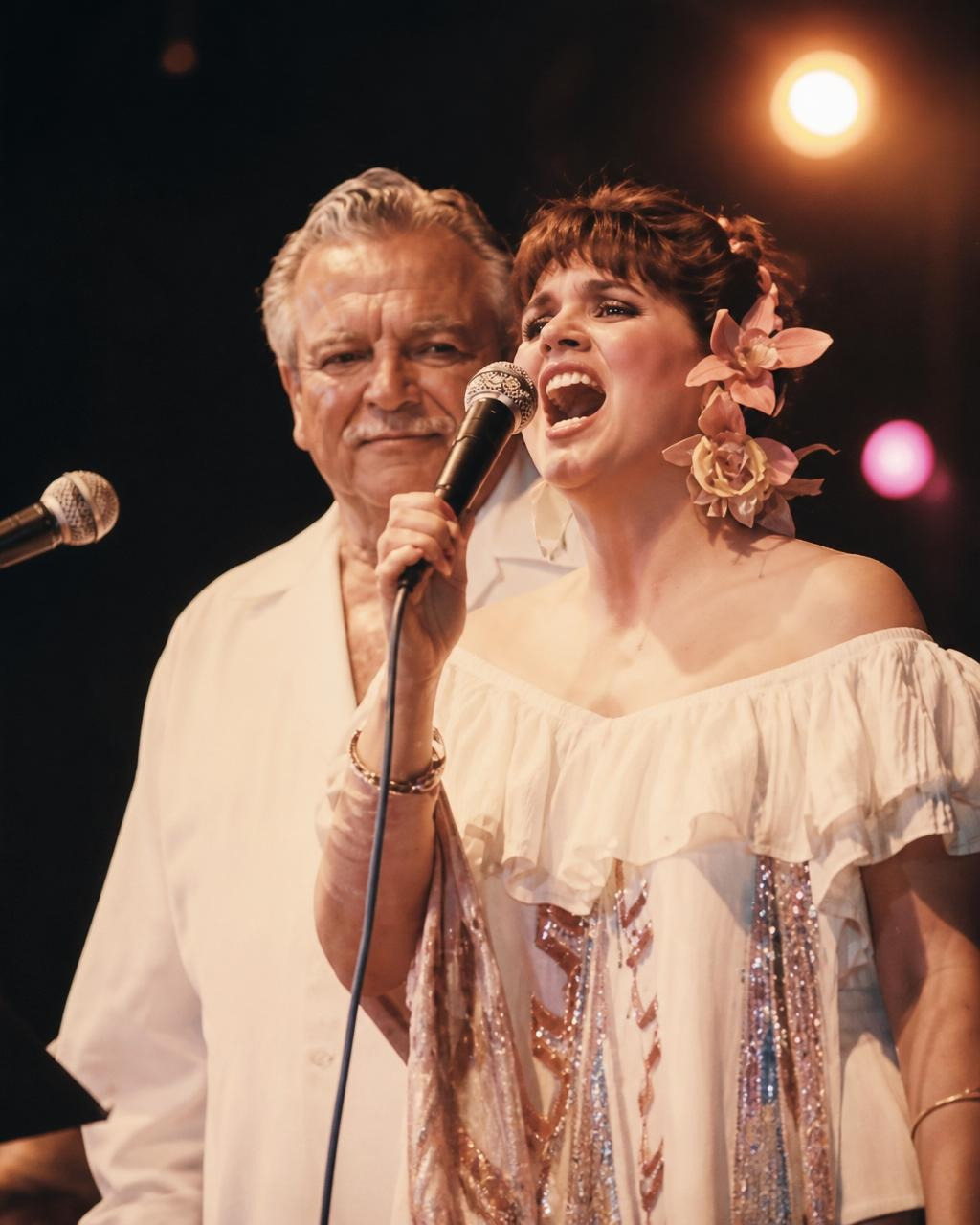
Linda Ronstadt and the Album That Chose Truth Over Safety
In 1987, Linda Ronstadt made a choice that seemed risky on paper and deeply personal in life. She recorded Canciones de Mi Padre, an album of traditional Mexican ranchera songs sung entirely in Spanish. For a star who had already conquered American pop and rock, it was not the obvious commercial move. But it was the honest one.
The songs came from childhood memories in Tucson, where Linda Ronstadt grew up hearing the music her father, Gilbert Ronstadt, loved to sing at home. Long before fame, long before awards, those melodies were part of the family air she breathed. They were familiar, intimate, and rooted in the world that shaped her.
By the time she entered the studio, Linda Ronstadt was not simply chasing nostalgia. She was doing serious artistic work. She studied the demanding rhythms, respected the tradition, and recorded with four mariachi ensembles. The result was not a decorative experiment or a passing tribute. It was a full commitment to style, language, and heritage.
A Career Move That Felt Like a Leap
Her record company reportedly did not see the project as an easy sell. An album of old Mexican songs from one of America’s biggest stars did not fit the usual business logic of the time. But some records are not built to follow logic. They are built to preserve memory.
Canciones de Mi Padre became a statement about identity as much as music. It showed that an artist could step away from the safest path and still create something lasting. Linda Ronstadt was not trying to sound current. She was trying to sound true.
She chose the truest album she could make, and the world listened.
What Happened Next
The response proved the value of that choice. Canciones de Mi Padre went double platinum, won the Grammy for Best Mexican-American Performance at the 31st Grammy Awards, and became the best-selling non-English-language album in American recording history. Decades later, in 2022, the Library of Congress selected it for the National Recording Registry, recognizing its cultural importance and enduring influence.
That arc matters because it tells a larger story about courage in art. The album was not safe, but it was deeply rooted. It was not designed to please everyone, but it reached far beyond its original expectations. Linda Ronstadt trusted the music that lived in her house first, and history rewarded that trust.
The Album That Lasted
Many artists spend their careers trying to predict what will work. Linda Ronstadt did something harder. She listened to what had always been there. The songs her father sang at home became the songs she shared with the world. In the end, that quiet act of fidelity outlived the doubts around it.
Canciones de Mi Padre remains powerful because it was never a compromise. It was a homecoming. And sometimes the most daring thing an artist can do is return to the songs that made them who they are.