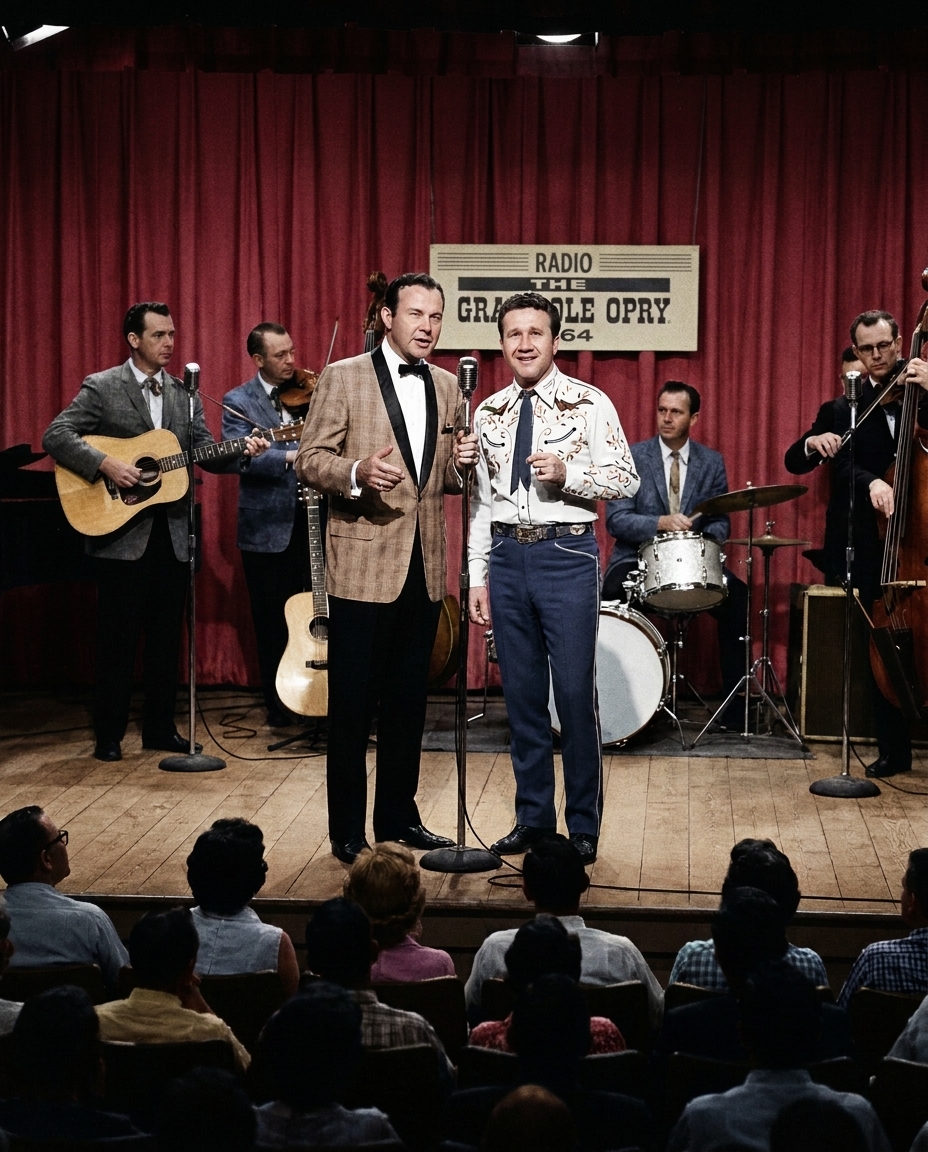
The Night Marty Robbins Heard the Sky Break Over Nashville
On July 31, 1964, Nashville was under one of those storms that makes the whole world feel smaller.
The wind pushed the rain sideways. Trees bent and shivered. Roofs rattled. The kind of afternoon that makes people stop what they are doing and glance toward the sky, not because they expect anything unusual, but because something in the air feels wrong.
Marty Robbins was at home when he heard it.
At first, it was only a sound — an engine, low and strained, cutting through the storm. Then it grew louder. Too loud. Too close. The noise pulled attention away from everything else. Marty Robbins looked up and listened the way a pilot listens, the way a man with instincts sharpened by life immediately knows when something is not right.
Later, Marty Robbins would remember the thought that hit him in that instant: either the person flying that plane was one incredible pilot, or the person was in serious trouble. No one should have been that low in weather like that. Not in rain like this. Not in wind like this.
Then, suddenly, the sound stopped.
For a few seconds, there was only the storm again. Rain. Wind. The uneasy silence that follows something your mind cannot yet explain. And then came another noise — the one Marty Robbins never forgot.
At that moment, Marty Robbins did not know whose plane it was. He did not know the storm had just taken one of country music’s most recognizable voices. He did not know that Gentleman Jim Reeves and Jim Reeves’s manager, Dean Manuel, had been flying back from Arkansas in a single-engine Beechcraft. He only knew that something terrible had happened somewhere beyond the trees and the rain.
A Voice So Smooth It Felt Eternal
Jim Reeves did not seem like a man the world could lose so suddenly. Jim Reeves carried himself with a calm that made every room feel steadier. The voice was part of it, of course. Warm, polished, controlled. When Jim Reeves sang “He’ll Have to Go,” it did not sound like a performance fighting for attention. It sounded effortless, like the song had always existed and Jim Reeves had simply opened the door for it to enter.
That was the strange thing about artists like Jim Reeves. Their voices seem permanent, almost detached from ordinary time. Fans hear the records so often, and in such intimate moments, that the singer begins to feel less like a person and more like part of life itself.
But storms do not care about fame. Rain does not pause for gold records. The sky does not make room for legends.
The Longest Forty-Eight Hours
The crash site was not found immediately. For two days, volunteers searched the woods south of Nashville through mud, broken branches, wet leaves, and relentless rain. It was the kind of search that wears on the body quickly and the spirit even faster. Every hour without answers deepened the dread.
During that long stretch, Nashville lived in suspended breath. Phone calls were made. Rumors moved from one home to another. Friends listened for updates no one could yet give. In the country music community, where paths crossed constantly on stages, in studios, and along the road, the fear felt personal.
Marty Robbins and Jim Reeves were not strangers linked only by headlines. Marty Robbins and Jim Reeves had shared stages, shared the strange brotherhood that comes from performing for the same crowds and living under the same pressure. Jim Reeves was forty years old. Marty Robbins was thirty-eight. Neither was old enough to be remembered in the past tense.
Years later, in an interview given in 1982, Marty Robbins reportedly looked back on those hours with the kind of clarity that only time can bring. Eighteen years had passed, but some memories had not softened at all. Marty Robbins remembered where the mind goes after a moment like that. Not in straight lines, but in fragments. A sound. A silence. A terrible suspicion. A tune that will not leave your head, even when you wish it would.
When an Ordinary Moment Turns Into History
What makes this story linger is not only the tragedy. It is the ordinary setting around it. A backyard. A thunderstorm. One man looking up because of a noise in the sky. That is how life changes sometimes — not with warning, not with ceremony, but in the middle of what should have been just another day.
Marty Robbins could not have known, in that exact second, that he was hearing the last passage of Jim Reeves through the Nashville sky. But memory has a cruel way of returning to moments like that and lighting them from behind. What felt confusing then becomes unforgettable later.
And maybe that is why this story still lands so deeply. Almost everyone has lived through some version of it. A phone call missed. A last conversation that seemed ordinary. A sound, a glance, a passing moment that only years later reveals its true weight.
Have you ever heard something in an ordinary moment and only understood later that it was the sound of the world changing?
On that storm-dark afternoon in Nashville, Marty Robbins heard it. And country music never sounded quite the same again.